The best GLP-1 tracker apps complete one important tracking job with as little friction as possible. Glowise is the strongest fit for a balanced all-in-one routine, Shotsy for medication-first schedules and exportable records, MeAgain for broad daily logging, Glapp for medication-cycle and supply context, MyFitnessPal for food-database depth, and Cronometer for detailed nutrient tracking.
This comparison was checked against current official product pages and U.S. App Store listings on July 23, 2026. We evaluated tracking scope, ease of keeping context together, food logging, medication and side-effect records, progress views, platform fit, privacy transparency, and the limits each app states. We did not use ratings as a ranking formula, and exact prices are excluded because subscriptions and regional offers change.
Quick comparison of the best GLP-1 tracker apps
| App | Best for | Main tracking scope | Current platform fit | Main tradeoff |
|---|---|---|---|---|
| Glowise | A balanced all-in-one routine | Medication, meals, macros, water, side-effect notes, weight, activity, progress | iPhone | Broad scope means more health and account data to review in the privacy label |
| Shotsy | Medication schedules, charts, and exports | Injections or pills, reminders, side effects, weight, nutrition, water, medication-level estimates | iPhone and Android | Medication-first design may be more detail than a simple food logger needs |
| MeAgain | Broad daily logging with flexible food entry | Shots or pills, food, protein, fiber, water, symptoms, weight, movement | iPhone | Some features require a subscription |
| Glapp | Medication-cycle, progress, and supply context | Shots, daily check-ins, weight, medication-level estimates, reports, inventory | iPhone, Apple Watch, and Android | Estimated phases and levels are context, not individualized medical guidance |
| MyFitnessPal | Large food database plus basic GLP-1 support | Food, calories, macros, water, fitness, dose reminders, side-effect notes | iPhone, iPad, Apple Watch, and Android | Nutrition remains the center of the product, not a complete medication timeline |
| Cronometer | Detailed macro and micronutrient tracking | Food, calories, protein, fiber, vitamins, minerals, weight, activity, sleep | iPhone, iPad, Apple Watch, Android, and web | Its current listing does not describe a dedicated GLP-1 medication workflow |
The useful distinction is not “specialist versus generalist” by itself. A dedicated GLP-1 tracker can reduce the work of connecting medication, symptoms, meals, and progress. A general nutrition app can be stronger when food search, recipe analysis, or micronutrient detail is the main job.
Best for a balanced all-in-one routine — Glowise
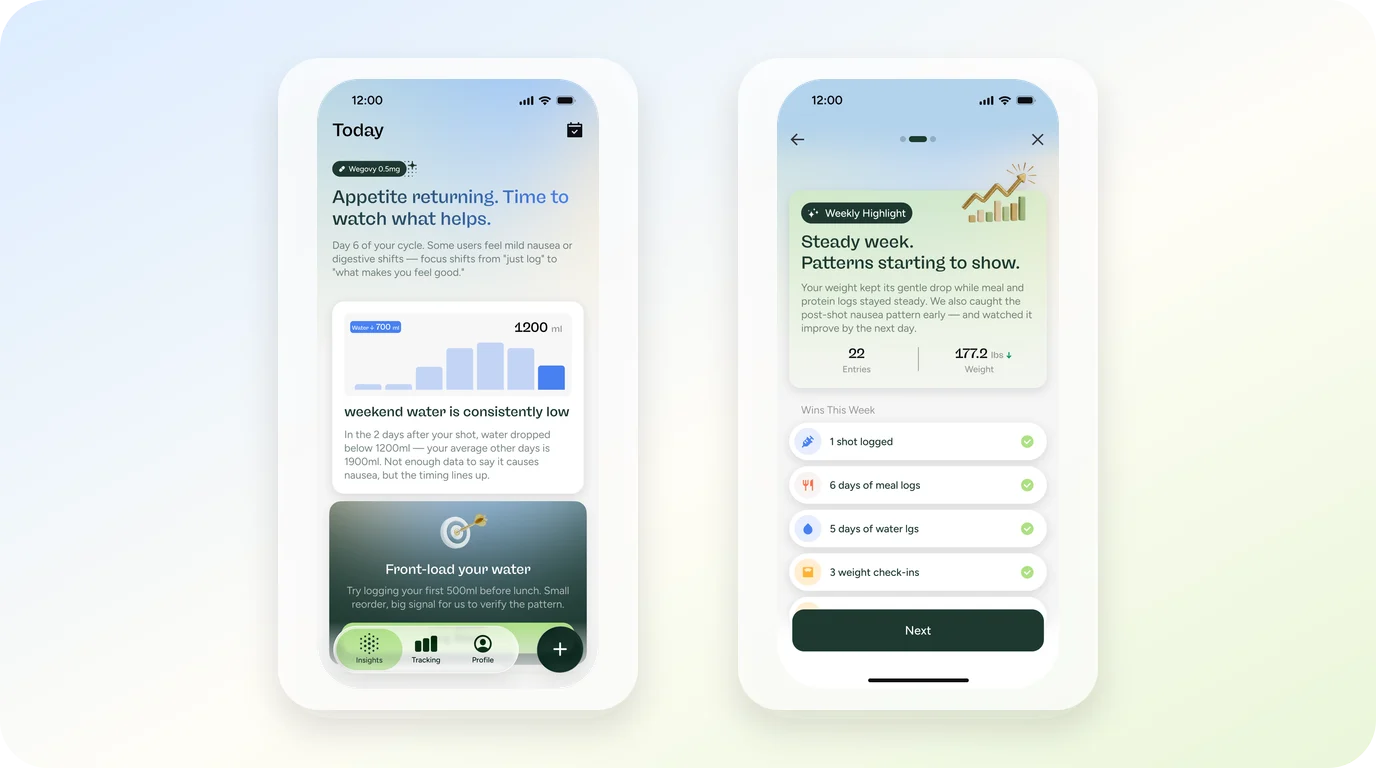
Glowise's current App Store listing describes medication reminders and dose records, symptom and side-effect logging, food entry by voice, photo, barcode, or label scan, calorie and macro tracking, water, weight, activity, and progress views.
That breadth makes Glowise the best fit in this list for someone who wants medication, nutrition, hydration, side-effect context, and progress in one calmer place. The nearby categories can be reviewed together instead of being reconstructed from a medication reminder app, a meal database, screenshots, and a notes file.
Where Glowise is strongest
- You want one record that connects medication, food, water, symptoms, weight, activity, and progress.
- Fast meal entry matters, but you also need medication and side-effect context.
- You prefer weekly insight and reflection views over a collection of isolated logs.
- You want an app built around GLP-1 routines without treating the app as a clinician.
The current Glowise GLP-1 Tracker product page also separates organizational support from medical decisions. Its Food and Protein Tracker and side-effect workflow are parts of the same broader record.
For a closer look at its current public features, platform fit, privacy checks, and tradeoffs, read our Glowise app review.
Where Glowise may not fit
The U.S. App Store currently lists Glowise as iPhone-only, so it is not the choice for someone who needs an Android app. Some capabilities are tied to in-app purchases. The App Store privacy label also shows several categories of data linked to the user and identifiers that may be used for tracking, so privacy-sensitive readers should review the current label and policy before creating an account.
Glowise does not diagnose symptoms, determine urgency, recommend a dose, or prove that a medication, meal, or behavior caused a change.
Best for medication schedules and exports — Shotsy
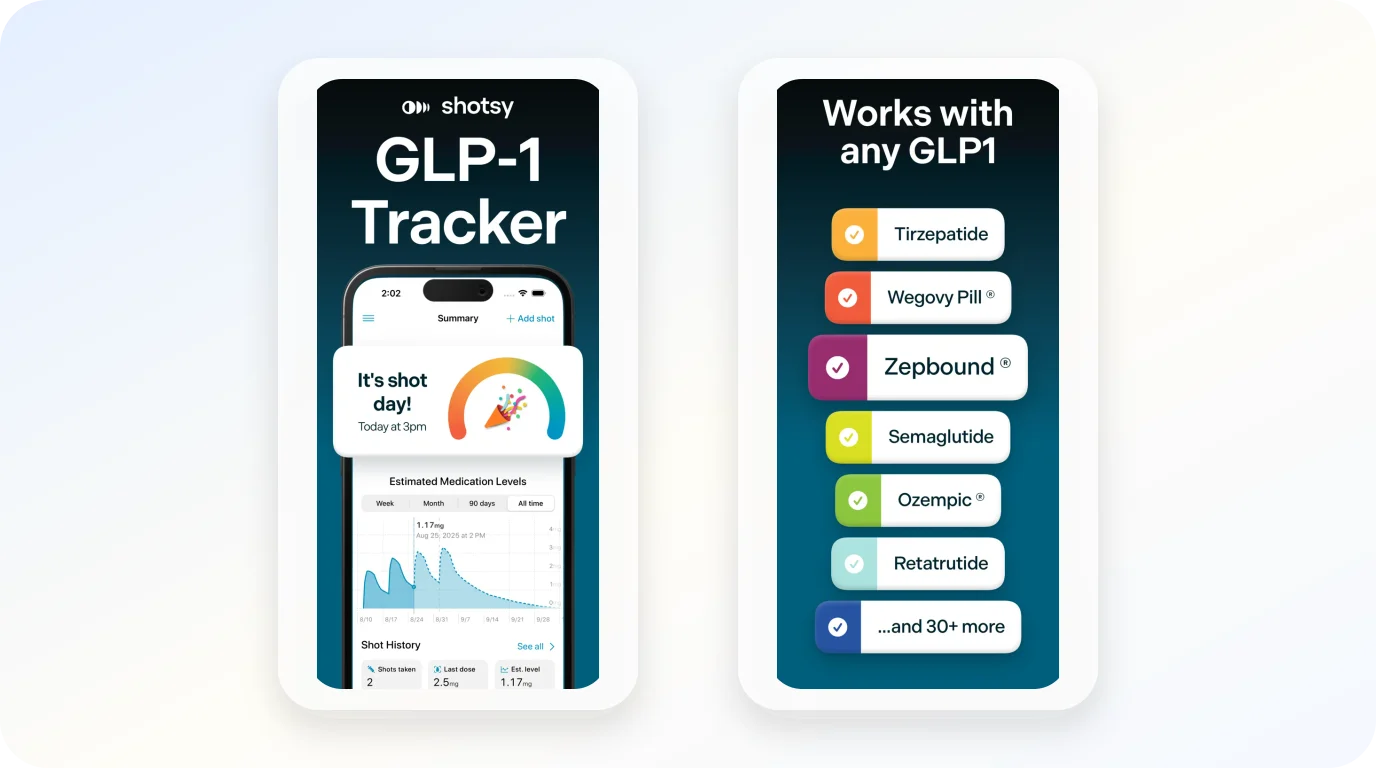
Shotsy's current App Store listing puts medication tracking first. It supports injection and pill records, multiple medication schedules, reminders, injection sites, side effects, weight, calories, protein, water, Apple Health import, and estimated medication-level charts.
Its official site also describes PDF export for doses, side effects, and weight. That makes Shotsy a strong choice when the main job is maintaining a structured medication history and preparing a compact record for a healthcare conversation.
Where Shotsy is strongest
- You need flexible schedules for injections, pills, or more than one medication.
- Injection-site history and rotation records matter to your routine.
- You value medication-level charts and detailed progress views.
- Exporting a PDF or preserving local and cloud backups is important.
- You need iPhone or Android availability.
Where Shotsy may not fit
Shotsy includes nutrition and water tracking, but its public positioning remains medication-first. Someone whose main job is a deep food search, recipe analysis, or detailed micronutrients may still prefer a nutrition specialist.
The iPhone listing currently requires iOS 18. Estimated medication-level charts can provide a model-based view, but they cannot tell an individual what is happening clinically or when a dose should change.
For a closer look at its current public features, platform fit, and tradeoffs, read our Shotsy app review.
Best for broad daily logging — MeAgain
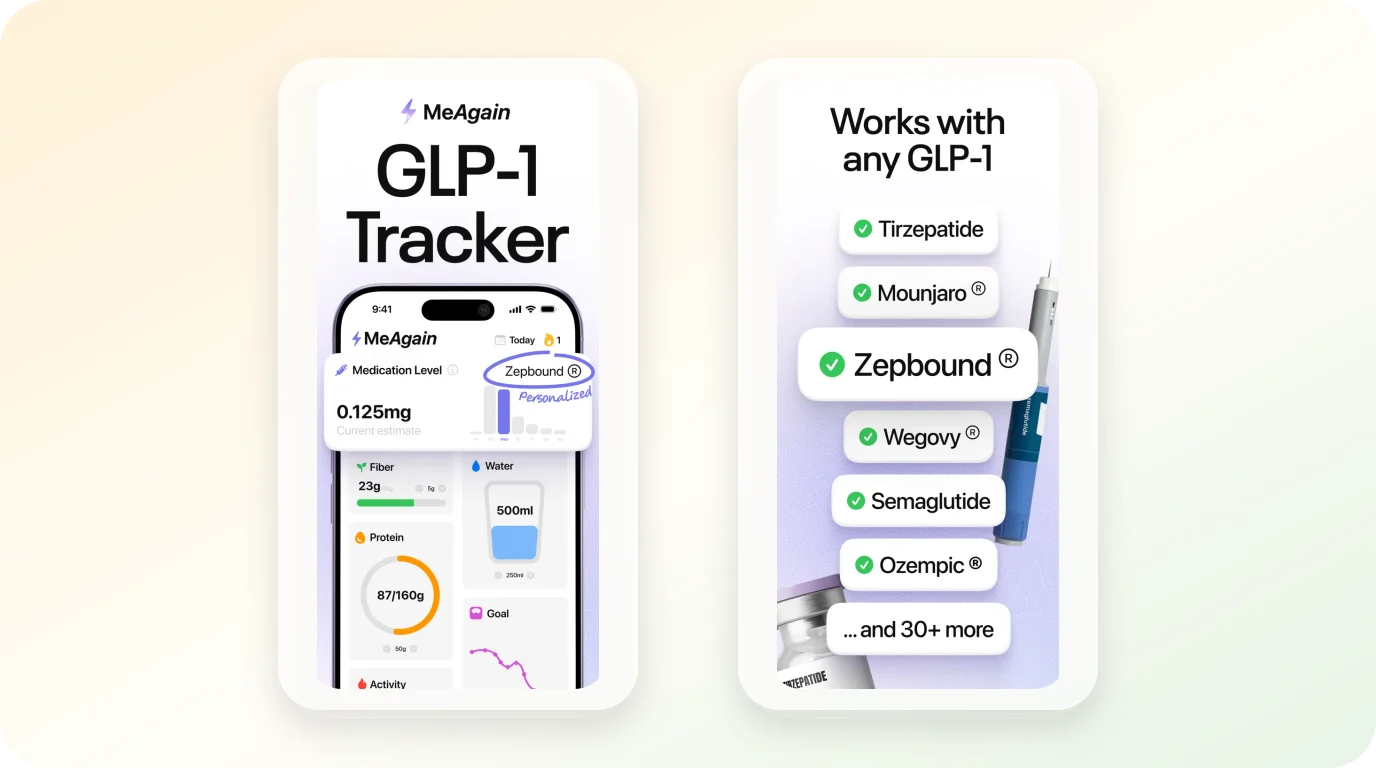
MeAgain's current App Store listing combines shot or pill routines with food entry by photo, barcode, and search; protein, fiber, and water; side-effect notes; weight; progress photos; movement; and a daily timeline.
MeAgain is a close alternative to Glowise for readers who want most of the daily GLP-1 routine in one app. Its public presentation is more playful, with widgets and a companion character, while still covering practical tracking categories.
Where MeAgain is strongest
- You want medication and food context in the same daily timeline.
- Protein, fiber, water, movement, and side-effect notes are all useful to you.
- Photo and barcode food entry matter.
- A lighter, more motivational interface helps you keep logging.
Where MeAgain may not fit
The current U.S. listing is iPhone-only and states that some features require a subscription. A reader who wants a restrained clinical-looking record, Android support, or a medication-focused export workflow may prefer another option.
MeAgain's own listing says it is for tracking and education, not diagnosis, side-effect treatment, or dose recommendations. That boundary should remain clear even when several signals appear together on one timeline.
For a closer look at the current public materials and the switching tradeoffs, read our MeAgain app review.
Best for medication-cycle and supply context — Glapp
Glapp's current App Store listing emphasizes shot records, daily check-ins, progress reports, medication-level curves, estimated shot phases, weight, Apple Health sync, and medication inventory. Its Google Play listing provides an Android route as well.
This makes Glapp the strongest fit here for a reader who wants to view dose timing beside hunger, cravings, mood, energy, sleep, bowel movements, weight, and supply records.
Where Glapp is strongest
- You want a daily check-in connected to medication timing.
- Medication inventory, pen or vial supply, and refill context matter.
- You prefer reports, charts, widgets, and Apple Watch access.
- You need an Android option as well as iPhone support.
Where Glapp may not fit
Glapp's medication-level and “phase” views are estimates. The app's own listing states that it is not a medical device and does not provide diagnosis or treatment. A model-based curve should never become a reason to change dose timing, delay professional advice, or assume that a symptom has one cause.
Its current iPhone listing is English-only and requires iOS 17. Readers who primarily need a large food database may find the medication-cycle focus more specialized than necessary.
For a closer look at its current public materials and the tradeoffs in a medication-cycle workflow, read our Glapp app review.
Best for food-database depth — MyFitnessPal
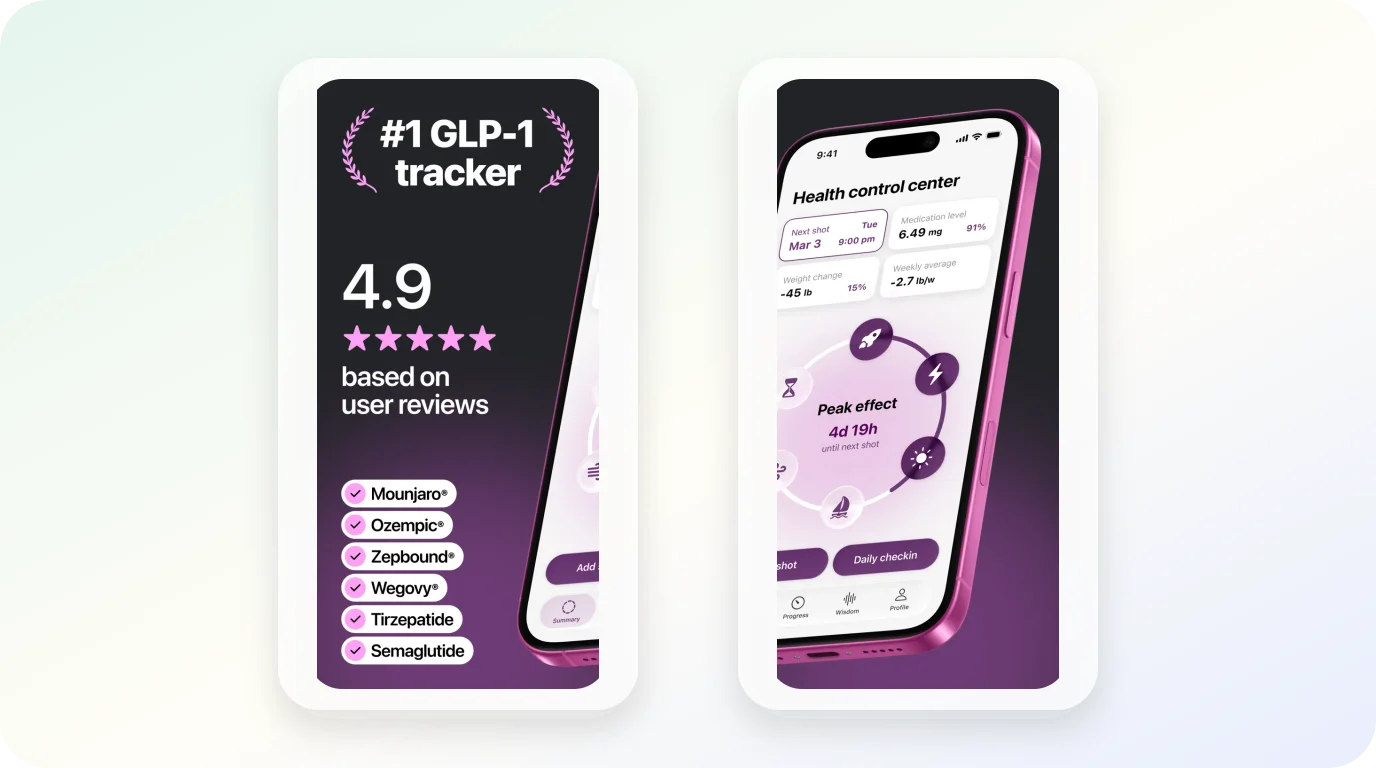
MyFitnessPal's current App Store listing describes a database of more than 20.5 million foods, meal search, barcode and meal scanning, macro and water tracking, recipes, fitness integrations, and GLP-1 support for dose logs, reminders, and how-you-feel or side-effect records.
That combination makes MyFitnessPal the best choice in this list when food logging is clearly the main job but the reader still wants a basic medication reminder and symptom layer.
Where MyFitnessPal is strongest
- Restaurant and packaged-food search depth matters.
- You already use the app for meals, recipes, macros, activity, or connected devices.
- You want to add basic GLP-1 records without moving to a dedicated tracker.
- Multi-language and broad device support are important.
Where MyFitnessPal may not fit
MyFitnessPal is a general nutrition and fitness platform. Its public listing does not present the same medication-history depth, injection-site context, supply tracking, or combined care-conversation record as dedicated GLP-1 apps.
Several advanced logging and planning features are subscription products. A large food database can also create more detail than a person wants to maintain, so choose the smallest set of fields that remains useful.
For a closer look at its GLP-1 support alongside food logging, read our MyFitnessPal GLP-1 review.
Best for detailed nutrient tracking — Cronometer
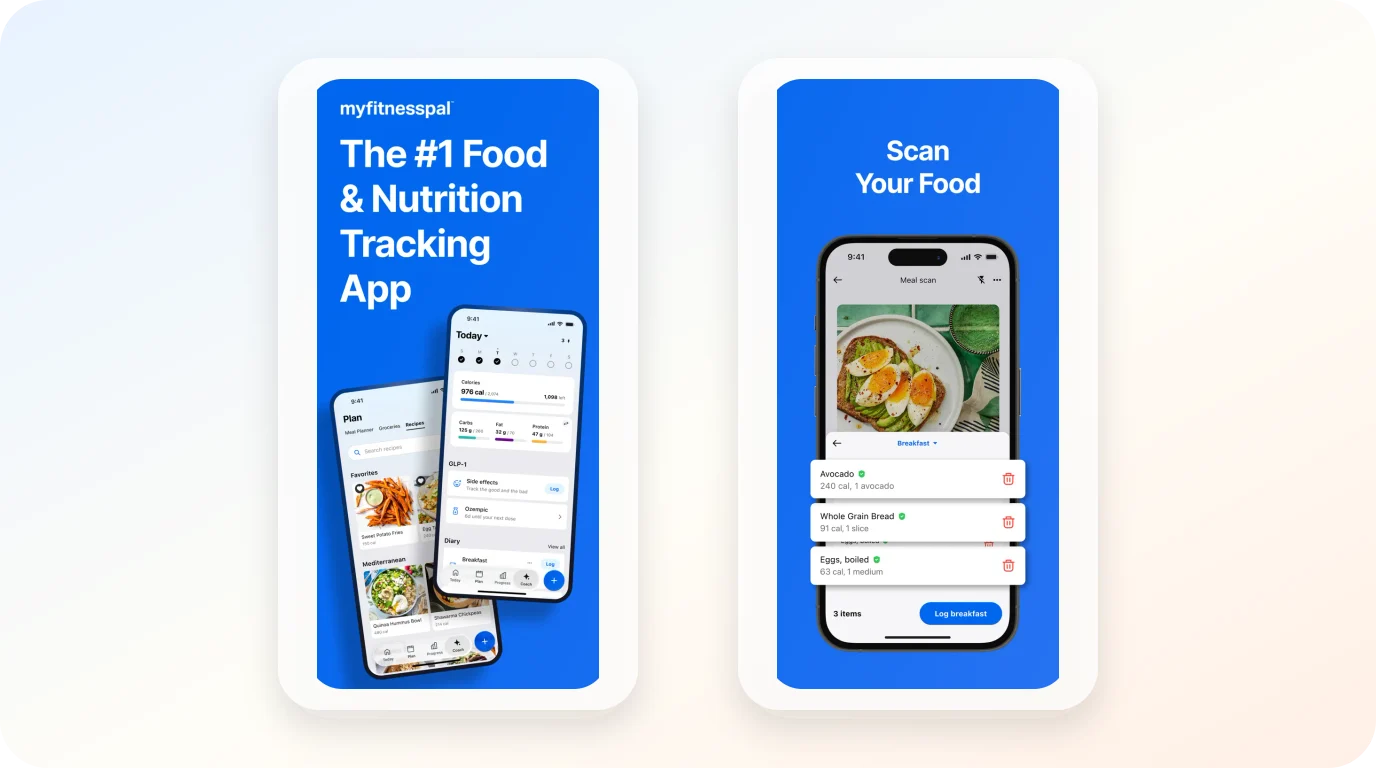
Cronometer's current App Store listing focuses on calories, macros, fiber, vitamins, minerals, weight, nutrition trends, and connections to Apple Health, Fitbit, Garmin, Oura, Whoop, and other services. It describes more than 95 nutrients and a curated food database.
Cronometer is therefore the strongest option here for someone whose main question is nutritional detail rather than medication management.
Where Cronometer is strongest
- You want macro and micronutrient detail in one food diary.
- A curated food database is more important than a GLP-1-specific timeline.
- You use connected fitness, sleep, or wearable data.
- You want web access in addition to mobile apps.
Where Cronometer may not fit
The current public listing does not describe a dedicated GLP-1 medication, injection-site, side-effect, or supply workflow. Someone who needs those records may have to pair Cronometer with a medication tracker, which recreates the split-record problem an all-in-one app is meant to solve.
Detailed targets are not automatically personal medical or nutrition advice. Individual nutrition needs should be discussed with a qualified clinician or registered dietitian when relevant.
For a closer look at nutrition detail, device fit, and privacy questions, read our Cronometer app review.
How to choose a GLP-1 tracker
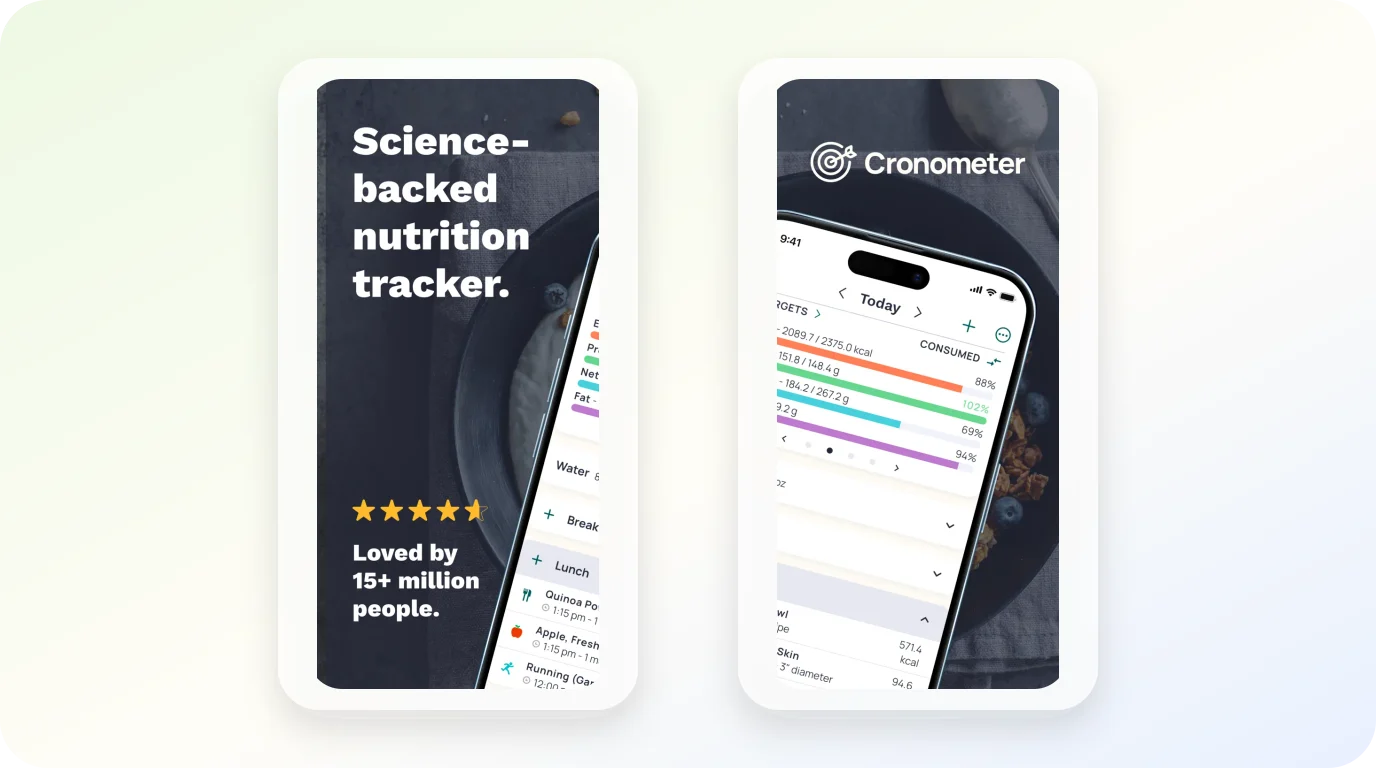
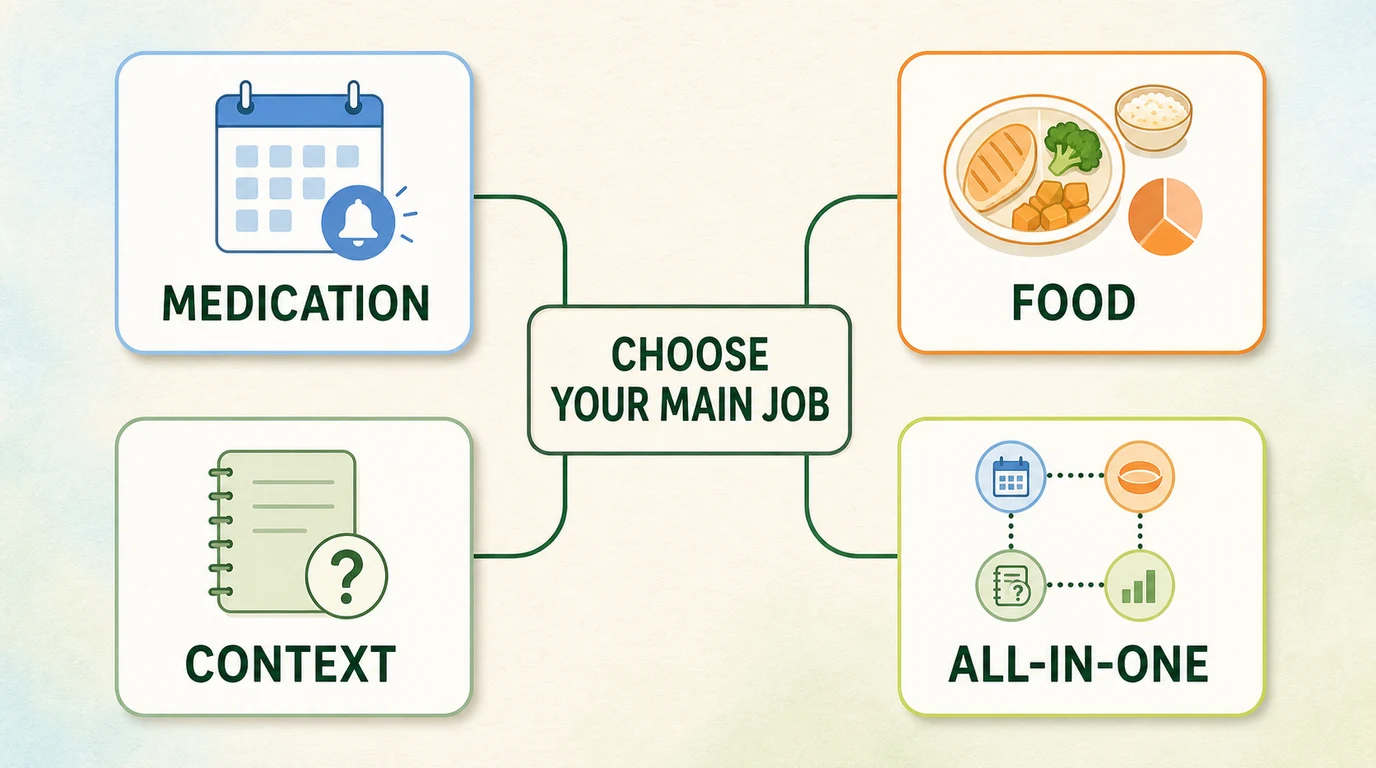
Do not begin with the longest feature list. Begin with the one decision or conversation the record should make easier.
Choose medication-first when timing is the main job
A medication-first app should make the exact product, form, schedule, dose record, reminder history, and relevant notes easy to review. Shotsy and Glapp are the clearest specialists in this group. Glowise and MeAgain add medication context inside a broader daily record.
Do not choose an app because its estimated curve looks medically precise. Confirm medication instructions with the approved information for your exact prescription and the professional managing your care.
Choose nutrition-first when food detail is the main job
MyFitnessPal is strongest for a broad searchable food catalog, while Cronometer is strongest for nutrient detail. Glowise and MeAgain are better when food needs to sit beside medication, water, symptoms, and progress rather than becoming a separate analysis project.
The right amount of nutrition detail is the amount you can use. More fields can reduce consistency when they do not support a real question.
Choose context-first for care conversations
If you want to remember what happened around a concern, look for free-text notes, timing, duration, intensity in your own words, effects on daily activities, and export or summary options. Glowise's Side Effect Tracker is designed around that organizational job.
A record can show that events happened near each other. It cannot diagnose the concern or prove that medication caused it.
If the purpose is a care conversation, the FDA's medication-list guidance offers a useful baseline: keep the exact medicines and other products you use current, then bring focused observations and questions rather than asking an app to interpret them.
Choose all-in-one when separate apps create friction
Glowise and MeAgain reduce context switching by keeping multiple daily categories together. That can be useful when your current system is a medication reminder, a food app, a water app, and a notes file.
The tradeoff is data scope. An all-in-one app may request or store more categories of personal information, so privacy review matters more, not less.
Privacy and medical-safety considerations
Health-app privacy cannot be reduced to one badge. Before choosing an app, read its current App Store or Google Play privacy label, privacy policy, account-deletion process, cloud-sync behavior, export options, and whether data may be used for analytics, personalization, or advertising.
Ask five practical questions:
- Can I use the core tracker without creating more data than I need?
- Is information stored on-device, in a private cloud account, or on company servers?
- Can I export and delete my records?
- Which data is linked to my identity or used for tracking?
- Does the policy match the features I plan to use, including photos, scans, health integrations, or AI tools?
Then check the medical boundary. A GLP-1 tracker can organize dates, records, observations, and questions. It should not diagnose a symptom, determine whether it is serious for you, select a medication, recommend a dose change, or replace urgent or routine professional care.
For instructions about administration, storage, missed doses, interactions, or warnings, use the approved materials for the exact prescription. The FDA's guide to learning about your medicines explains where to find official information and what to ask a pharmacist or prescriber.
The NIDDK overview of prescription medicines for overweight and obesity is also a useful reminder that medicines, approved uses, and individual care decisions differ; a tracker does not collapse those differences into one universal routine.
The practical takeaway
There is no universal winner because the best tracker depends on the job:
- Choose Glowise when you want the most balanced medication, food, hydration, side-effect, and progress record in one place.
- Choose Shotsy when medication schedules, injection history, charts, and exports come first.
- Choose MeAgain when you want broad all-in-one logging in a more playful daily experience.
- Choose Glapp when medication-cycle, check-in, report, and supply context matter most.
- Choose MyFitnessPal when food-database breadth outweighs medication-history depth.
- Choose Cronometer when detailed nutrient analysis is the priority.
If you are comparing apps for a semaglutide-specific routine, see our semaglutide app comparison.
One calmer place for the details
Build a GLP-1 tracking routine around what matters to you
Glowise brings medication, meals, water, side-effect notes, weight, activity, and progress together while keeping medical decisions with qualified professionals.
The practical takeaway
Your tracker-selection checklist
- Name the one tracking job that matters most before comparing features.
- Confirm that the app supports your device, medication form, and preferred record style.
- Decide whether you need medication depth, nutrition depth, or one connected daily timeline.
- Review current privacy labels, policies, export options, and deletion controls.
- Treat estimated levels and patterns as context, not diagnosis or dosing guidance.
- Choose the smallest routine you can maintain and review usefully.
Frequently asked questions
What should a GLP-1 tracker app track?
A useful tracker may record the exact medication context you have confirmed, timing, reminders, meals, water, side-effect notes, weight, activity, progress, and questions. You do not need every category. Choose the fields that support a real routine or care conversation.
Is a dedicated GLP-1 tracker better than a calorie tracker?
A dedicated tracker is usually better for medication schedules, side-effect context, injection records, and combined timelines. A general calorie tracker may be better for food search, recipes, macros, or micronutrients. The better choice depends on the main job.
Can a tracker estimate medication levels accurately?
Some apps display model-based medication-level curves from published pharmacokinetic information. Those estimates are not a measurement of your individual blood level and should not guide dose timing or treatment changes.
Can a GLP-1 tracker tell me whether a symptom is serious?
No. A tracker can organize what you noticed, when it happened, how long it lasted, and how it affected daily activities. It cannot diagnose the cause or determine urgency for an individual. Contact a qualified healthcare professional about concerning, severe, persistent, or rapidly worsening symptoms, and use local emergency services for a possible emergency.
Should I choose a free or paid GLP-1 tracker?
Start by checking whether the free tier completes your main job. Paid features may be worthwhile for exports, advanced charts, scans, reports, or deeper analysis, but exact plans change. Review the current store listing before subscribing.
What privacy details should I check before using a health app?
Check what data is collected, what is linked to your identity, whether any identifiers are used for tracking, where records are stored, which integrations receive data, and how export and deletion work. Recheck the policy when enabling photos, health-device sync, or AI features.
Sources
Product features and availability in this draft were checked on July 23, 2026:

About the author
Maya Lee
Glowise Senior GLP-1 Content Editor
Maya Lee is a Glowise Health Content Editor. Her guides turn product records, authoritative sources, and everyday organization questions into clear, practical GLP-1 information.
She helps readers ask better questions and keep the details relevant to a care conversation together.
See more Glowise on Google
Add Glowise as a preferred source to find our GLP-1 guides more easily in Google Search.