This Shotsy app review is most useful for deciding whether a medication-first record fits the details you want to review most often.
Shotsy app is most useful for a medication-first GLP-1 record: schedules, injection or pill history, dose reminders, and an export-friendly review. If the main reason you open a tracker is to confirm medication timing, look back at dose history, keep injection-site context, or produce a compact report, this review can help you decide whether that shape matches the record you will actually keep.
This review relies on Shotsy's current public materials rather than personal testing, and it focuses on one practical question: which tracking job does this app make easier?
What this app is best for
Shotsy describes itself as a GLP-1 tracker built around the medication event. Its current materials describe shot and pill logging, dose reminders, injection-site rotation, side-effect and weight records, nutrition and water logs, estimated medication-level context, and PDF reports. The app is described as available on iPhone and Android.
That feature set points to a specific kind of user: someone whose record starts with the dose and grows outward from there. If your weekly question is "when did I last take it, at what dose, and where," a medication-first design keeps the answer close to the surface. If your question is usually broader—how the whole day or week fit together around the medication—you will want to weigh that priority before committing.
How this review evaluates the app
A review of a tracker is only useful if it tests the app against a real routine. This review uses five questions, each tied to a decision you can make today.
| Review question | What a good answer looks like | Where Shotsy fits based on current materials |
|---|---|---|
| What record does it center on? | A clear primary job you can name in one sentence | Medication events: shot and pill logging, dose reminders, injection-site rotation |
| Does it support looking back? | History you can scan without reconstructing the week | Dose history, side-effect and weight records, estimated medication-level context |
| Can the record leave the app? | A portable format for appointments or personal files | PDF reports are described in the product materials |
| Does it cover the rest of the day? | Enough context around the dose to be useful | Nutrition and water logs are described alongside the medication record |
| Does it fit your device? | Available on the phone you actually carry | Described as available on iPhone and Android |
Two cautions apply to any row in this table. First, feature availability can vary by app version, device, region, and plan, and subscriptions can change, so confirm details in the app's current store listing before you build a routine around any single feature. Second, a feature list is a starting point for a fit decision, and it works best when you compare it with other tracker shapes. If you want that wider view, you can compare GLP-1 tracker fits across different record priorities before settling on one app.
Core workflow and verified features
Based on Shotsy's current product materials, the core workflow revolves around logging a medication event and letting the supporting records accumulate around it.
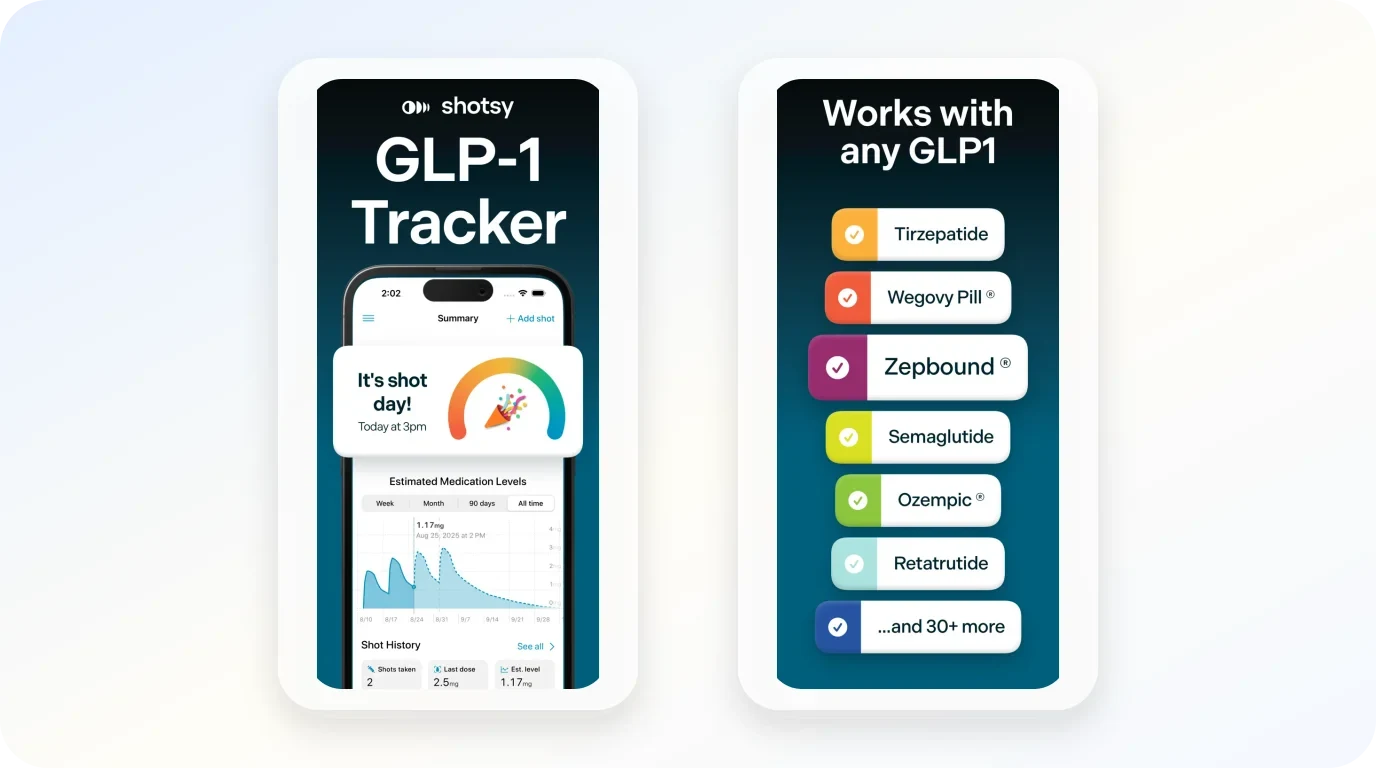
The described feature set breaks into four practical groups:
- Medication events. Shot and pill logging, dose reminders, and injection-site rotation. This is the center of the app: a structured history of what you took, when, and where.
- Body context. Side-effect records and weight records, so changes you notice can sit beside the medication timeline.
- Daily inputs. Nutrition and water logs, for readers who want food and hydration in the same record as the dose.
- Review and export. Estimated medication-level context and PDF reports, aimed at readers who want a compact summary to review or bring to an appointment.
The first few records to try
If you decide to test the app, keep the trial small and concrete. Log your next medication event with the dose and injection-site detail. Add one side-effect note the next time something is worth remembering. Record weight on whatever rhythm you already use. After a week, ask the only question that matters: can you reconstruct the week from the record without effort? A tracker that passes that test in seven days is likely to keep earning its place. A tracker that asks for more logging than you will realistically do will quietly become another abandoned icon.
What the app does not settle
Estimated medication-level context is an organizational aid: it reflects what the app can compute from your logged schedule. It cannot confirm how you individually respond to a medication, and no tracker output should be read that way. Treat every estimate in any app as a note about your record, and bring interpretation questions to a clinician or pharmacist.
Where it works well
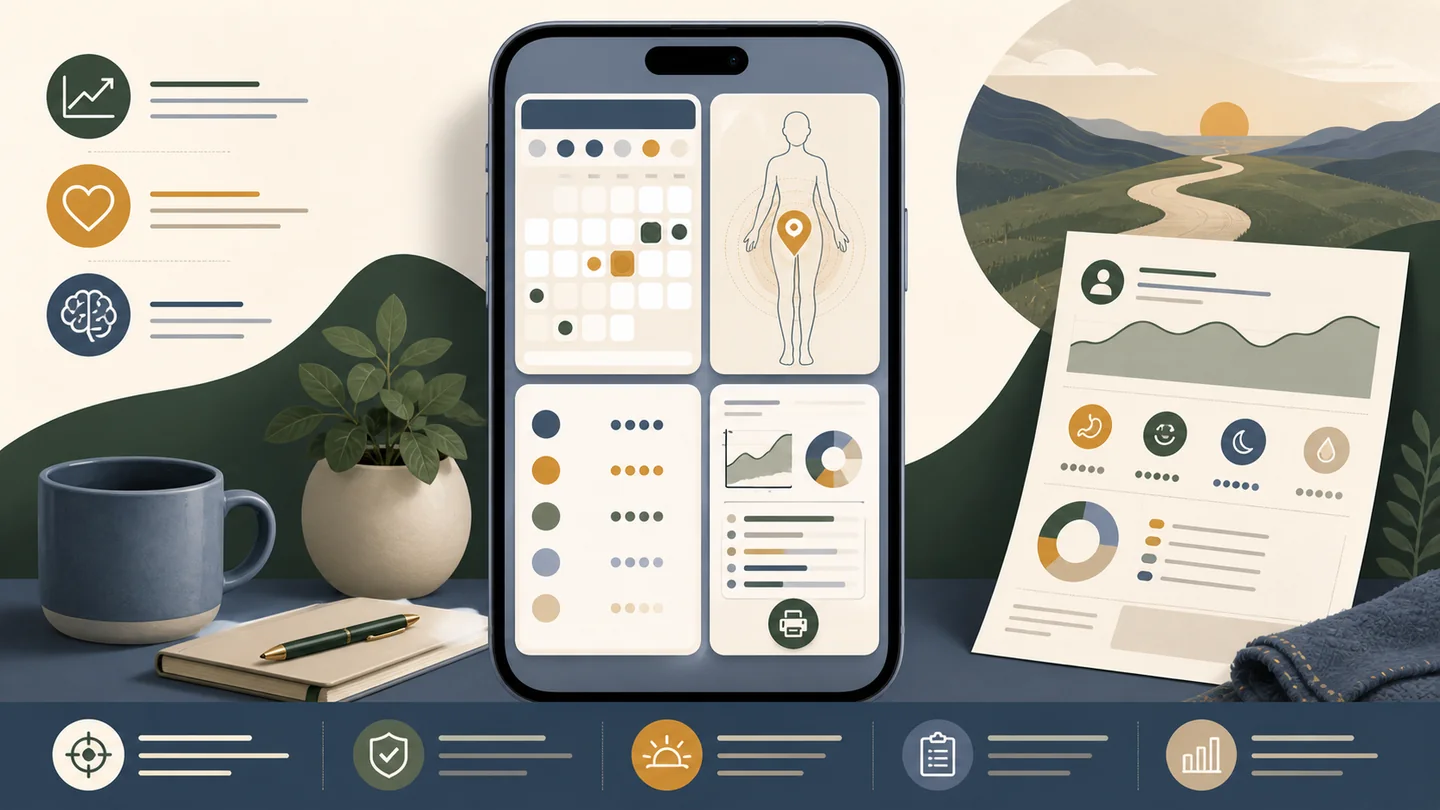
Shotsy app tends to fit best in four situations:
- You want proof of timing. Your recurring question is whether you took the dose, on which day, and at what strength. A medication-first log answers that without extra navigation.
- Injection-site context matters to you. Site rotation records turn a memory task into a lookup when that detail is part of the record you want to keep.
- You prepare for appointments. PDF reports suit readers who like to arrive with a printed or shareable summary instead of scrolling through an app in a waiting room.
- You keep a lean routine. If your tracking style is "log the dose, note anything unusual, move on," a medication-centered design matches that rhythm with less friction than a broad all-day journal.
The common thread is that the medication event is the anchor. When that anchor matches your real habit, the rest of the record—weight, side effects, nutrition, water—adds context around something you were already going to log.
Limitations and tradeoffs
Every tracker makes a tradeoff between depth in one area and coverage across many. A few are worth naming plainly here.
- A medication-first shape centers the dose. Readers who want the whole day—meals, activity, mood, and progress in one continuous picture—may find the rest of the record plays a supporting role to the medication log.
- Breadth carries a maintenance cost. Nutrition and water logs are available in the described feature set, and each extra log only helps if you keep it up. Be honest about which inputs you will sustain past week two.
- Details can change. Subscriptions, plan tiers, device compatibility, and regional availability can all change over time. This review does not state prices, ratings, or user counts, because those figures age quickly; verify them in the current store listing and product pages before deciding.
- Estimates stay estimates. Estimated medication-level context is useful as a personal reference, and it carries the limits described above.
The part worth slowing down for
The one tradeoff that deserves real thought is the match between the app's center of gravity and yours. Before creating an account, write down the three details you most often need to find in your current notes. If all three are medication details, this shape fits. If two of the three are about food, daily context, or how the week felt overall, a broader daily record may serve you better, and that is a legitimate reason to keep looking.
Privacy and medical boundaries
A GLP-1 tracker holds sensitive information: medication names, doses, weight, and symptoms. In the public Shotsy privacy policy last updated March 6, 2026 (accessed August 20, 2026), Shotsy identifies health data such as GLP-1 injection date, site, time, and dose; side effects and wellness notes; weight; protein and calorie intake; water intake; and optional Apple Health or Health Connect imports for related weight, hydration, and nutrition fields. The policy describes different platform arrangements: iOS does not require a user account and stores individual health entries in a private iCloud database associated with an Apple ID, while Android requires Google Sign-In and stores app data in Firebase tied to the account and a platform-generated user ID. It also describes export and deletion choices: iOS supports in-app export, with deletion of iCloud data through device settings and/or in-app deletion where available; Android supports export or deletion from Settings, including account deletion. For anonymous iOS experience data in the United States, the policy says you can opt out of future collection, but specific historical records may not be locatable for deletion. These are bounded descriptions of the published policy, not a privacy, security, or compliance verdict.
Treat privacy as a checklist you run yourself. Read the app's current store listing and privacy policy, confirm what account is required, and check what export and deletion options exist before you move a personal history into any app.
The medical boundary matters just as much. A tracker can organize your records, and it cannot diagnose a symptom, choose a dose, or establish what caused an individual change. If you notice something new—a symptom, a shift in how you feel, a question about timing—the record's job is to help you describe it clearly: what happened, when you noticed it, and what else was going on. The interpretation belongs in a conversation with your clinician or pharmacist. If you want a structured way to keep symptom notes together for exactly that kind of conversation, a focused side-effect record is a practical companion to any medication log.
Alternatives and next steps
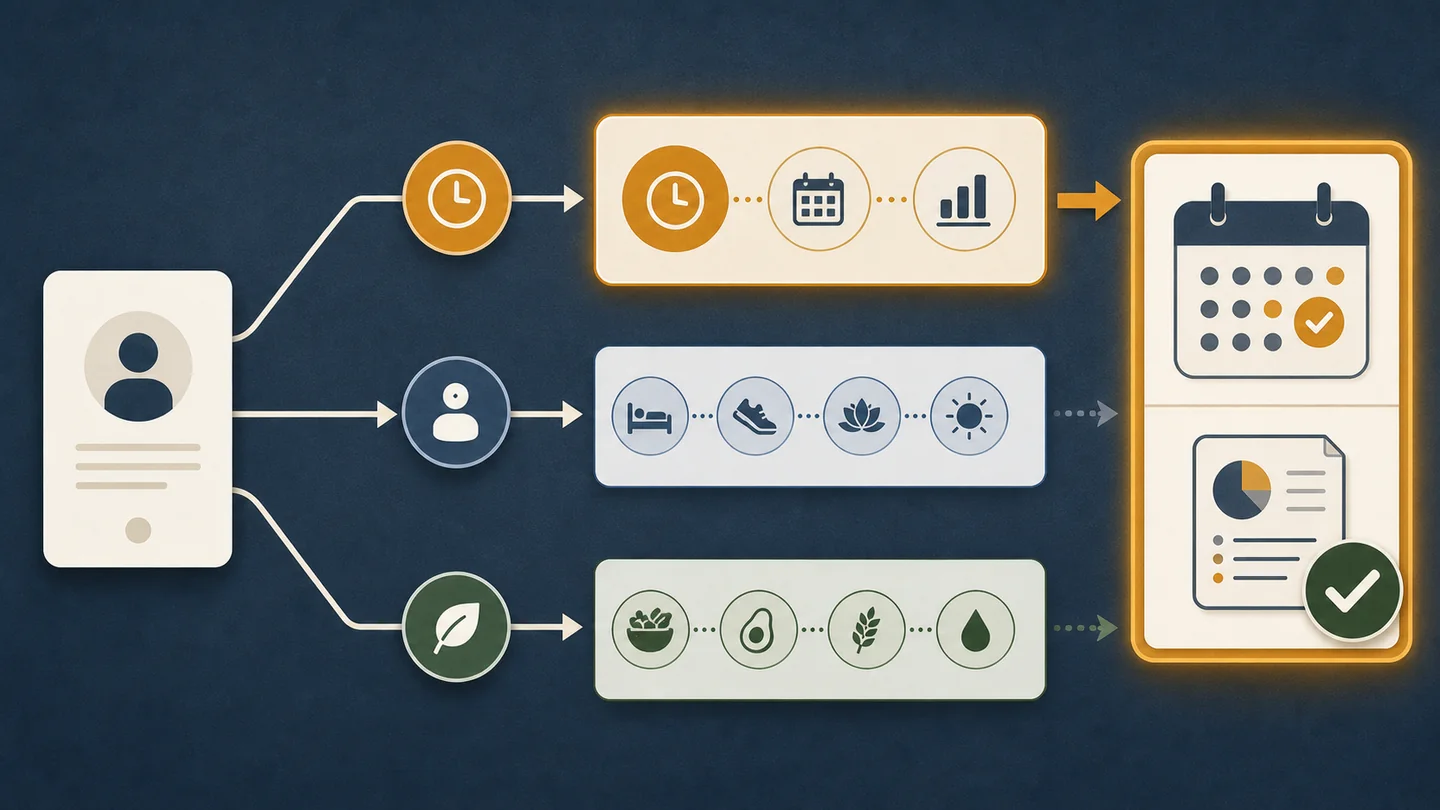
If the fit questions above surfaced a genuine mismatch, the next step depends on what caused it:
- The record feels too medication-centered. Look for a tracker that treats the dose as one part of a wider daily view covering meals, water, activity, and progress.
- You want a different balance of logs. Some readers need deeper food detail; others need less logging overall. Name the specific gap before switching, so the next app is chosen for a reason rather than out of frustration.
- You are still comparing shapes. It can help to compare a different tracker fit directly, especially if you already know which part of your routine the current options are missing.
Whichever direction you go, carry the same small test with you: log a real week, then check whether the record answers your questions without effort.
A connected record, when you want one
Explore a broader GLP-1 tracking routine
Glowise brings the records you choose to keep into one calm daily view, while medical decisions stay with qualified professionals.
The practical takeaway
Shotsy app may suit a medication-first GLP-1 record. The workflow groups above cover the main decision: medication events first, body and daily context around them, then review and export. Its value is highest when your most frequent tracking task starts with the dose.
The practical takeaway
Your Shotsy app checklist
- Name the record you will open most often; choose Shotsy when that record is the medication history itself.
- Trial the app for one real week and test whether you can reconstruct the week from the log.
- Confirm current plan, device, region, privacy, and export details in the app's own materials before committing.
Frequently asked questions
Who is Shotsy app best for?
It suits someone whose tracking routine centers on the medication event: confirming timing, reviewing dose history, rotating injection sites, and producing a report to review or share. Readers who want a broader all-day record should weigh that priority first.
What should I check before creating an account?
Confirm the app's current availability on your device and in your region, review the subscription terms, read the privacy materials, and verify the export options. Feature availability can vary by version and plan, so use the current store listing and product pages as your reference.
Can this app tell me whether a symptom is caused by medication?
No. A tracker can organize what you logged—when a symptom appeared, what dose you took, what else you recorded that week—and that organized record is useful in a care conversation. Establishing cause is a clinical judgment, and it belongs with your clinician or pharmacist.
When is a broader tracker comparison more useful?
When you are not yet sure which record matters most to you. Comparing tracker shapes side by side helps you decide whether a medication-first log, a food-first log, or a wider daily companion fits the routine you will actually keep.
Sources
- Shotsy app official product information — shotsyapp.com/glp-1-tracker, accessed August 2026. Feature descriptions used throughout this review.
- Shotsy app App Store listing — apps.apple.com/us/app/shotsy-glp-1-tracker/id6499510249, accessed August 2026. Platform availability context.
- U.S. Food and Drug Administration, "Learn About Your Medicines" — fda.gov/patients/learn-about-your-medicines, accessed August 2026. Basis for the boundary between organizing records and clinical interpretation.

About the author
Maya Lee
Glowise Senior GLP-1 Content Editor
Maya Lee is a Glowise Health Content Editor. Her guides turn product records, authoritative sources, and everyday organization questions into clear, practical GLP-1 information.
She helps readers ask better questions and keep the details relevant to a care conversation together.
See more Glowise on Google
Add Glowise as a preferred source to find our GLP-1 guides more easily in Google Search.