Starting GLP-1 treatment is easier to approach when you separate what must be confirmed from what can simply be observed. Before your first dose, identify the exact medicine and form you were prescribed, read its patient labeling, confirm any unclear instructions with your prescriber or pharmacist, and choose a simple way to record what happens next.
There is no universal first-week timeline. Medicines, approved uses, devices, schedules, warnings, and individual experiences differ. This guide helps you prepare and keep useful context; it does not replace the instructions for your prescription or predict how you will respond.
What to confirm before your first dose
“GLP-1” is a broad category label, not a single set of directions. Even products discussed together online can have different forms, approved uses, storage requirements, administration steps, warnings, interactions, and missed-dose instructions.
Start with the exact product documents
The most reliable starting point is the labeling supplied with your prescription. The FDA's guide to learning about your medicines explains how to find a Medication Guide, Patient Package Insert, or Instructions for Use. If your medicine uses a device, ask for a demonstration or clarification before trying to reconstruct the process from memory.
Bring your full medication context
Bring a current list of prescription medicines, over-the-counter products, vitamins, and supplements. The FDA recommends keeping an up-to-date medication list because it can help healthcare professionals identify relevant details and reduce avoidable medication errors or interactions.
Use this first-dose preparation checklist
Preparation does not require a perfect new lifestyle. It requires a few answers you can trust and a plan for where future questions will go.
| Confirm this | Why it matters | Best place to verify it |
|---|---|---|
| Exact medicine, form, and device | Instructions can differ across products and presentations | Prescription label, Medication Guide, pharmacist |
| When and how to use it | Timing and administration are product-specific | Instructions for Use, prescriber, pharmacist |
| Storage and travel handling | Temperature and handling rules may differ | Product labeling, pharmacist |
| What to do about a late or missed dose | The correct next step depends on the exact medicine | Product labeling, prescriber, pharmacist |
| Other medicines and supplements | Your care team needs the complete context | Medication list, prescriber, pharmacist |
| Routine and urgent contact plan | You should know where different questions belong | Prescriber's office, pharmacist, local emergency services |
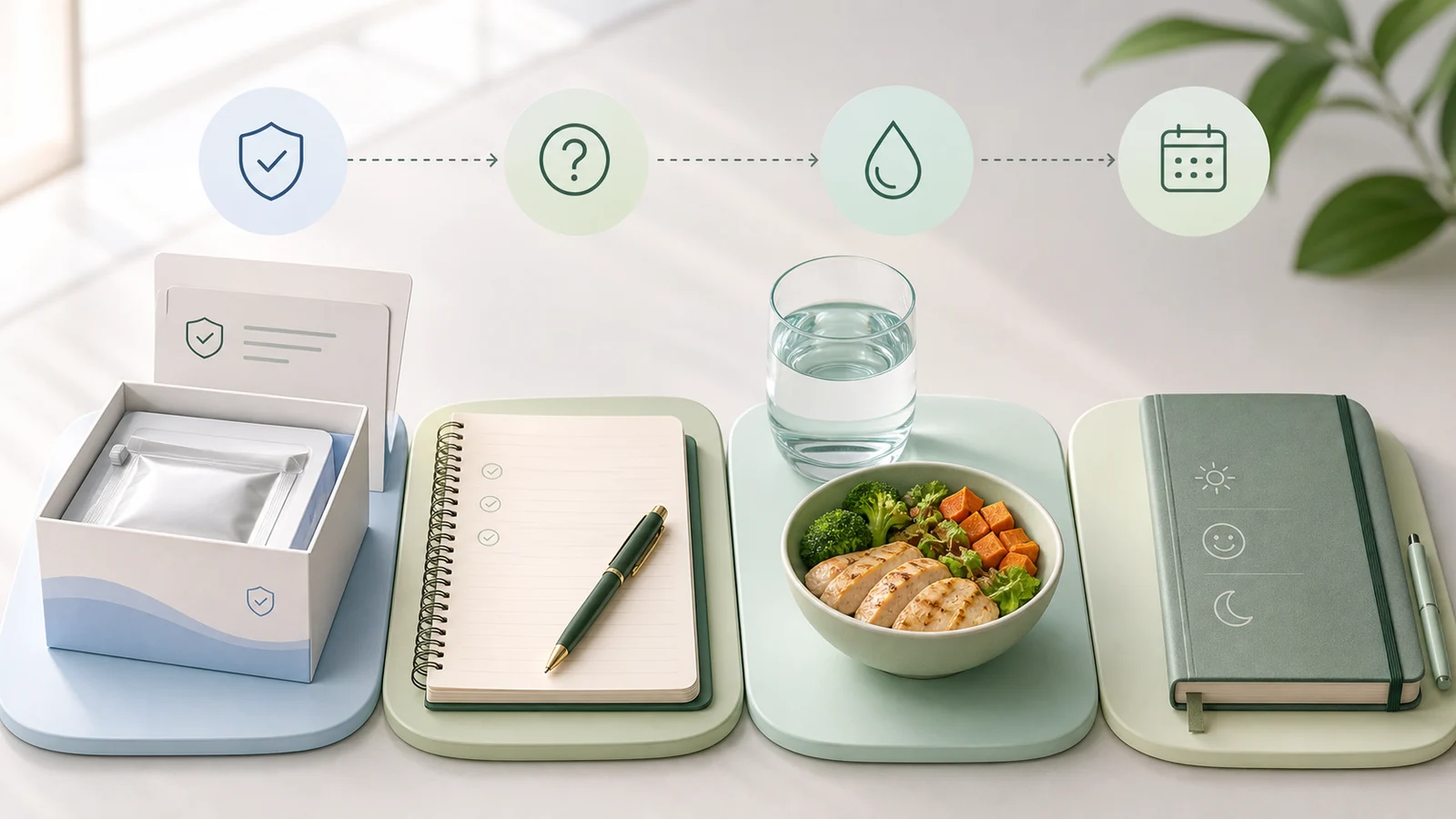
Save the instructions and contact details somewhere easy to find. The FDA's questions to ask a doctor or pharmacist include practical topics such as storage, interactions, side effects, monitoring, and what to do if a dose is forgotten.
What the first weeks may feel like
Variation is the rule, not a fixed schedule
The honest answer is that experiences vary. Some people notice changes early, some notice little at first, and some have symptoms that need professional advice. An online calendar cannot tell you which pattern will apply to you.
Use official information for possibilities, not predictions
Gastrointestinal effects such as nausea, vomiting, diarrhea, and constipation are discussed in official information for several GLP-1-based medicines and in a multidisciplinary clinical consensus on gastrointestinal adverse events. That does not mean everyone will experience them, that they will follow the same timing, or that a new symptom is necessarily caused by the medicine.
Product-specific patient information remains the right source for possible side effects and warnings. For example, current FDA labeling for Wegovy and Zepbound is not interchangeable. Use the label for what you were actually prescribed.
The useful goal in the first weeks is not to grade the experience against someone else's story. It is to notice what changed, keep enough detail to describe it accurately, and know where to take a question.
Keep food, fluids, and routines simple
Starting a medicine can create pressure to redesign every meal and habit at once. That often produces more tracking than insight. Follow the nutrition and activity guidance from your own clinician or registered dietitian, especially if you have other health conditions or specific treatment goals.
Record context you can actually use
For a personal record, broad details can be enough:
- what and roughly when you ate;
- whether the meal felt comfortable or difficult to finish;
- whether your usual fluid intake changed;
- whether nausea, constipation, vomiting, diarrhea, discomfort, or another concern affected eating or drinking;
- what you want to ask rather than what you assume caused it.
Keep nutrition targets personal
Avoid treating a universal calorie, fluid, or protein number as a prescription. Personal needs and tolerances differ. If a general estimate would help you frame a nutrition conversation, the Glowise protein calculator shows its assumptions and range; treat the result as educational rather than a personalized target.
Glowise's Food and Protein Tracker can keep meals, protein, hydration, appetite, and daily context together while leaving nutrition targets to you and the qualified professional supporting your care.
Track enough context to make your notes useful
Describe what happened before trying to explain it
A useful record answers simple questions: what happened, when did it happen, how long did it last, what else was going on, and what do you want to ask? It does not need to explain the cause.
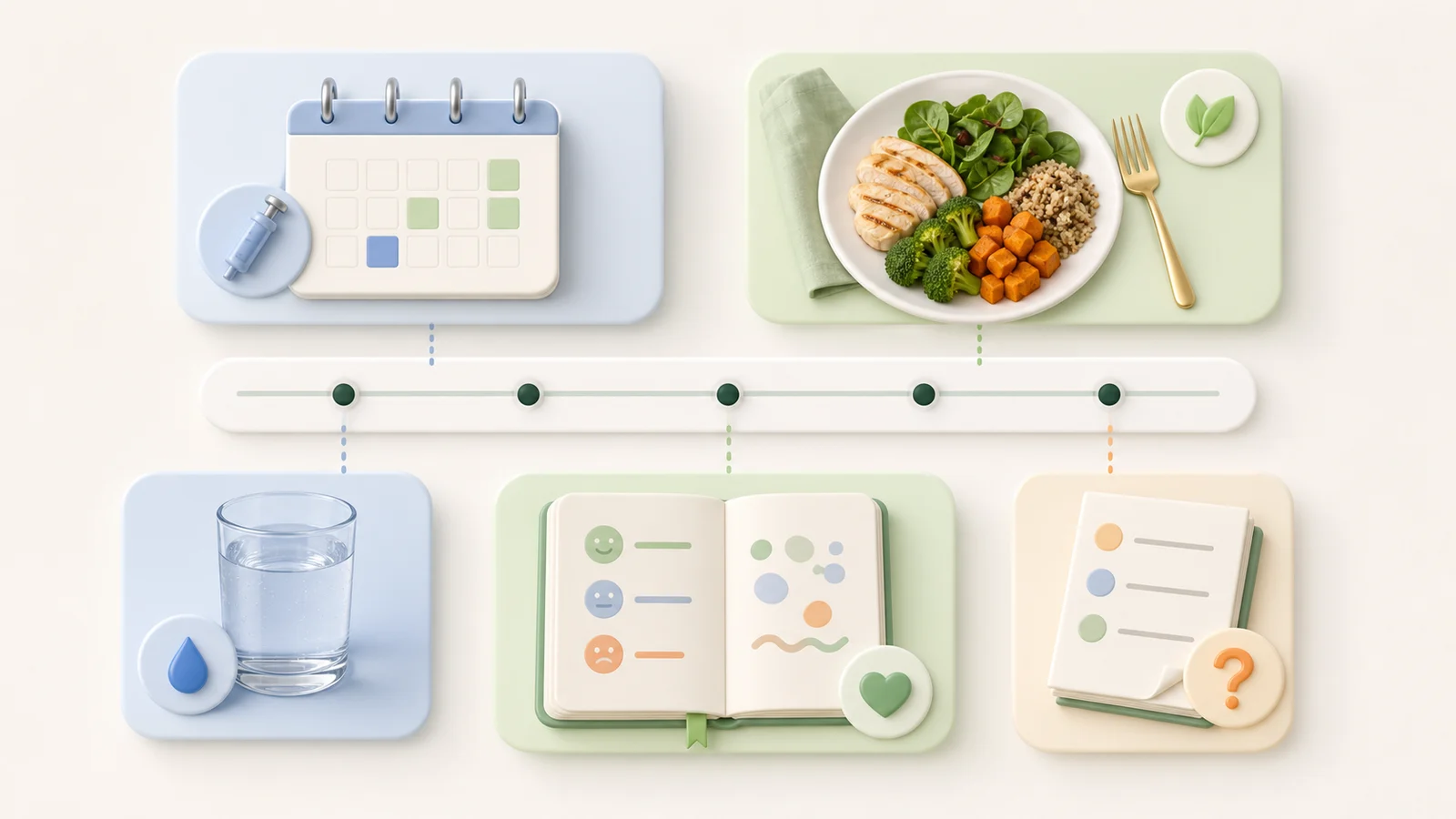
Choose a small set of details you can maintain:
- Record medication details only as confirmed by your prescription and instructions.
- Add the date and time after following those instructions.
- Note meals, fluids, sleep, activity, or other context only when it helps you remember the day.
- Describe symptoms in your own words, including timing, duration, and whether they interrupted normal activities.
- Save questions and the advice you receive from a qualified professional.
Treat timing as context, not a diagnosis
The useful distinction: a timeline can reveal that events occurred near each other, but it cannot diagnose a symptom or prove that one event caused another. The Glowise Side Effect Tracker is designed to keep timing, duration, medication, food, hydration, and care notes together without deciding what they mean medically.
Know when a question needs professional help
Take routine medication questions to the right professional
Routine questions about instructions, devices, storage, interactions, refills, or a missed dose belong with your prescriber or pharmacist. Questions about changing, delaying, repeating, or stopping a dose also belong there—not in a generic article or tracking app.
Get prompt help for concerning or worsening symptoms
Contact a qualified healthcare professional promptly about symptoms that are concerning, severe, persistent, rapidly worsening, or making it difficult to keep fluids down. Follow the urgent directions in the Medication Guide for your exact product. If you think you may be experiencing a medical emergency, contact local emergency services.
Glowise cannot assess severity, identify a cause, or tell you whether treatment should change. Its role is to help you keep the observations and questions you may want available for a care conversation.
How Glowise can support a starting routine
The Glowise GLP-1 Tracker brings medication, food, water, side-effect notes, weight, activity, and progress into one place. That can make it easier to look back at a week without reconstructing it from separate reminders, screenshots, and notes.
Start with a light setup
A light setup is enough:
- add only medication details you have confirmed;
- choose the few daily signals you genuinely want to remember;
- record observations without assigning a diagnosis or cause;
- bring relevant questions and notes to the appropriate professional.
Glowise does not select a medicine, calculate a dose, interpret symptoms, or determine treatment changes. It should make organization easier—not make you feel responsible for solving medical questions alone.
A calmer place for the details
Keep your starting GLP-1 routine in one place
Glowise helps you organize medication, meals, water, side-effect notes, weight, activity, and progress while keeping medical decisions with qualified professionals.
The practical takeaway
Your starting GLP-1 checklist
- Read the Medication Guide or Instructions for Use for the exact product and form you received.
- Confirm administration, storage, interactions, missed-dose instructions, and contact details before you need them.
- Keep a short medication and supplement list that is easy to update and share.
- Track a few useful observations instead of trying to measure everything perfectly.
- Treat timing as context, not proof that a medicine, meal, or behavior caused a symptom.
- Take medication, symptom, and treatment-change questions to a prescriber, pharmacist, or other qualified professional.
Frequently asked questions
What should I do before starting a GLP-1 medicine?
Identify the exact medicine and form you were prescribed, read its patient labeling, confirm unclear instructions with your prescriber or pharmacist, update your medication and supplement list, and save the correct contact information for future questions.
How soon will I notice a change after the first dose?
There is no single timeline that applies to every person or product. Use the information for your exact prescription and discuss questions about expected effects with the professional managing your care.
Does everyone have side effects when starting GLP-1 treatment?
No. Official labeling lists possible adverse reactions, not a guaranteed experience. The type, timing, and intensity of symptoms can vary, and a new symptom should not automatically be attributed to medication.
What should I eat when starting a GLP-1 medicine?
There is no universal meal plan for everyone starting GLP-1 treatment. Follow the guidance from your clinician or registered dietitian, and keep simple notes about meals, fluids, appetite, comfort, and questions when that context is useful.
What is worth tracking during the first weeks?
A practical record can include confirmed medication timing, meal and hydration context, symptoms in your own words, duration, effects on normal activities, and questions for follow-up. Track only what you can use consistently.
Can Glowise tell me whether a symptom is serious?
No. Glowise organizes the information you enter; it does not diagnose symptoms, assess urgency, identify causes, or recommend medication or dose changes. Use your product instructions and qualified professional care for those decisions.
Sources
Authoritative sources used for this draft:
- FDA — Learn About Your Medicines
- FDA — Create and Keep a Medication List for Your Health
- FDA — What to Ask Your Doctor or Pharmacist
- NIDDK — Prescription Medications to Treat Overweight and Obesity
- PubMed — Clinical Recommendations to Manage Gastrointestinal Adverse Events with GLP-1 Receptor Agonists
- FDA — Current Wegovy Prescribing Information and Medication Guide
- FDA — Current Zepbound Prescribing Information and Medication Guide

About the author
Maya Lee
Glowise Senior GLP-1 Content Editor
Maya Lee is a Glowise Health Content Editor. Her guides turn product records, authoritative sources, and everyday organization questions into clear, practical GLP-1 information.
She helps readers ask better questions and keep the details relevant to a care conversation together.
See more Glowise on Google
Add Glowise as a preferred source to find our GLP-1 guides more easily in Google Search.