
Your first month on GLP-1 is not a test with one correct timeline. The medicine and form you were prescribed, the instructions that came with it, your health history, and your care plan all matter. An online week-by-week story cannot predict exactly what you will notice.
A better goal is to build a clear record of the month: what you were instructed to do, what you observed, what felt sustainable, and what you want to ask at your next care conversation. That record can be useful even when the month feels uneventful.
Why first-month experiences vary
The phrase “first month on GLP-1” can make the experience sound more uniform than it is. GLP-1-based medicines include different products, approved uses, forms, instructions, warnings, and schedules. Individual experiences also vary.
Use the information for your exact prescription
Start with the label, Medication Guide, or Instructions for Use for the exact product and form you received. The FDA's guide to learning about your medicines explains where to find approved information and which questions to take to a pharmacist or prescriber.
Keep those materials accessible throughout the month. If an instruction is unclear—or if you are unsure about storage, administration, interactions, a missed dose, or a possible side effect—use the contact route provided by your care team rather than substituting a general online timeline.
Separate observation from interpretation
Useful notes describe what happened. Medical interpretation explains why it happened and what should happen next. Those are not the same task.
For example, “I felt nauseated after lunch and it lasted two hours” is an observation. “The medicine caused the nausea, so I should change my dose” is a medical conclusion. A personal tracker can help with the first statement; the second belongs with a qualified professional who has the relevant clinical context.
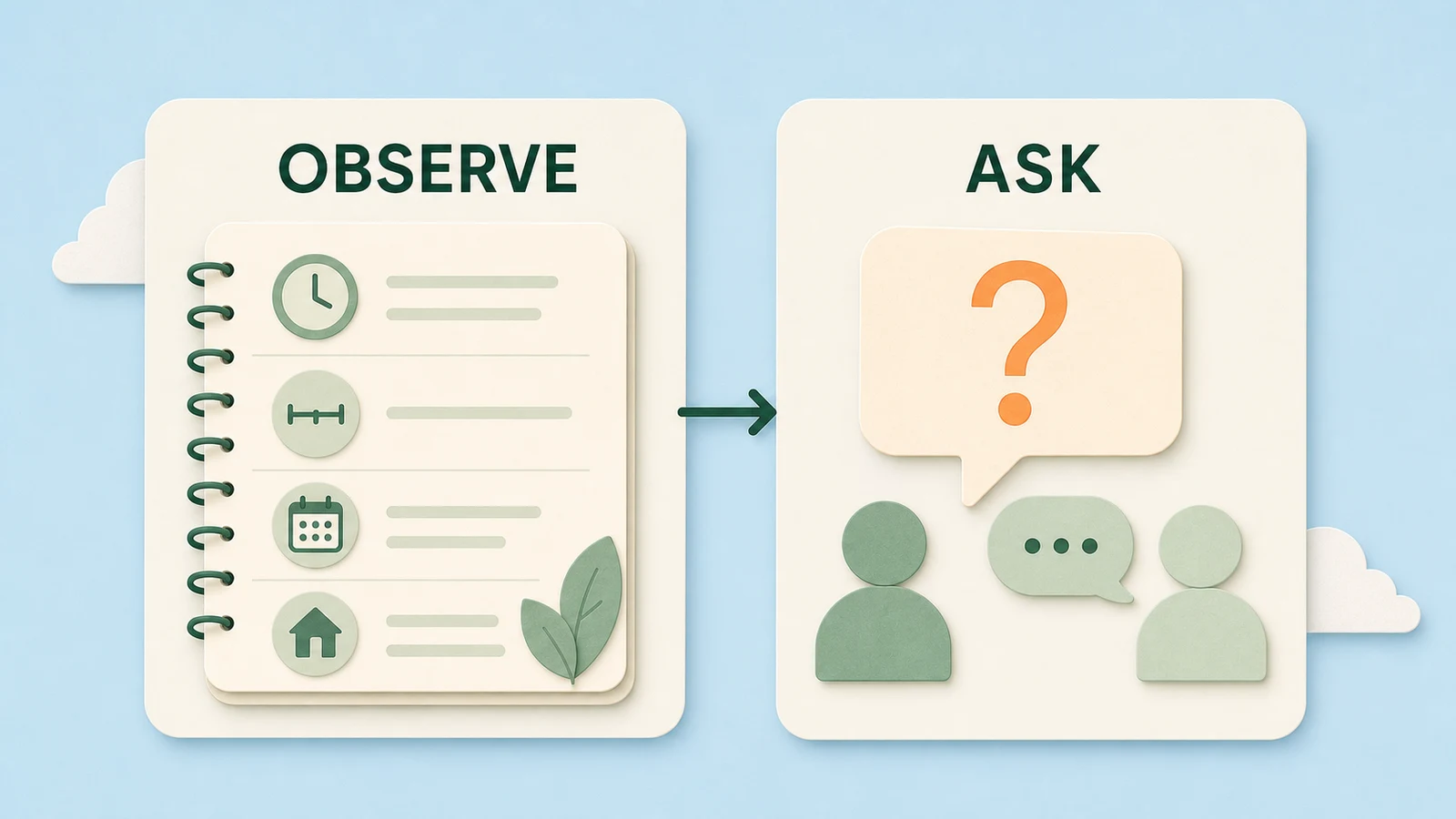
Build a useful month-one baseline
A baseline is a small set of details you can compare over time. It does not need to capture every number or turn normal variation into a problem.
Choose a small set of repeatable details
Before deciding what to track, ask what information you may realistically use later. A short, consistent record is usually easier to review than a long form you abandon after three days.
| Area | Useful record | What the record cannot establish |
|---|---|---|
| Prescription context | Exact product, form, confirmed instructions, and recorded use | Whether the medicine or dose is right for you |
| Meals and fluids | Approximate timing, what felt manageable, and noticeable changes | A universal nutrition or hydration target |
| Symptoms | Your words, timing, duration, intensity, and effect on daily tasks | The cause, diagnosis, or urgency of a symptom |
| Daily function | Sleep, energy, activity, and routine disruptions that matter to you | Whether one change was caused by treatment |
| Questions | Unclear instructions and topics to discuss | The medical answer or a treatment recommendation |
Record daily function, not only the scale
Weight may be one part of a care plan, but it is not the only context worth remembering. Meals, fluids, sleep, energy, movement, bowel habits, comfort, and the ability to complete normal activities may all help you describe the month.
You do not need to monitor every category. Choose the few details connected to your goals and care instructions, and use the same simple language each time. If daily weighing was not recommended for you, a generic article should not turn it into a requirement.
Use four weekly review windows instead of predictions
The four windows below are an editorial way to organize your notes. They are not a dosing schedule, a promise about when effects appear, or a substitute for product-specific instructions.
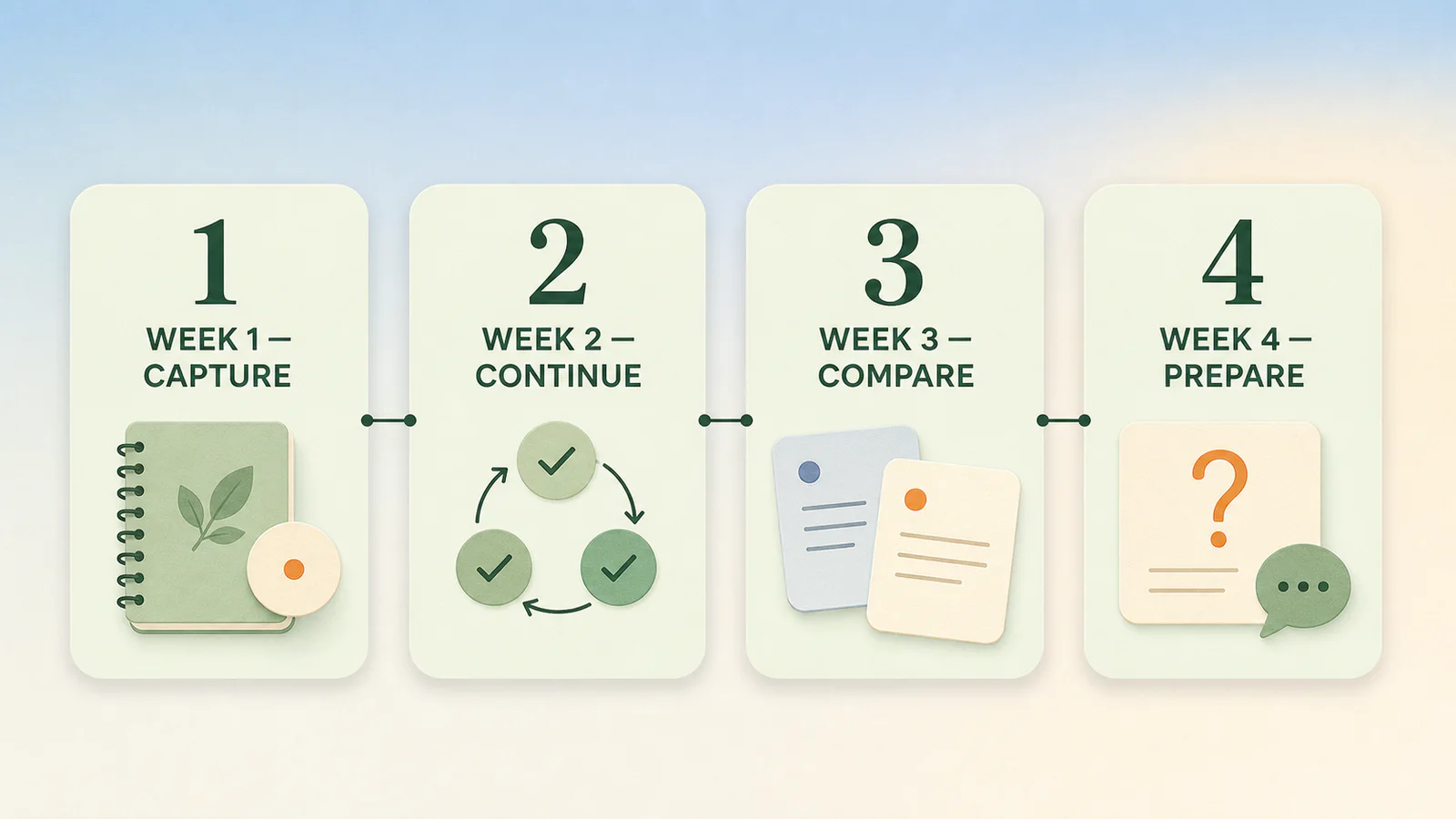
Week 1 — Capture the starting context
Record the exact medication details you have confirmed, when you began following the instructions, and what your ordinary routines looked like at the start. Note meals, fluids, sleep, activity, symptoms, and daily function only at a level you can sustain.
The aim is not to identify a trend after a few entries. It is to preserve enough context that you do not have to reconstruct the first days from memory.
Week 2 — Continue only what is sustainable
Review the first week and remove fields that are creating work without helping you remember anything useful. Keep the observations you can describe consistently.
If you notice a new concern, add the timing, duration, intensity in your own words, and whether it interfered with eating, drinking, sleep, work, or another normal activity. Do not wait for a weekly review if the concern needs professional attention.
Week 3 — Compare without assigning a cause
Look for repeated situations, not explanations. You might notice that an observation occurred on several days, that a routine became harder to maintain, or that a question keeps returning.
That comparison can help you prepare a clearer description. It still cannot prove that the medicine, a meal, a behavior, or another factor caused the pattern.
Week 4 — Prepare useful questions
Turn the month into a short care-conversation summary: confirmed medication context, a few important observations, changes in daily function, and the questions you want answered.
Do not use the end of the month as an automatic checkpoint for changing, delaying, repeating, or stopping a dose. Follow the exact instructions for your prescription and contact the professional managing your care when a treatment decision is needed.
Keep food and hydration notes useful
Food notes are most useful when they describe your actual experience, not when they grade every meal. Record what you ate in broad terms, when you ate, whether the portion felt manageable, and whether eating or drinking was affected by discomfort or another concern.
There is no universal calorie, protein, meal-size, or fluid target for everyone in their first month. Personal needs can differ based on many factors, including medical history and the guidance of a clinician or registered dietitian.
Glowise's Food and Protein Tracker can keep meals, protein, hydration, appetite, and daily context in one place. It does not prescribe a nutrition target or decide what your record means medically.
Record side-effect context without diagnosing it
Gastrointestinal events such as nausea, vomiting, diarrhea, and constipation are discussed in a multidisciplinary clinical consensus on GLP-1 receptor agonists and in product-specific prescribing information. They are possibilities, not a guaranteed first-month sequence.
When you record a concern, use neutral details:
- what you noticed in your own words;
- when it began and how long it lasted;
- how intense it felt using a scale you can repeat;
- whether it changed eating, drinking, sleep, work, or another normal activity;
- what else was happening that may be useful context;
- the question you want to take to a professional.
The Glowise Side Effect Tracker is designed to organize these observations without diagnosing a symptom, identifying its cause, or recommending a medication change.
Contact a qualified healthcare professional promptly about symptoms that are concerning, severe, persistent, rapidly worsening, or making it difficult to keep fluids down. Follow urgent directions in the Medication Guide for your exact product. If you think you may be experiencing a medical emergency, contact local emergency services.
Prepare an end-of-month care conversation
An end-of-month review should make a conversation easier, not replace it. The FDA recommends keeping an updated medication list, including prescription medicines, over-the-counter products, vitamins, and supplements.
Bring or prepare:
- The exact medication name, form, and instructions you were given.
- A current list of other medicines, vitamins, and supplements.
- A short summary of observations that mattered most.
- Any changes in eating, drinking, sleep, activity, or normal daily function.
- Questions about instructions, interactions, monitoring, side effects, or follow-up.
- Notes about advice you already received and what happened afterward.
The FDA's questions to ask a doctor or pharmacist can help you prepare topics such as how to use a medicine, possible interactions, what monitoring may be needed, and what to do when instructions are unclear.
How Glowise can keep month-one context together
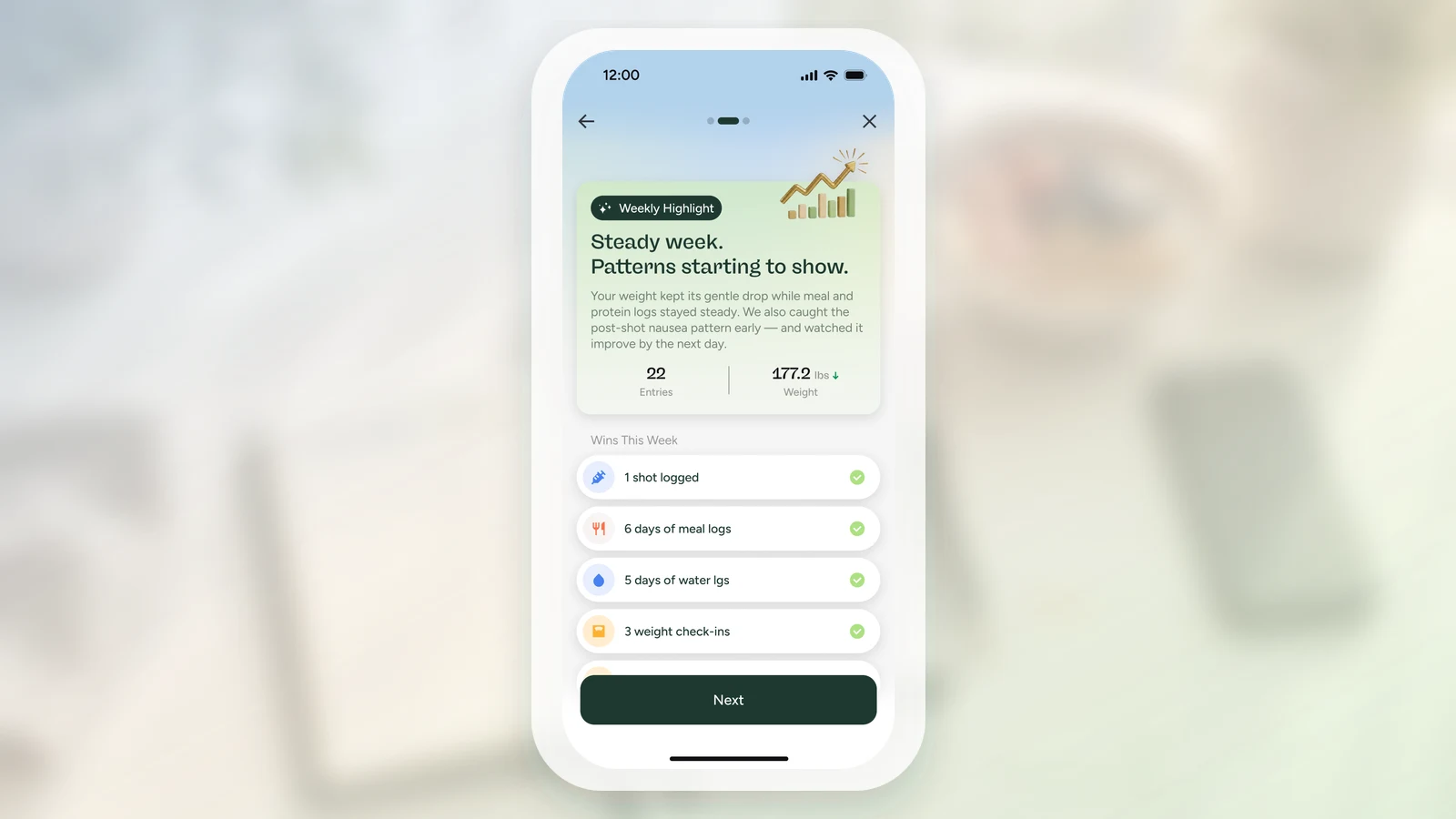
The Glowise GLP-1 Tracker brings medication, food, water, side-effect notes, weight, activity, and progress into one organized view. Instead of rebuilding the month from separate reminders, screenshots, and notes, you can keep the context you chose in a consistent place.
Glowise does not diagnose symptoms, assess urgency, select medication, calculate a dose, or determine treatment changes. It is an organization tool for your own record and care conversations.
The sample screen below shows how a weekly overview can bring logged categories together. Its entries are illustrative product content, not targets or expected outcomes, and the overview does not determine what caused a pattern.
One month, one calmer record
Keep your first-month GLP-1 context together
Organize medication, meals, water, side-effect notes, weight, activity, progress, and questions without turning your personal record into medical advice.
The practical takeaway
Your first-month review checklist
- Use the approved information for the exact product and form you received.
- Track a small set of repeatable observations rather than trying to measure everything.
- Treat weekly reviews as organization windows, not predictions about effects or dosing.
- Record meals, fluids, symptoms, and daily function in neutral language.
- Keep observation separate from diagnosis, causation, and treatment decisions.
- Bring a current medication list, important observations, and specific questions to follow-up.
Frequently asked questions
What should I expect during my first month on GLP-1?
There is no universal first-month timeline. Products, instructions, approved uses, and individual experiences differ. Use the information for your exact prescription and ask the professional managing your care what expectations are relevant to you.
What should I track during the first month?
A practical record can include confirmed medication context, broad meal and fluid notes, symptoms in your own words, duration, effects on normal activities, and questions for follow-up. Choose only the fields you can use consistently.
What if I do not notice an appetite or weight change in the first month?
A generic timeline cannot determine what a lack of noticeable change means for an individual. Do not compare your experience with a promised online schedule. Continue following your prescribed instructions and take questions about expected response, monitoring, or next steps to your prescriber.
Should my dose change after the first month?
This article cannot recommend a dose change or a timing schedule. Follow the instructions for your exact prescription. Questions about increasing, delaying, repeating, reducing, or stopping a dose belong with the qualified professional managing your treatment.
Can a tracking pattern show what caused a symptom?
No. A pattern can show that events occurred near each other or repeated over time, but it cannot establish a diagnosis or prove causation. Use the pattern to describe what happened and ask a qualified professional what it may mean.
When should I seek professional help?
Contact a qualified healthcare professional promptly about symptoms that are concerning, severe, persistent, rapidly worsening, or making it difficult to keep fluids down. Follow the urgent directions for your exact product. If you think you may be experiencing a medical emergency, contact local emergency services.
Sources
Authoritative sources used for this draft:

About the author
Maya Lee
Glowise Senior GLP-1 Content Editor
Maya Lee is a Glowise Health Content Editor. Her guides turn product records, authoritative sources, and everyday organization questions into clear, practical GLP-1 information.
She helps readers ask better questions and keep the details relevant to a care conversation together.
See more Glowise on Google
Add Glowise as a preferred source to find our GLP-1 guides more easily in Google Search.