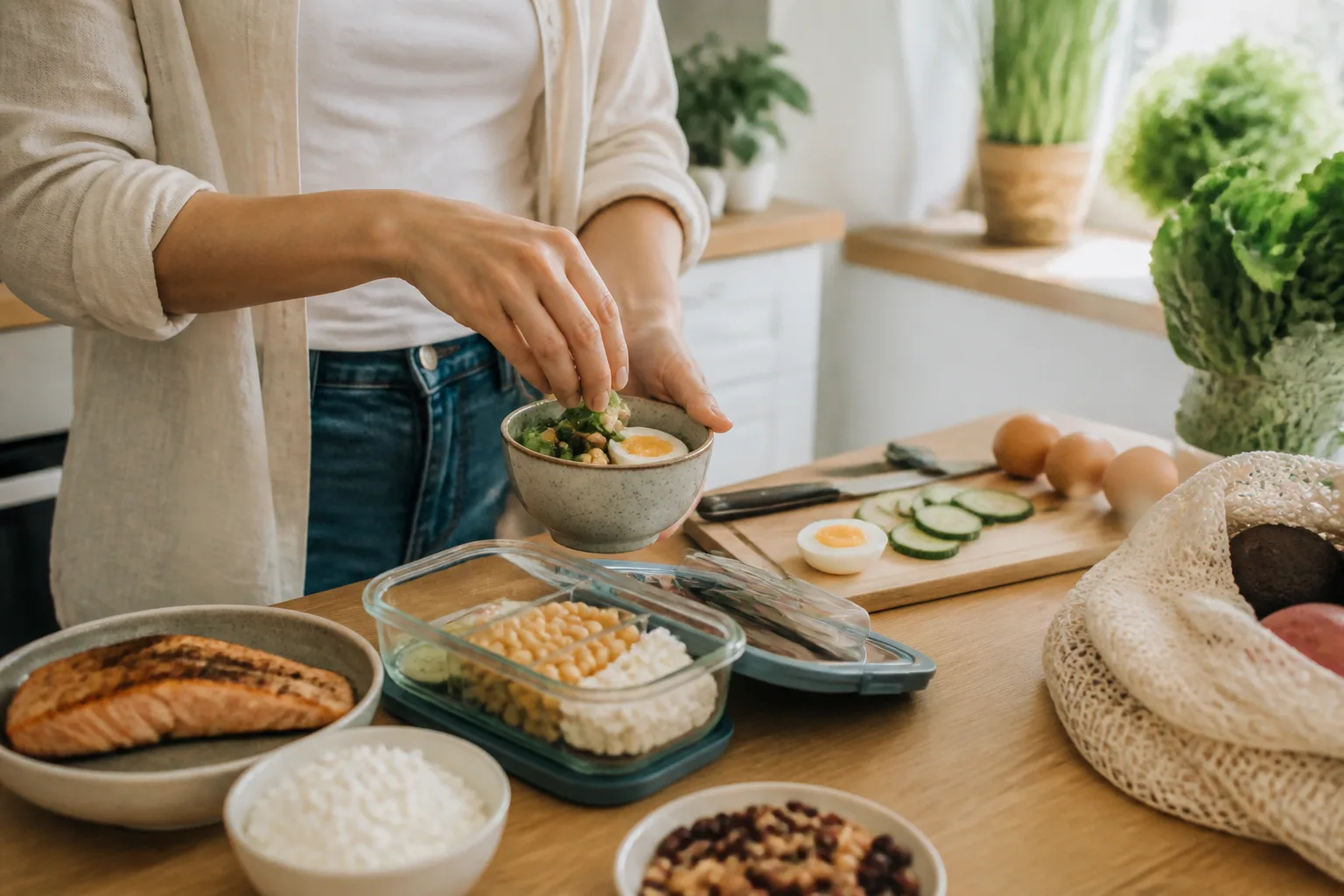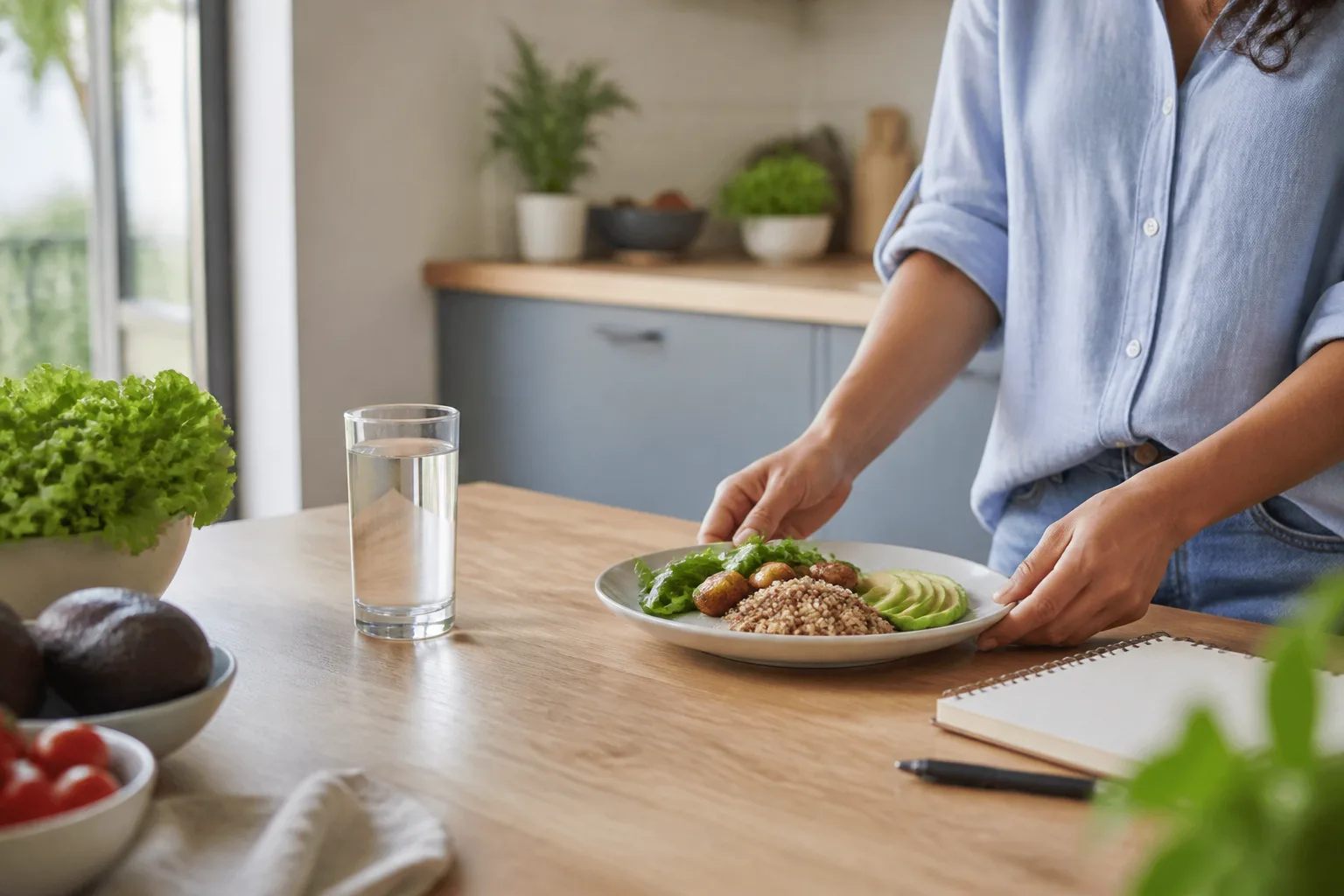
A GLP-1 nutrition guide is most useful when it helps you notice food, protein context, hydration, meal comfort, and timing without turning any one day into a score.
Picture an ordinary Tuesday: a familiar lunch looks larger than your appetite, and you stop halfway through. That small change can be useful information. Record what happened, then look for a pattern over several days instead of treating one meal as a verdict.
What a GLP-1 Nutrition Guide Can Help With
GLP-1 medications are prescription medicines, and for some people they can affect appetite, fullness, or how comfortable a meal feels. Not everyone notices these changes, and the changes that do appear can vary from day to day and week to week. A broad nutrition guide cannot predict your experience. What it can do is give you a short list of things worth paying attention to, so that a surprising lunch becomes a data point instead of a worry.
It also helps to know where this kind of guide sits in the bigger picture. Prescription weight-management medicines are generally used alongside a reduced-calorie eating pattern and physical activity, not as replacements for those habits. Food still matters. A guide like this one simply helps you stay oriented toward food while your appetite signals may be shifting.
Keep a broad guide separate from a personal plan
The priorities are food, protein context, hydration, meal comfort, and timing. A personal plan is different: it depends on health history, medications, preferences, and goals. The multi-society nutrition advisory pairs those priorities with individual assessment, which is why this page keeps general information separate from individual targets.
Start With a Small Nutrition Record
The most practical first step is also the least ambitious one: write down what you actually ate, in plain words, near the time you ate it. Not what you planned to eat. Not what you think you should have eaten. The meal that happened.
A modest note such as "half a sandwich, soup, felt full fast" is enough. It avoids both the perfect diary that lasts a few days and the version of the week that memory reconstructs later.
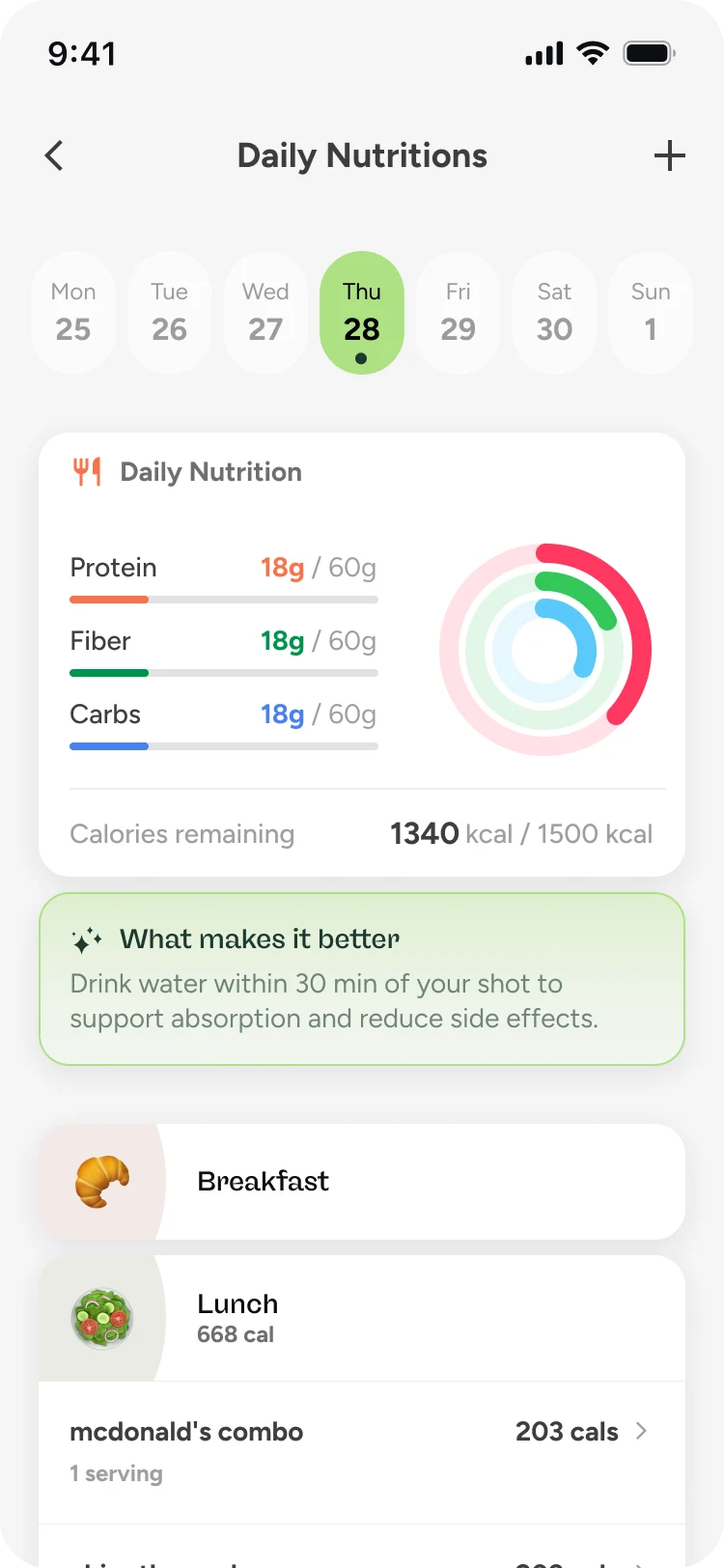
The Food and Protein Tracker keeps meals and protein context in one place with water, appetite, fullness, and personal notes. It also shows weekly context, so you can review a pattern rather than isolated days. Use it to organize what happened; personal targets and medical interpretation belong in qualified individual support where available.
Let a small or partial meal count
Here is the decision this whole guide revolves around: you made the familiar lunch, and half of it was enough. The tempting move is to treat the half you did not eat as a shortfall and the day as a failure. A better move is to record the half you did eat as a complete entry, because it is one.
A partial meal still tells you what you ate, roughly how much, when, and how it felt. Four partial meals recorded honestly are far more useful than one ideal day recorded carefully and three days of silence. If your appetite is often low and you want a more specific method for those days, this low-appetite food method for GLP-1 days goes deeper on that single situation. The record-keeping habit stays the same either way.
A calmer food record
Keep the meal you actually ate in view
Bring food, protein context, water, and the notes that matter into one calm daily record.
Five Things to Keep in View
You do not need to watch everything. Five things cover most of what matters in everyday eating, and they fit on one short mental list.
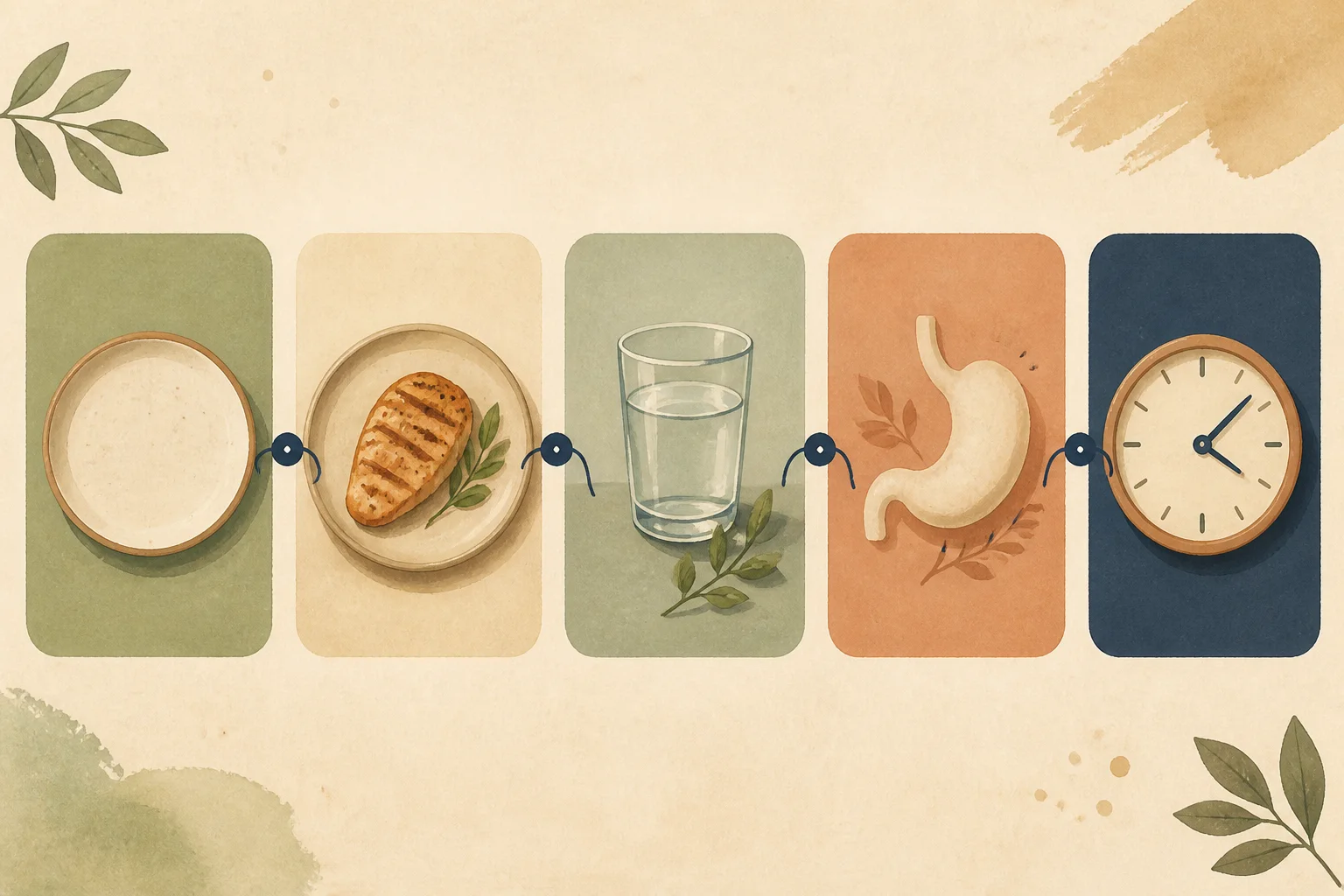
Food variety. When portions shrink, variety is usually the first casualty, because the safest three foods crowd out everything else. Keeping some range on the plate — different proteins, different vegetables, different textures across the week — supports dietary adequacy without requiring any single meal to be impressive.
Protein context. Protein comes up constantly in conversations about eating during GLP-1 treatment, and the advisory literature treats it as a genuine priority. What to avoid is the leap from "protein matters" to "here is your number."
Hydration. Fluids are easy to forget when food is less interesting, and thirst signals can be as quiet as appetite signals. Water deserves its own attention rather than riding along with meals.
Meal comfort. How a meal felt — easy, heavy, too fast, fine — is real information. Comfort is not a soft extra; it is often the earliest signal that a routine needs adjusting.
Timing. When you ate can matter as much as what you ate. A day where all your eating happens in one crowded evening window reads differently from the same food spread across the day, and you can only see that if the record keeps times.
Protein context without a universal target
There is no protein number that belongs in a general guide, because the right amount depends on the person: body size, activity, health history, and more. Advisories from nutrition organizations point to protein as a priority and to individual assessment as the way to make it personal. Both halves of that sentence matter.
What a general reader can do is keep protein visible. Notice whether most days include a protein source you can name. If you want a rough starting range to discuss with a professional, a protein range estimate from the calculator can frame that conversation — as input to it, not as a verdict. And if you are used to tracking intake more formally, it helps to understand how calorie tracking fits into the GLP-1 context before deciding how much counting is useful to you.
Hydration without a fixed rule
The same logic applies to water. There is no single daily number that suits everyone, and a guide that hands you one is overstepping. What you can do is treat fluids as their own line item: note roughly what you drank, notice whether low-fluid days cluster with low-appetite days, and pay attention when both trend together. If a rough reference point would help you think about your own habits, a water intake range estimate gives you something concrete to react to. The record makes the pattern visible; the professional helps you interpret it.
Adjust the Method When a Meal Feels Different
Some days the routine just works. Other days a familiar food sits oddly, or a normal portion feels like too much, or eating earlier than usual goes better than your habitual time. None of these experiences needs a new diet. They call for a small adjustment to the method: a smaller portion to start, a slower pace, a different time, a simpler plate.
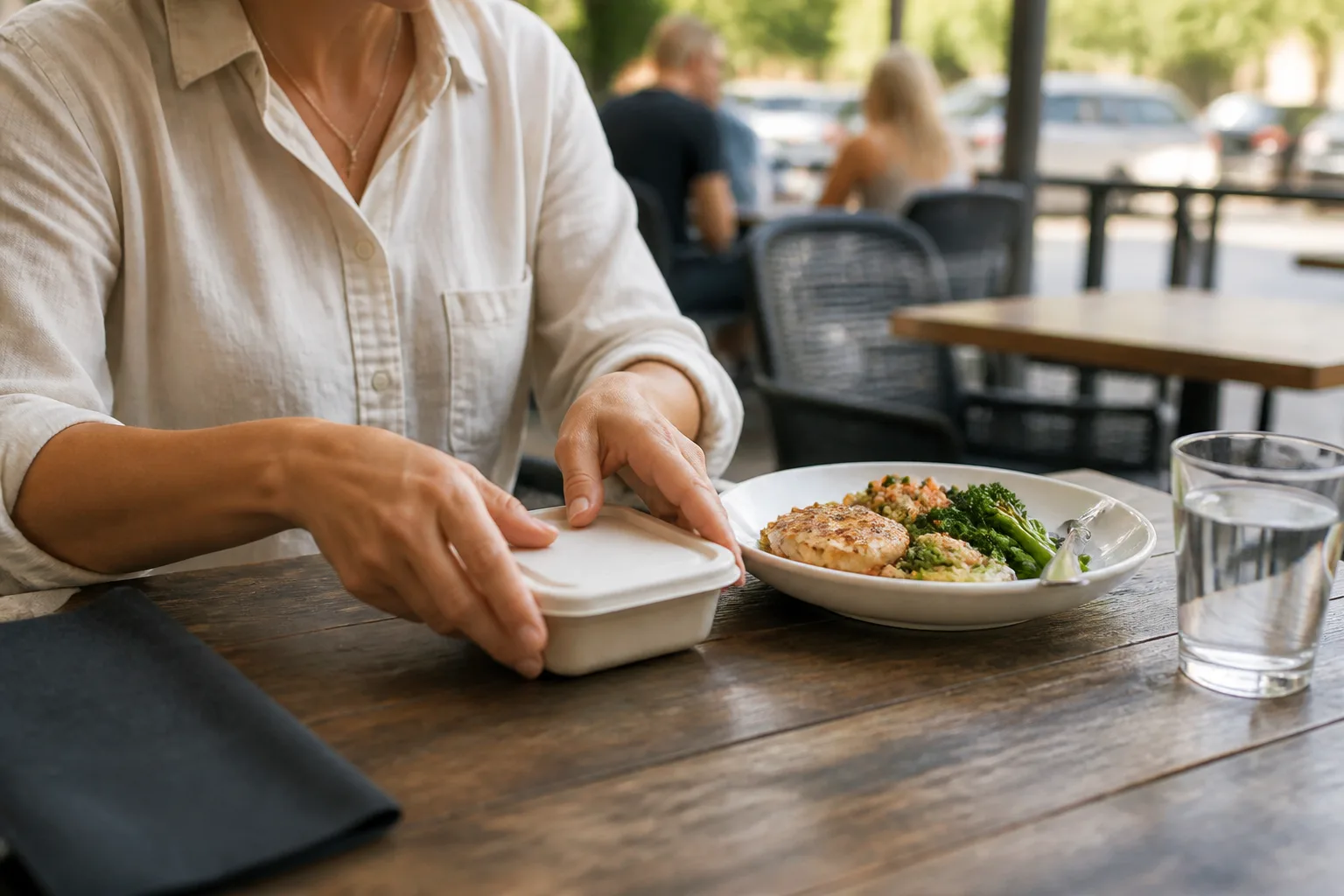
Eating out is its own version of this. A restaurant meal compresses portion, pace, and social pressure into one sitting, and a little forethought goes a long way. If that is a recurring situation for you, this restaurant meal plan for dining out on GLP-1 walks through that scenario specifically.
Use comfort and tolerance as context
When a meal feels different, the useful question is not "what is wrong" but "what changed." Was the portion larger than your current appetite? Was the meal faster than usual? Richer? Earlier? Comfort and tolerance are context clues, and recording them alongside the meal turns an unpleasant lunch into usable information. What this guide will not do is interpret those sensations as symptoms or suggest causes. If comfort problems persist, that is a question for personal support, not for a notes app — the notes simply make that conversation better.
Review the Week Without a Food Score
A single meal tells you very little. A week of small honest records tells you quite a lot — if you read it without grading it. The habit to build is a short weekly review: ten quiet minutes, the week's entries in front of you, and one question in mind.
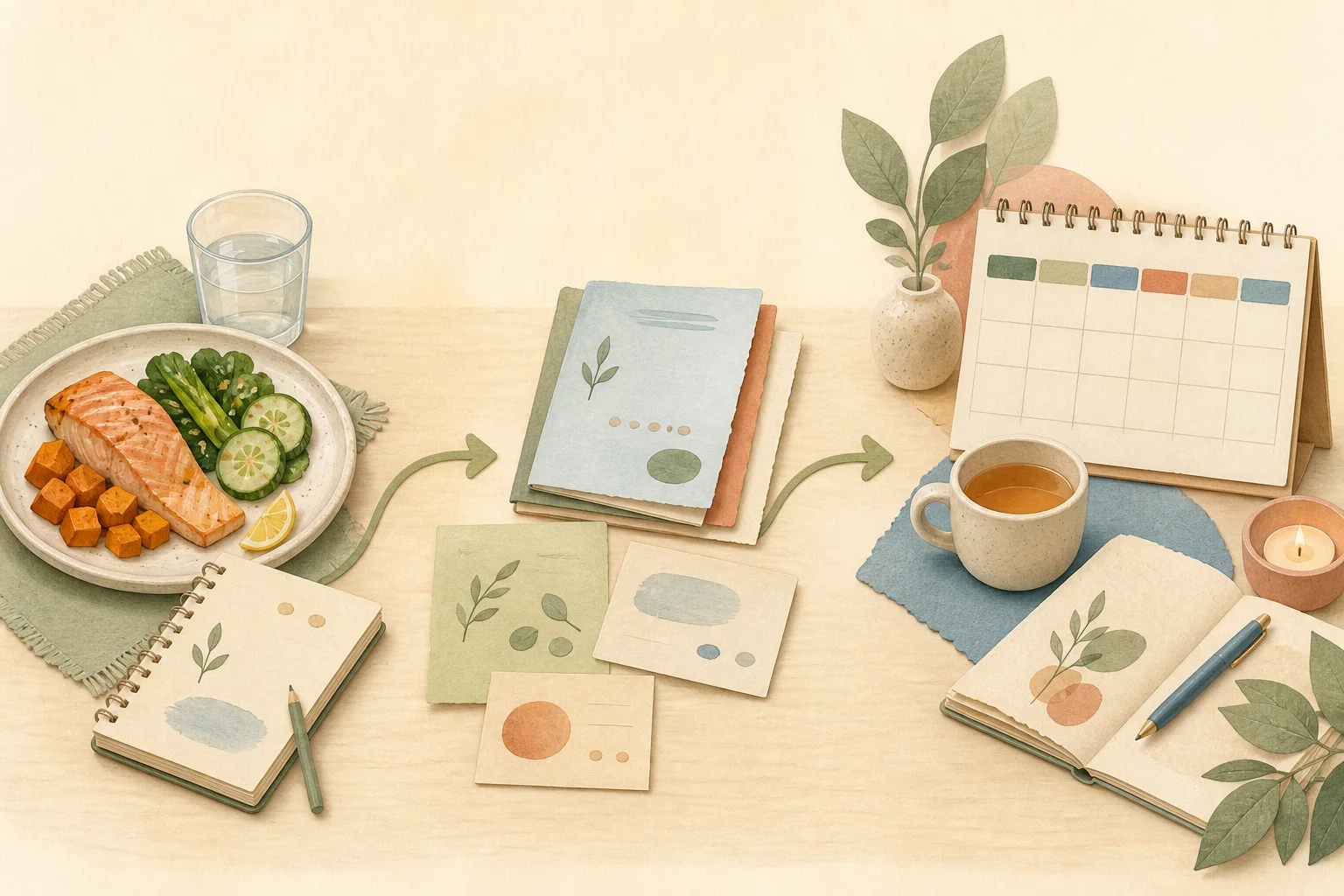
Resist the urge to count wins and losses. Scorekeeping language — good days, bad days, streaks — imports a judgment the record was never meant to carry. A week is not a test you passed or failed. It is a description of how eating went, and descriptions are allowed to be uneven.
Turn a pattern into a useful question
The goal of the review is not a verdict; it is a question you can act on. A few examples of what that looks like:
- "Protein shows up at dinner but rarely before it — is there one easy morning source I actually like?"
- "Low-fluid days and low-appetite days keep landing together — worth mentioning at my next appointment."
- "Restaurant meals went fine twice this month — what did I order, and can I repeat it?"
Notice that each question is specific, small, and answerable. That is the difference between reviewing a week and judging one.
The practical takeaway
A calm nutrition starting point
- A GLP-1 nutrition guide should orient you, not prescribe a plan for you.
- Record the meal you actually ate, including small or partial ones.
- Keep five things in view: variety, protein context, hydration, comfort, and timing.
- There is no universal protein, calorie, or water target; individual assessment is what makes priorities personal.
- Adjust the method — portion, pace, timing — when a familiar meal feels different.
- Review the week for patterns, and turn each pattern into one useful question.
- Persistent eating difficulty deserves qualified individual support, with your record as the starting point.
When a Nutrition Question Needs Personal Support
A general guide has a clear edge, and it is worth naming plainly. This article does not cover medication dose changes, diagnosis, or treatment of any symptom, and neither should your notes app. Some questions simply belong with a qualified professional: eating that stays difficult over time, weight or strength changes that concern you, nutrition needs shaped by another health condition, or any situation where you want an actual target rather than a rough range.
Going to that conversation with a few weeks of calm records — what you ate, how much, when, and how it felt — changes its quality. Instead of reporting a vague sense that "eating has been weird," you can show a pattern. That is the quiet payoff of everything above: the record was never the point. The clarity was.
Frequently Asked Questions
Is there one best GLP-1 diet?
No. Prescription weight-management medicines are used alongside a reduced-calorie eating pattern and physical activity, but no single named diet is the universal companion to GLP-1 treatment. The priorities that recur across nutrition guidance — dietary adequacy, protein, hydration — can be met through many different eating styles. Which style fits you depends on your health history and preferences, which is why personal assessment matters more than any branded plan.
Do I need to count every calorie?
No. Counting is one tool among several, and for many people a simple record of what was eaten, roughly how much, and how it felt provides most of the value with far less friction. If more formal tracking interests you, learn how calorie counting interacts with GLP-1 treatment first, then decide how much of it is actually useful to you. A partial, honest record beats a precise one you abandon.
How should I think about protein without a universal target?
Treat protein as something to keep visible rather than something to hit. Notice whether most of your days include a protein source you can name, especially when portions are small. If you want a rough range, use an estimate as the start of a conversation with a qualified professional — not as a rule. Advisory guidance consistently pairs "protein matters" with "the right amount is individual," and both parts deserve equal weight.
What should I do if eating stays difficult?
Occasional off days are common; eating that remains difficult over time is a reason to seek qualified individual support where it is available to you. Bring your record. A few weeks of notes about what you ate, when, and how it felt give a professional far more to work with than a general description. This guide deliberately does not interpret persistent difficulty, because that interpretation is exactly what personal support is for.
Sources

About the author
Maya Lee
Glowise Senior GLP-1 Content Editor
Maya Lee is a Glowise Health Content Editor. Her guides turn product records, authoritative sources, and everyday organization questions into clear, practical GLP-1 information.
She helps readers ask better questions and keep the details relevant to a care conversation together.
See more Glowise on Google
Add Glowise as a preferred source to find our GLP-1 guides more easily in Google Search.