Eating out on GLP-1 can be easier when you preview the menu, choose something adjustable, decide how much feels manageable when it arrives, and remember the part you actually finished. GLP-1 medications are prescription medicines that can affect appetite, fullness, or food comfort for some people; they are not a single prescribed diet. That is the whole method. It does not require a special restaurant, a special cuisine, or a perfect order. It asks you to make a few small decisions before the food is in front of you, and to pay attention once it is.
If you have had the experience of sitting down, opening a menu, and feeling like every option describes more food than you could possibly want, you already understand why a little structure helps. The plan below is not a rulebook. It is a sequence you can adapt to a Tuesday lunch, a birthday dinner, or a quick counter-service stop on the way home.
Can You Eat Out on GLP-1?
Yes, and many people do. A joint advisory from the American College of Lifestyle Medicine, the American Society for Nutrition, the Obesity Medicine Association, and The Obesity Society describes individualized attention to appetite, gastrointestinal comfort, and food tolerance as part of nutrition care during GLP-1 treatment. That framing matters here: it is about paying attention to your own appetite and comfort, not about following one universal restaurant script. What feels manageable is personal, it can shift from week to week, and it can differ between lunch and dinner on the same day.
So the goal of eating out on GLP-1 is not to find the single correct meal. It is to make the meal in front of you fit the appetite you actually have that day, and to leave with a clear picture of what happened. Restaurants are built around abundance. Your plan simply narrows that abundance down to something workable.
Start with flexibility instead of perfection
Treat the order as a starting point, not a test. A meal can be enjoyable even when you leave some behind or take it home.
Preview the Menu and Make One Simple Plan
Choose a restaurant for flexibility
The most useful five minutes of a restaurant meal often happen before you arrive. Most restaurants post their menus online, and a quick look changes the whole experience. Instead of scanning twenty options under time pressure with a server waiting, you walk in with one or two candidates already in mind.
When you preview, look for three qualities:
- Adjustability. Can the dish be modified without drama? Bowls, salads, grilled plates, and build-your-own formats usually can. A fully composed dish with a fixed sauce and fixed sides is harder to reshape.
- A clear protein anchor. Something on the plate that you recognize as the center of the meal, rather than a dish where everything blurs together.
- A reasonable finish line. A dish you can imagine eating part of and stopping, without the remainder going to waste. Some meals travel home well; some do not.
Your plan can be as small as one sentence: "I'm getting the grilled bowl, sauce on the side, and I'll see how far I get." That sentence does a lot of work. It removes the in-the-moment negotiation, and it gives the meal a shape before it arrives.
If you are meeting other people, previewing has a second benefit: it frees you to be present. When you already know what you will order, the menu stops being homework and the table becomes the point of the evening.
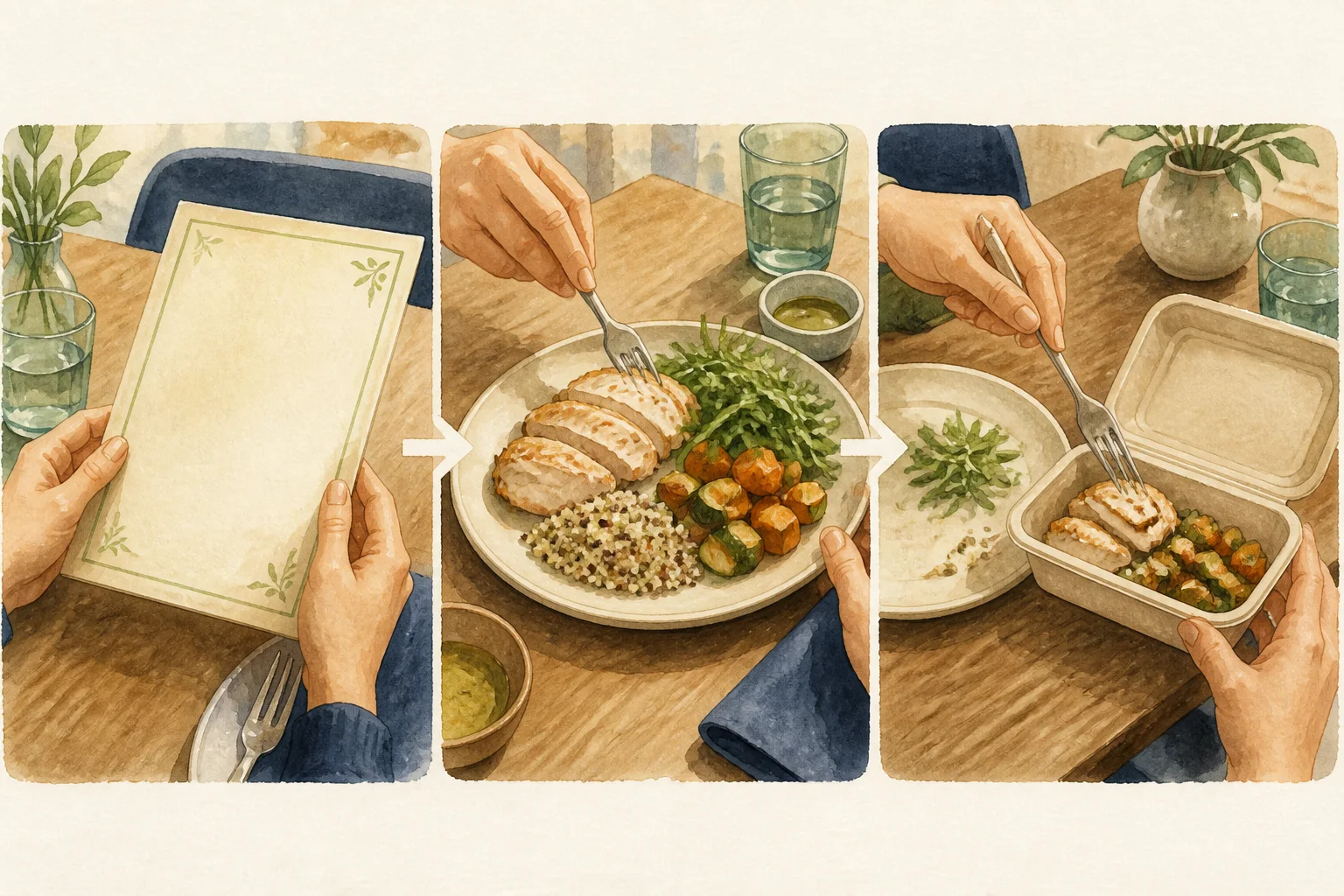
Build an Order Around What Feels Manageable
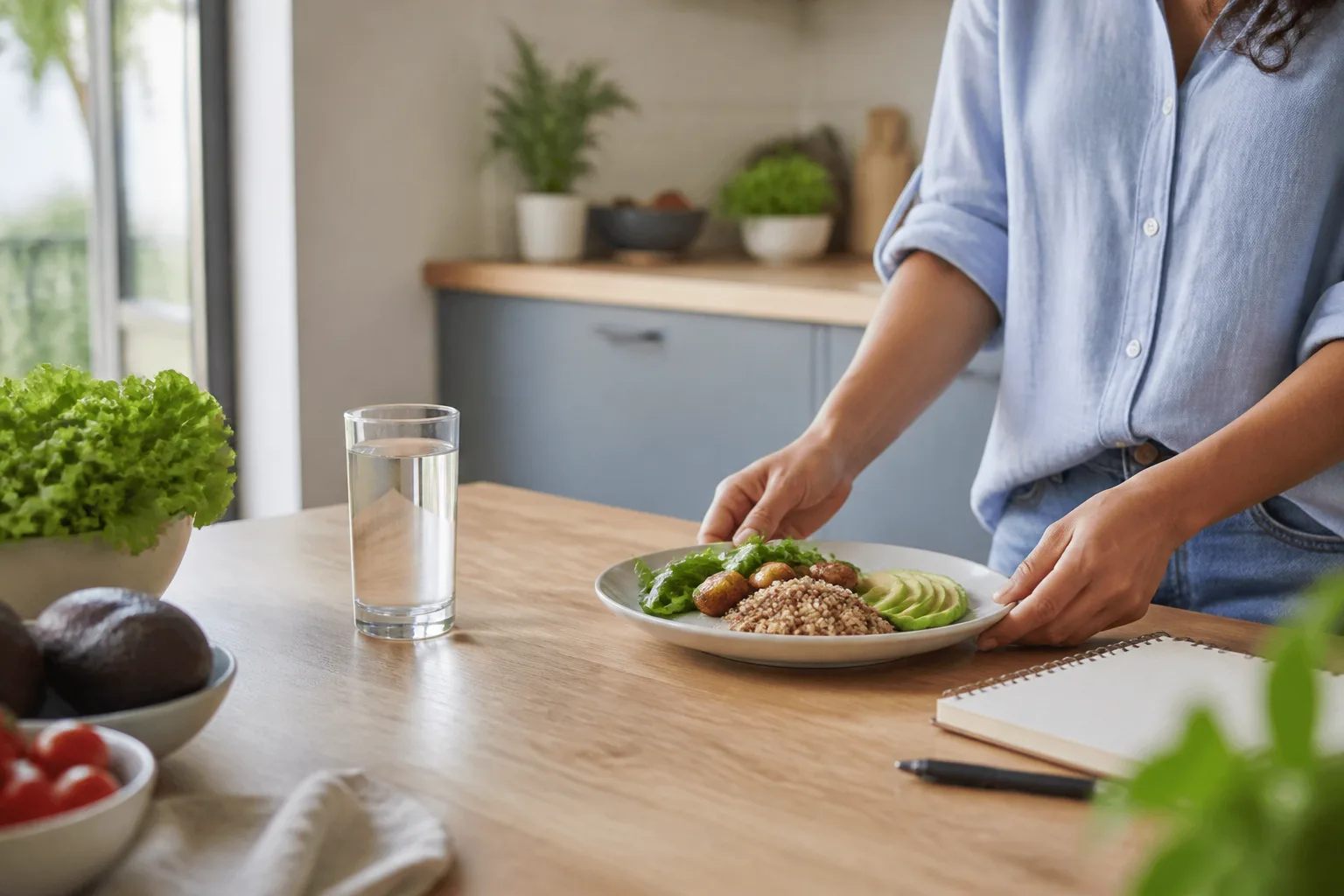
Choose components separately
Ordering on GLP-1 is less about finding a "safe" dish and more about building one that can flex. A few habits make this easier.
Start smaller than the menu suggests. Appetizers, side dishes, kids' portions where allowed, and half portions where offered are all legitimate orders. Two small items often match a reduced appetite better than one large entrée, and they let you stop when you are done rather than when the plate is empty.
Ask for components on the side. Sauces, dressings, and toppings on the side turn a fixed dish into an adjustable one. You control how much of the rich part makes it into each bite, and you can stop adding when the meal feels like enough.
Let protein lead the first bites. Many people on GLP-1 find it useful to eat the protein portion of the plate first, so that if appetite fades partway through, the most nourishing part of the meal already happened. This is a sequencing preference, not a prescription, and it pairs naturally with the broader ideas in the GLP-1 nutrition guide.
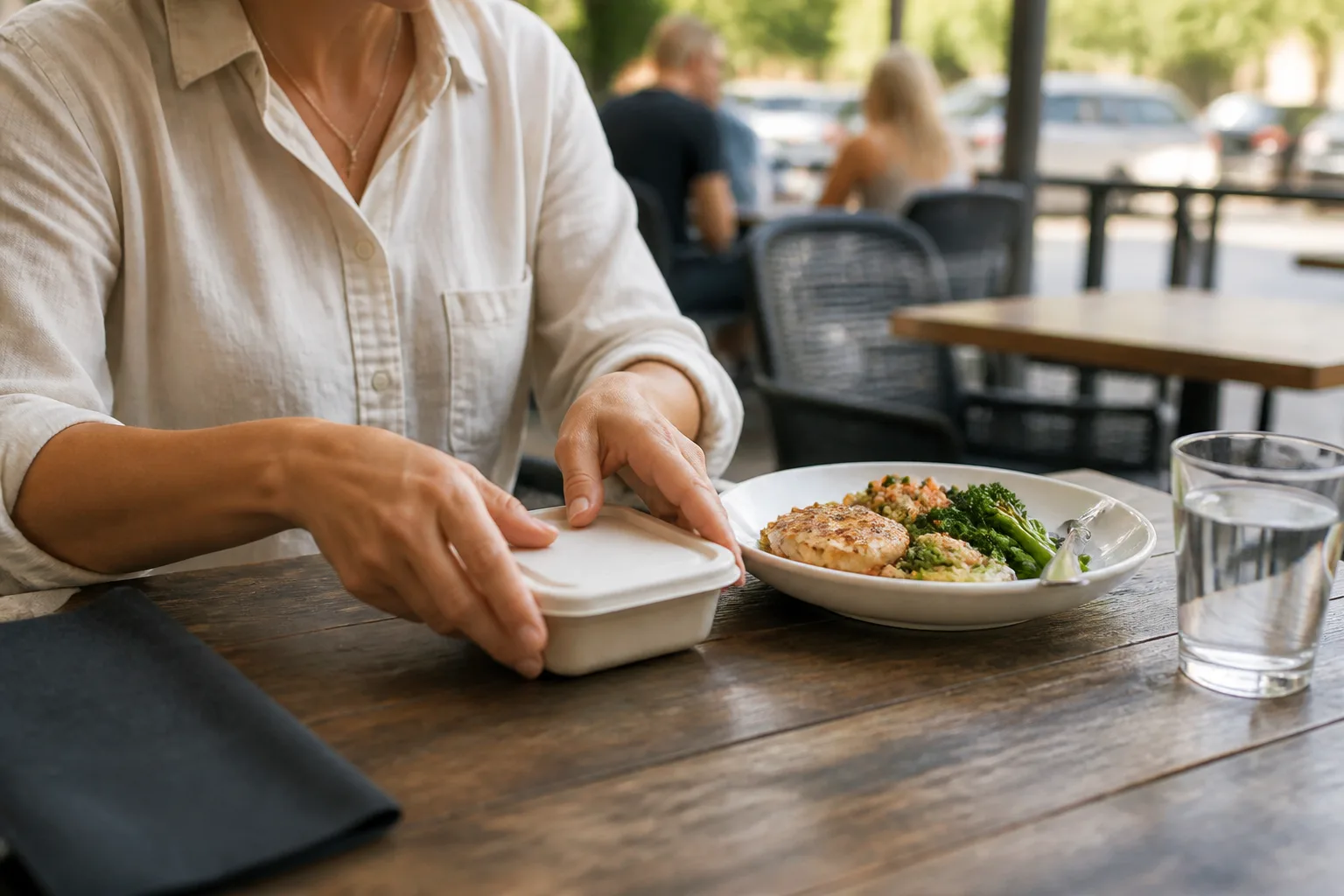
Decide the takeout question early. If the portion arrives and it is clearly more than you will eat, splitting it mentally — or literally, into a container — early in the meal is easier than doing it at the end. Some people ask for the container with the meal. Others wait and see. Either is fine; the point is that "the rest comes home" is a plan, not a failure.
Keep drinks simple. Water is identified by the CDC as a healthier drink choice in its general guidance, and it is an easy default at a restaurant table. Whatever you choose to drink, sipping steadily through the meal tends to be more comfortable than catching up at the end.
When the Meal Arrives Let Your Appetite Lead
This is the part no menu preview can do for you. Appetite on GLP-1 is not a fixed setting, and the plan you made at noon may meet a different appetite at seven. The skill is noticing, in real time, how the meal is going.
A few cues worth watching:
- The first few bites. Are you enjoying this, or eating it because it is in front of you? If the answer shifts early, that is information.
- Pace. Eating a little more slowly gives fullness signals time to arrive. On GLP-1, those signals can feel different than they used to, and rushing past them is how a pleasant dinner turns into an uncomfortable evening.
- The stop point. There is usually a moment where the meal could end well. It often arrives before the plate is empty. You do not owe the plate anything.
If you ordered more than you can finish, that is normal, not a mistake. Restaurant portions are calibrated for a generic diner, and you are a specific one. If you find that even your adjusted order was too ambitious, make a quiet note of it — that is exactly the kind of detail that makes the next meal easier. If low appetite is a recurring pattern rather than an occasional one, the ideas in what to eat on GLP-1 with low appetite may help between restaurant visits.
A Quick Guide by Restaurant Style
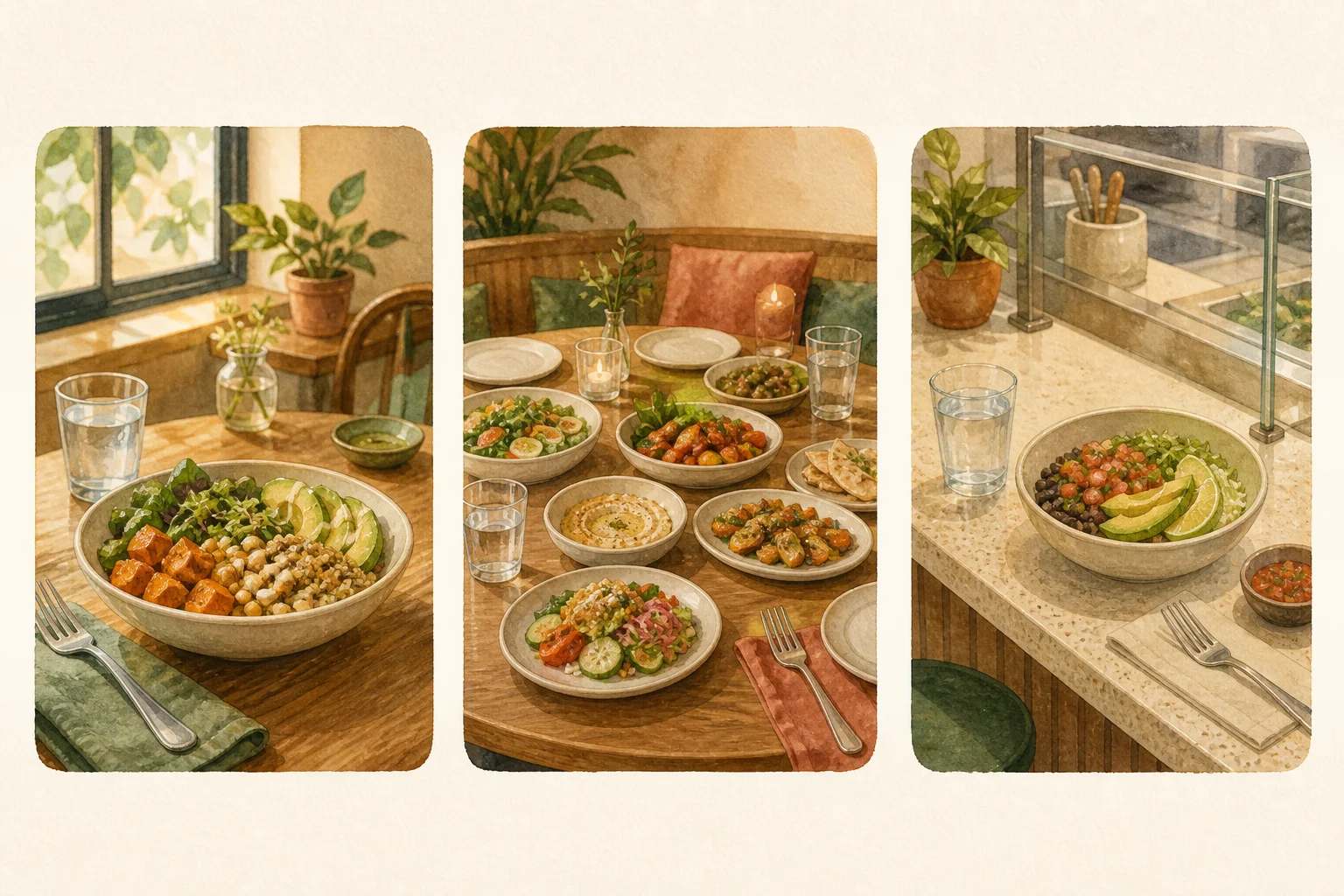
The method above works anywhere, but each restaurant style has its own easy entry point. This is not a ranking — it is a set of starting moves you can adapt.
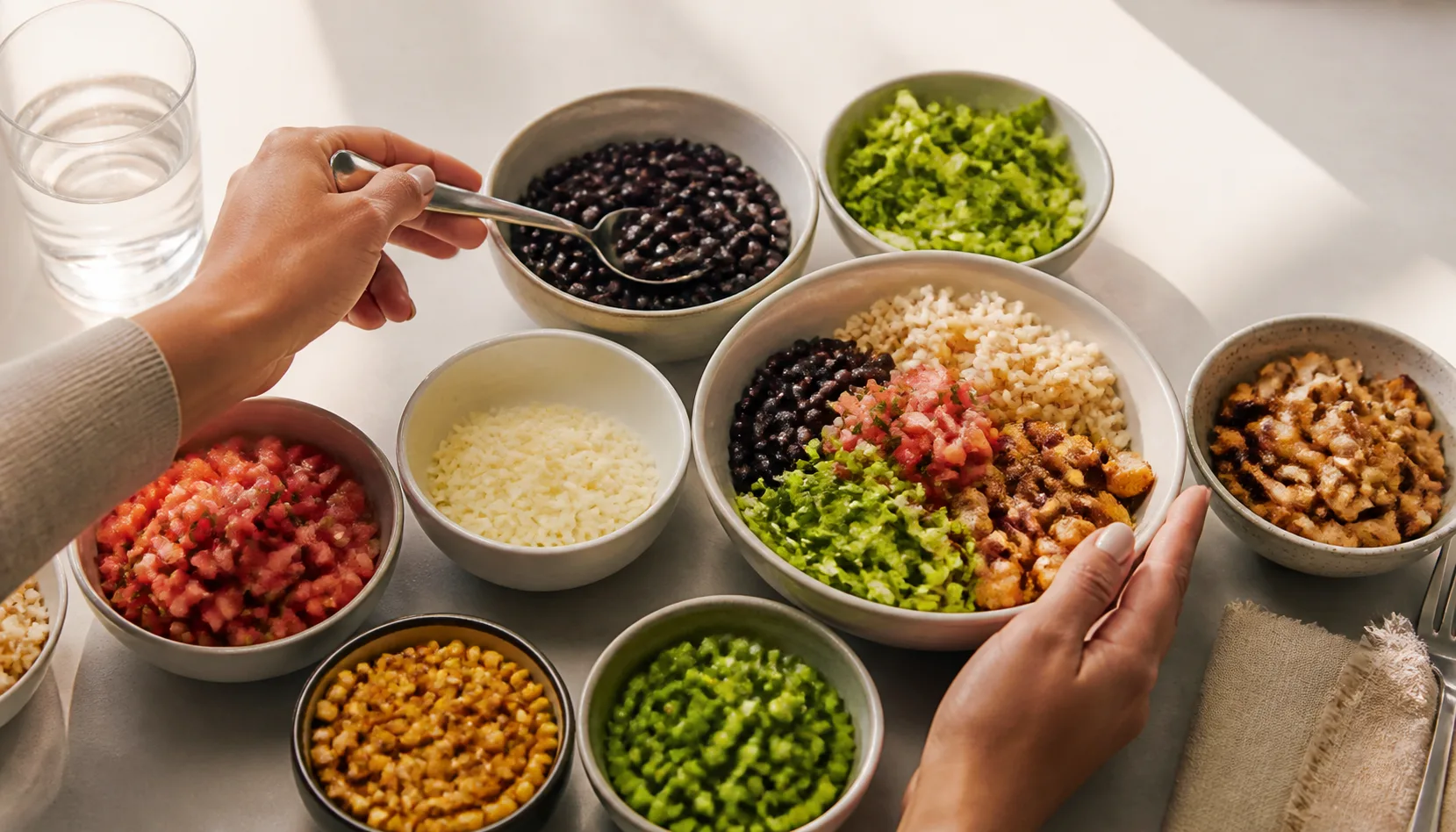
Counter-service and build-your-own spots. These are the most naturally adjustable format. You choose the base, the protein, and each topping, which means you control both the composition and the size from the start. A bowl with a clear protein and a moderate set of toppings is a straightforward build. For a concrete walkthrough of one popular chain, see what to order at Chipotle on GLP-1.
Sit-down casual restaurants. The menu is fixed, but the kitchen is usually flexible. Grilled preparations, dishes where the sauce can come on the side, and entrées with a visible protein center are the easiest to adapt. Splitting a dish, or ordering an appetizer as your main, is common enough that no server will blink.
Shared-plate and family-style meals. These look harder but have a hidden advantage: you can take small amounts of several things and stop without leaving a conspicuous full plate. Serve yourself modestly the first time around. You can always go back, and often you will not want to.
Across all three styles, the same three questions do the work: Is it adjustable? Does it have a clear protein? Can I stop partway without waste?
Keep a Useful Record of What You Actually Finished
Here is where most restaurant plans quietly fall apart. The meal ends, the evening moves on, and by the next morning the details are gone: what you ordered, how much of it you ate, how you felt afterward. Those details are the most useful part of the whole method, because they are what make the next restaurant meal easier than this one.
The record does not need to be elaborate. The helpful version captures the meal as it actually happened, not as it was planned: the dish, the portion you finished rather than the portion you were served, roughly how much protein was in the part you ate, what you drank, and a word or two about how the meal sat with you. If you already keep an eye on intake during the day, how to track calories for GLP-1 covers the everyday version of that habit, and hydration on GLP-1 is a useful companion for the water side of the record.
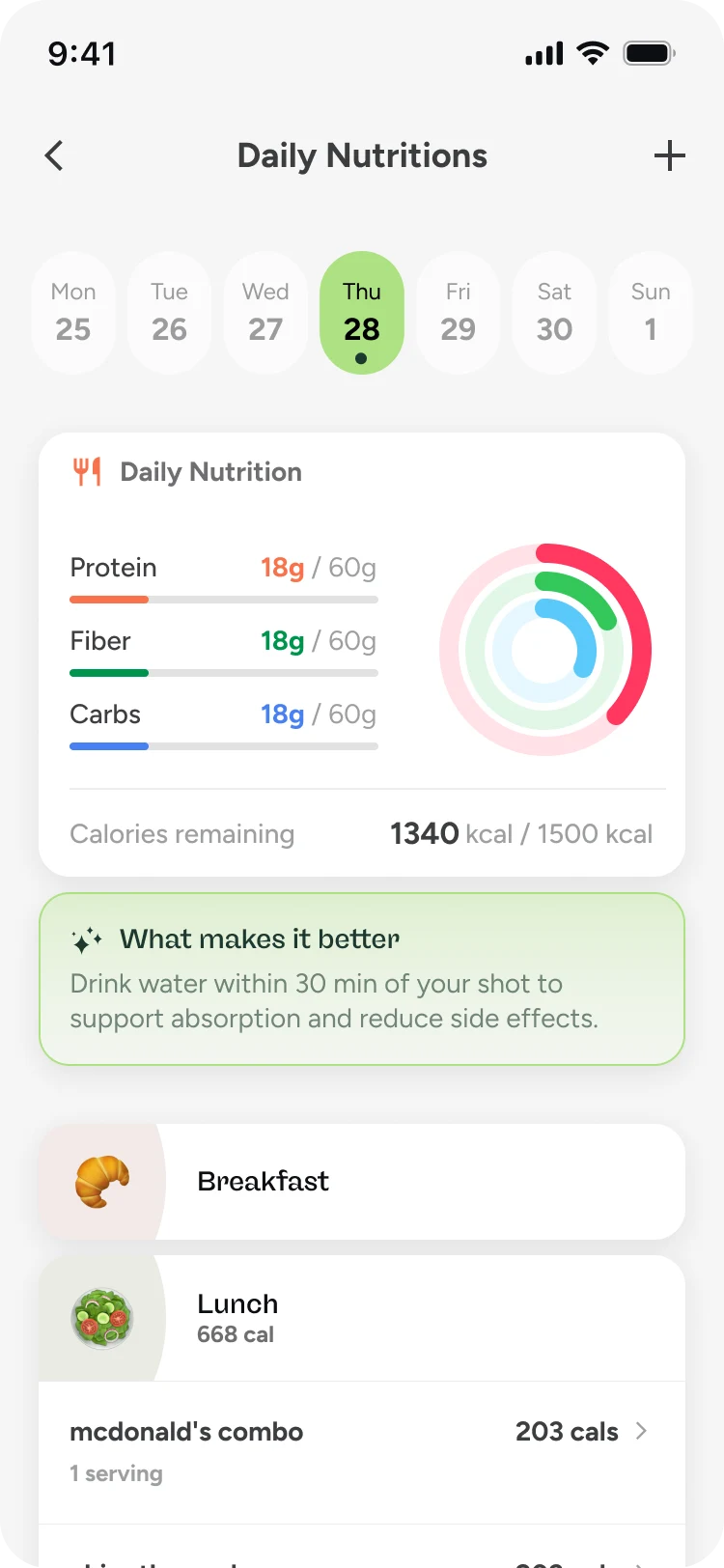
This is what Glowise is built to hold. The Food and Protein Tracker keeps your meals and their protein context together in one place, and it keeps water, appetite, fullness, and your own notes in the same daily record — so a restaurant meal lands in the same log as everything else that day, not in a separate mental file. Weekly views give you context across days, which is often where the useful patterns show up: which styles of meal you tend to finish comfortably, which portions consistently outsize your appetite, and how restaurant days compare to home days. Glowise keeps the record; the noticing and interpretation stay yours.
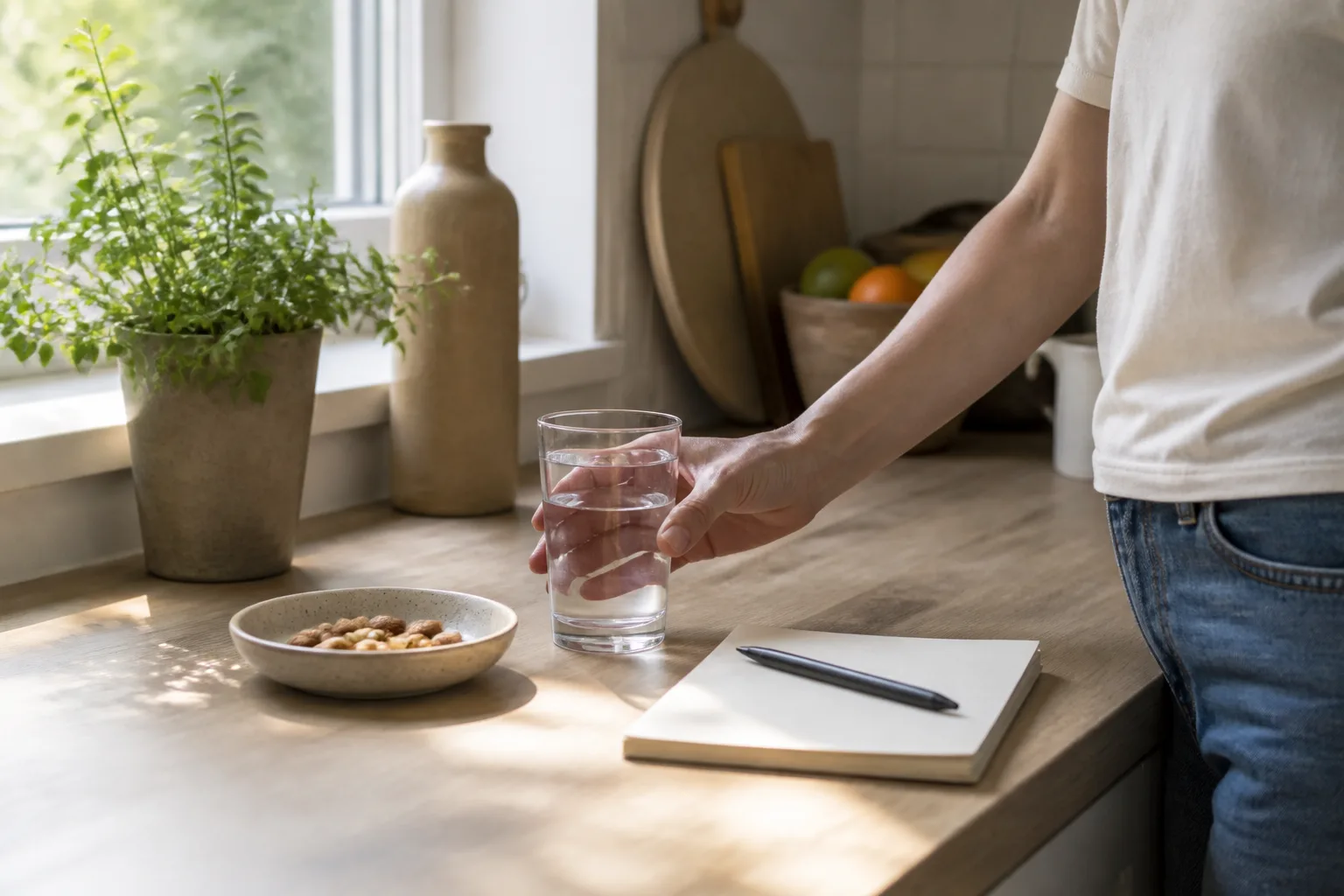
Keep the real meal in view
Record the part of the meal that happened
Bring food, protein context, water, and a few helpful notes together after a restaurant meal.
The practical takeaway
Restaurant plan in brief
- Preview the menu before you arrive and pick one or two adjustable options.
- Favor dishes with a clear protein anchor and parts that can come on the side.
- Order smaller than the menu assumes; appetizers and half portions count.
- Let your appetite set the pace and the stopping point once the food arrives.
- Treat leftovers as part of the plan, not as a failed meal.
- Record the portion you actually finished, along with water, appetite, fullness, and a short note.
- Use weekly context to spot which restaurant patterns work for you.
Frequently Asked Questions
Can I still enjoy a restaurant meal on GLP-1?
Yes. Enjoyment usually comes from the company, the setting, and a few good bites — not from finishing a large portion. A smaller, well-chosen meal eaten at your own pace can be a better restaurant experience than a bigger one you push through.
Should I decide on a takeout container before the meal arrives?
It helps many people, but it is optional. Deciding early means the split happens calmly instead of at the end of the meal. If you prefer to wait and see how your appetite goes, that works too — the container is a tool, not an obligation.
Do I need to choose the same kind of restaurant every time?
No. The method — preview, adjustable order, appetite-led pace, honest record — transfers across cuisines and formats. Variety is fine; the questions you ask of the menu stay the same.
What should I record after a restaurant meal?
The dish, the portion you actually finished, the protein context of what you ate, what you drank, and a short note on appetite, fullness, and comfort. Small and honest beats detailed and abandoned.
Sources

About the author
Maya Lee
Glowise Senior GLP-1 Content Editor
Maya Lee is a Glowise Health Content Editor. Her guides turn product records, authoritative sources, and everyday organization questions into clear, practical GLP-1 information.
She helps readers ask better questions and keep the details relevant to a care conversation together.
See more Glowise on Google
Add Glowise as a preferred source to find our GLP-1 guides more easily in Google Search.