
Wegovy stomach pain can occur alongside nausea, constipation, diarrhea, bloating, or other digestive symptoms. Semaglutide slows stomach emptying, which helps explain some digestive effects, but it cannot explain the cause of every episode of abdominal pain. The first distinction is between discomfort that needs a conversation about tolerability and warning symptoms that need prompt medical attention.
This guide explains the U.S. product information and general symptom questions. The study numbers below are for a specified injection trial population, not every Wegovy form or every person. If you use Wegovy outside the U.S., follow the Medication Guide or patient leaflet supplied locally; presentations and instructions may differ.
How common is abdominal pain with Wegovy?
In the U.S. Wegovy prescribing information, the pooled adult weight-reduction trials of 2.4 mg once-weekly injection reported abdominal pain in 20% of treated participants versus 10% with placebo. There were 2,116 participants in the Wegovy group and 1,261 in the placebo group.
The category is broader than severe stomach pain. It includes upper or lower abdominal pain, gastrointestinal pain, tenderness, discomfort, and epigastric discomfort. The percentage therefore does not mean that 20% developed pancreatitis or another serious condition. It also cannot tell you what is causing your own pain.
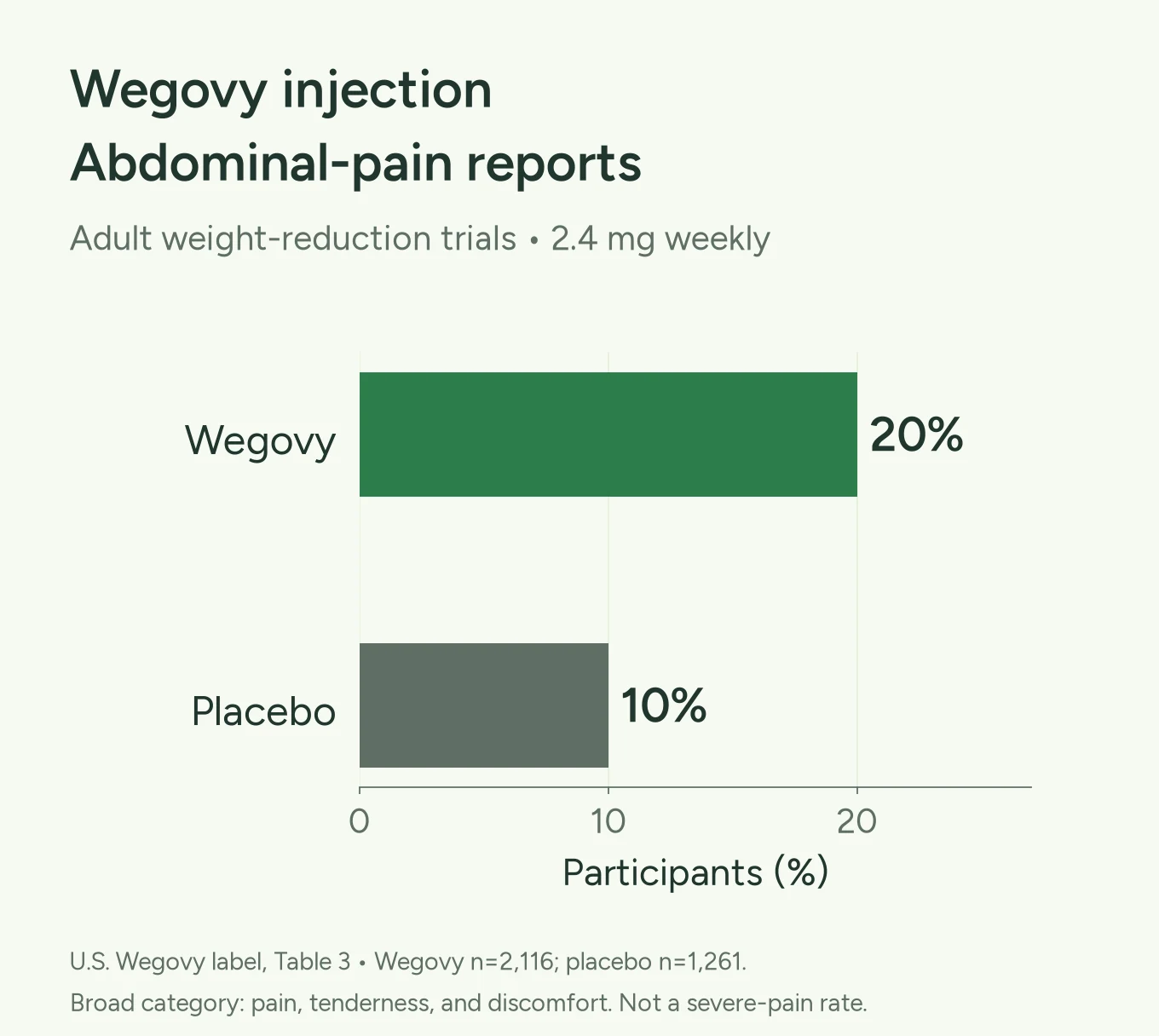
These numbers belong to the adult injection studies. They should not be transferred unchanged to the oral tablet, children, another medicine, or a different dose.
Why digestive discomfort and cramps can happen
Wegovy's active ingredient, semaglutide, affects appetite and slows stomach emptying. Food moving through the stomach more slowly can be relevant to fullness and digestive symptoms. Constipation, gas, nausea, and diarrhea can also accompany abdominal discomfort; the symptom someone calls “stomach pain” may describe several different experiences.
| What someone may notice | Why the distinction is useful |
|---|---|
| Fullness, bloating, or upper-abdominal discomfort | Describes a different pattern from a brief lower-abdominal cramp; note its relation to eating |
| Cramps with loose stools | Diarrhea and fluid loss become part of the question, rather than pain alone |
| Pain with constipation | Bowel changes and how long they have persisted are useful details for assessment |
| Severe, persistent, or worsening pain | Needs professional assessment; do not label it a normal adjustment based on timing alone |
This table helps describe symptoms, not diagnose their cause. Gallbladder problems, pancreatic inflammation, other illnesses, and medicines unrelated to Wegovy can also be relevant. Being listed as a possible side effect is not proof that a particular pain is harmless or drug-related.
If the main issue is a bowel change, our guides to GLP-1 constipation and GLP-1 diarrhea address those more specific questions.
When can symptoms appear, and how long do they last?
The Wegovy label reports that nausea, vomiting, and diarrhea increased during dose escalation in adult injection trials. That finding helps explain why a recent start or dose increase belongs in the conversation. It is not a schedule predicting when abdominal pain should begin or end for an individual.
The manufacturer's side-effects information describes nausea as generally transient in studies and asks people to report side effects that bother them or do not go away. A symptom improving over time is different from pain that persists, becomes severe, or gains new features.
There is no single “normal number of days” that makes all Wegovy stomach pain safe to wait out. If you are searching because pain is continuing, repeatedly returning, or interfering with eating, drinking, or usual activities, contact the treating team instead of repeatedly extending an observation period. A prescriber may review tolerability and the treatment plan; do not devise a dose adjustment yourself.
What may help mild digestive discomfort?
For mild digestive symptoms without the warning signs above, there are general comfort measures to discuss with your healthcare professional. These are not treatment for unexplained severe or persistent pain.
Change the pace and size of meals
Eating slowly gives you more opportunity to notice fullness before eating more. Smaller meals may be easier to tolerate than one large meal. If nausea accompanies the discomfort, bland foods and avoiding a very fatty meal may help some people. Medical News Today's Wegovy stomach-pain guide discusses these measures; the manufacturer also suggests asking your healthcare professional about slower eating and foods containing water.
An ordinary adjustment could be a smaller serving first, with time to assess how you feel, rather than trying to finish a usual large portion despite fullness. That is a flexible approach to comfort, not a requirement to eat too little or skip meals.
Pay attention to fluids and associated symptoms
Vomiting and diarrhea can cause dehydration. The product information links fluid loss with kidney problems, so inability to keep fluids down or ongoing vomiting deserves prompt contact with the treating team. Follow any existing fluid restrictions from your clinician rather than adopting a generic hydration target.
Note whether the difficulty is fullness, nausea, loose stools, constipation, or pain itself. That distinction helps the clinician choose an appropriate response. Starting several over-the-counter remedies at once can obscure what changed and may not address the cause; ask a pharmacist or prescriber about a specific symptom before adding medication.
Know when self-management should stop
A smaller meal is not a test that rules out a serious problem. If pain becomes severe or will not go away, follow the Medication Guide's stop-use and immediate-contact instruction. If symptoms remain bothersome despite ordinary adjustments, report them rather than assuming that tolerating pain is necessary for the medicine to work.
Warning signs: match the symptom to the official action
The following is a summary of important U.S. Wegovy warnings, not a complete diagnostic checklist. Use the full Medication Guide supplied with your prescription.
| Warning pattern described in the product information | What the guidance says to do |
|---|---|
| Severe stomach-area pain that will not go away, sometimes reaching the back, with or without nausea or vomiting | Stop using Wegovy and call your healthcare provider right away; this is the pancreatitis warning |
| Upper-abdominal pain with features such as fever, yellowing skin or eyes, or clay-colored stools | Call your healthcare provider right away; the guide identifies these as possible gallbladder-problem symptoms |
| Stomach problems that are severe or do not go away | Tell your healthcare provider; serious gastrointestinal problems have been reported |
| Swelling of the face, lips, tongue, or throat; trouble breathing or swallowing; severe rash or itching; fainting or other serious-allergy symptoms | Stop using Wegovy and get medical help right away; use emergency services for an emergency |
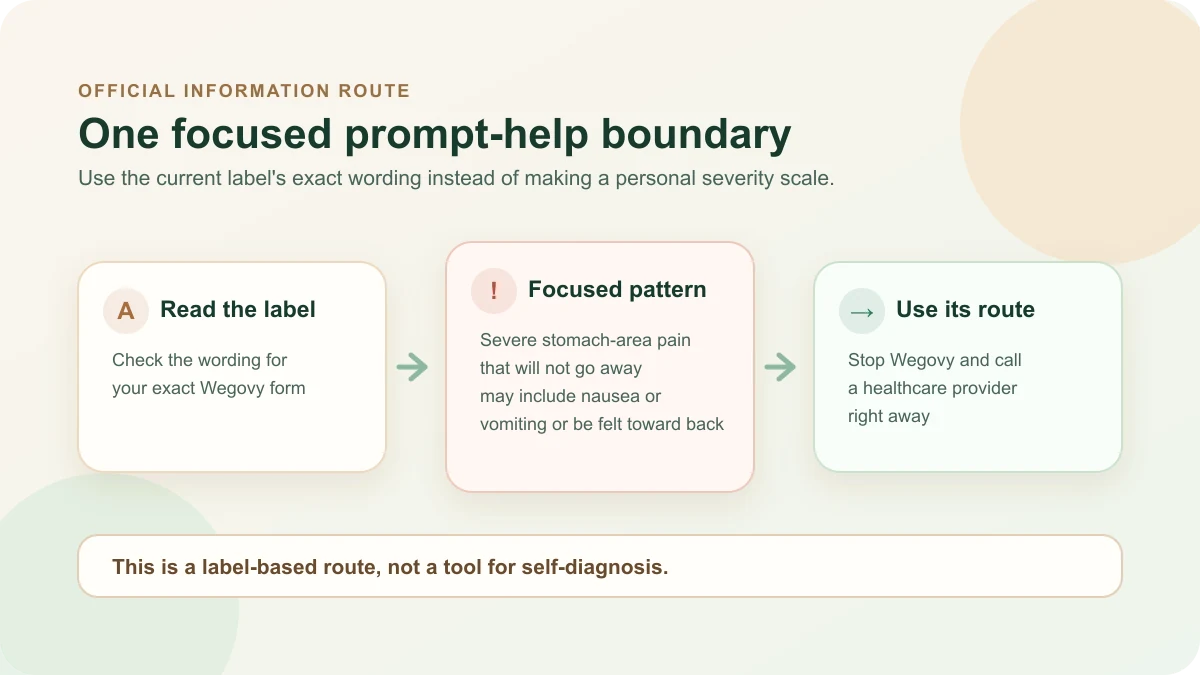
These warnings are not predictions that a symptom has a particular diagnosis. Their purpose is to prevent a potentially serious pattern from being treated as routine discomfort. The absence of one listed feature also does not certify that pain is safe.
What to tell the clinician or pharmacist
Once appropriate help is being arranged, a short description is useful. Include the exact product and form, prescribed dose, when it was started or changed, where the pain is, how it feels, whether it is constant or intermittent, and what else is happening. Mention vomiting, bowel changes, fever, difficulty drinking, or other changes rather than recording pain in isolation.
For example: “I use Wegovy injection. The dose changed last week. Since yesterday, I have had repeated cramps with loose stools, and today drinking has been difficult.” This describes observations that can guide the conversation without claiming a diagnosis. It is an example of wording, not a reason to wait until a particular day to call.
A single brief note is enough; it should not become a form you must finish before seeking help. If you already use Glowise's Side Effect Tracker, medication timing and symptom notes can help you recall the sequence. The app cannot decide whether pain is urgent or whether a dose should change.

Frequently asked questions
Can Wegovy cause stomach cramps?
Abdominal pain and other gastrointestinal symptoms are listed in the product information. Cramps may occur alongside bowel changes, but the word “cramps” does not identify the cause. Severe, persistent, or worsening symptoms need assessment rather than an assumption that they are ordinary side effects.
How can I stop Wegovy stomach pain?
The next step depends on the pain. Severe pain that will not go away triggers the Medication Guide's instruction to stop Wegovy and call your healthcare provider right away. For mild digestive discomfort, discuss slower eating, smaller meals, tolerable food choices, fluids, and associated symptoms with the treating team. These measures do not replace evaluation of ongoing pain.
Does stomach pain mean Wegovy is working?
No. A side effect is not a measure of treatment benefit. The absence of pain does not mean treatment is ineffective either. Treatment response and symptoms should be reviewed as separate questions.
Should I take an over-the-counter medicine for the pain?
Ask a pharmacist or prescriber about the exact symptoms and your other medicines. Do not use a new remedy to postpone assessment of severe or persistent pain, and do not use a general article to choose a dose change.
Are the injection and tablet abdominal-pain rates identical?
They should not be treated as one number. The 20% versus 10% figure in this article comes from pooled adult trials of 2.4 mg weekly injection. Oral tablets have separate study data and instructions.
Sources

About the author
Maya Lee
Glowise Senior GLP-1 Content Editor
Maya Lee is a Glowise Health Content Editor. Her guides turn product records, authoritative sources, and everyday organization questions into clear, practical GLP-1 information.
She helps readers ask better questions and keep the details relevant to a care conversation together.
See more Glowise on Google
Add Glowise as a preferred source to find our GLP-1 guides more easily in Google Search.