There is no single amount of water that is right for everyone taking Ozempic. A broad total-fluid estimate can give you an orientation, but it is not an Ozempic-specific prescription. Activity, hot weather, what you can comfortably eat and drink, vomiting or diarrhea, and any existing clinician-directed fluid limit can all change the useful answer.
That distinction matters because a precise-looking number can feel more certain than it really is. The better starting point is not “What number must I hit?” but “What general reference am I using, and what about today could make that reference a poor fit?”
Start with the right kind of answer
When people ask how much water to drink on Ozempic, two different questions often get folded together. One is a general hydration question: how do total water, beverages, and plain water differ in a population reference? The other is a personal health question: what amount makes sense for this person, with this routine, these symptoms, and these existing instructions?
The first question can have a useful general answer. The second needs context that an article cannot see.
This is why “drink more water” is not a complete response. It does not say whether the speaker means plain water or total fluid. It does not account for a cool desk day versus several hours outdoors in heat. It also does not leave room for someone who has been told to limit fluids.
A more useful answer keeps those layers separate. Begin with a broad reference if you need one. Then look at the circumstances that can move the question away from that reference. If persistent stomach symptoms are part of the picture, the current Ozempic label adds a specific reason to contact a healthcare professional rather than trying to solve the situation with a number alone.
What a general range can and cannot do
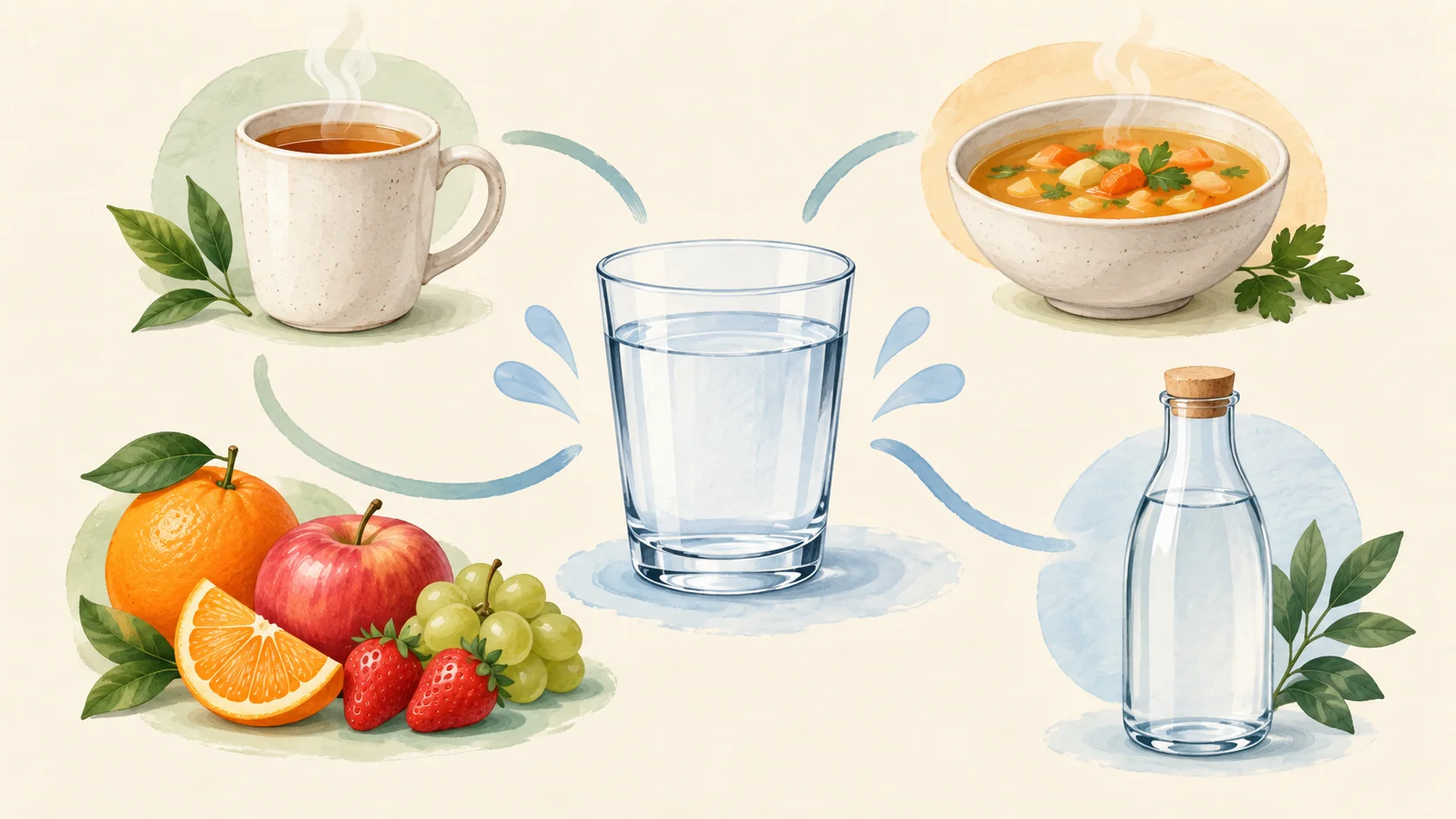
The National Academies water reference distinguishes total water from beverages and from plain drinking water. Total water includes water from drinking water, other beverages, and food. Its age- and sex-specific adequate-intake values are population references for healthy people, not an Ozempic target or a personal prescription.
Those categories matter. A plain-water count is only one part of the day; beverages and water-containing foods are not interchangeable with a bottle count, either. The National Academies also notes that individual needs can vary substantially with activity and climate, so its reference should not be used as a fixed requirement.
| Reference point | What it can help with | What it cannot decide |
|---|---|---|
| A National Academies total-water reference | Shows how population values define total water, beverages, and food | Your personal requirement or a plain-water target |
| Plain-water count | Makes one drink easy to notice or record | Your complete total-fluid intake |
| A calculator estimate | Makes assumptions such as weight, activity, heat, and sweating visible | Whether those assumptions fit your health context |
| A clinician-set fluid limit | Provides an instruction based on your care context | It should not be replaced by a general online range |
The table is not asking you to choose the biggest number. It is asking you to notice which kind of information you have. A reference helps you estimate. A personal instruction tells you what to follow. When the two appear to conflict, the general reference does not overrule the personal instruction.
What can change the answer
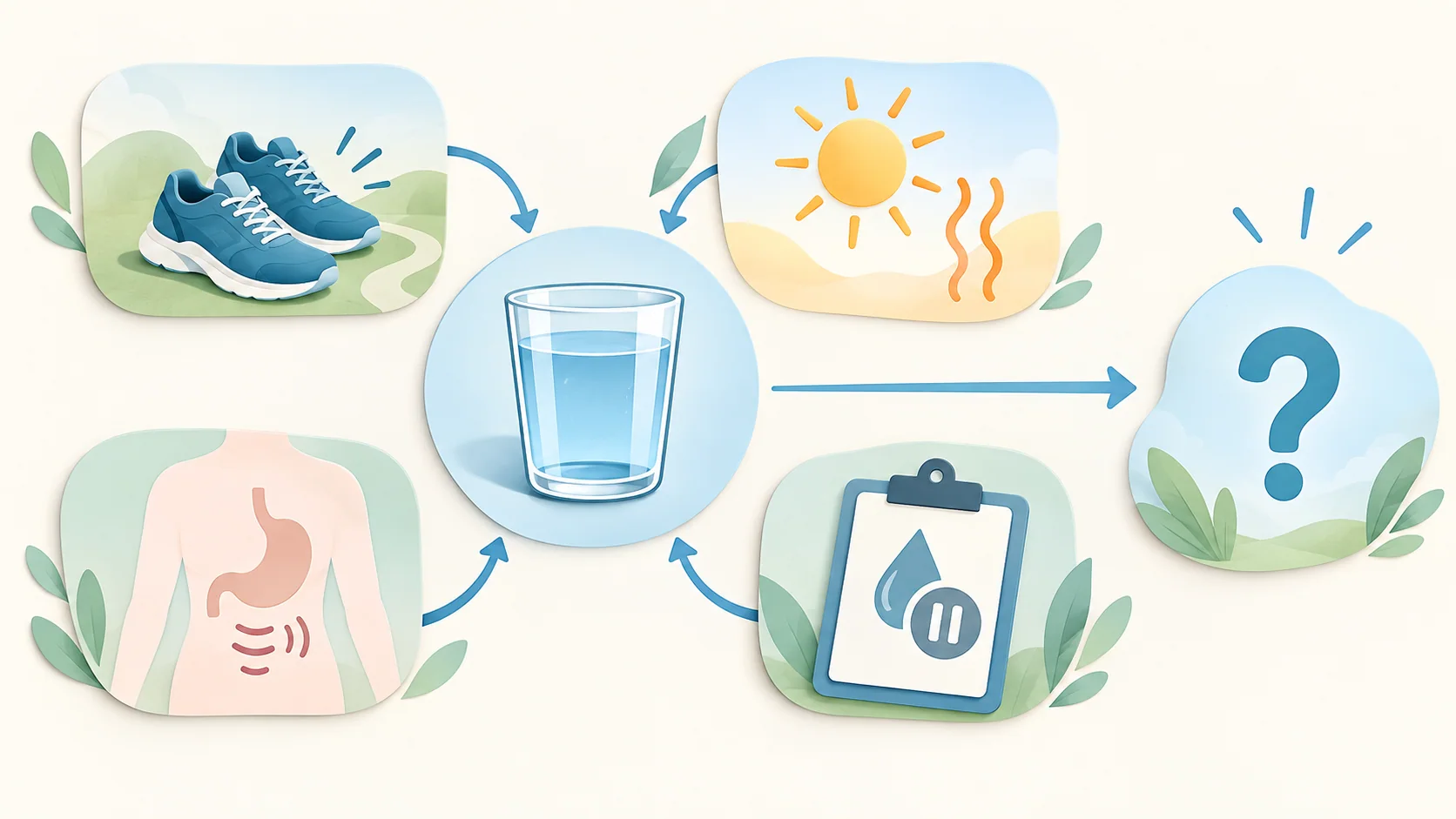
A fluid number becomes more useful when you place it beside the day it is meant to describe. Four pieces of context are especially worth making visible.
Activity and extra sweating. A quiet day and a physically active day are not the same situation. Rather than treating one number as permanently correct, note when your activity or sweating pattern is meaningfully different from the assumptions behind the estimate.
Heat. Time in hot conditions changes the context. “Today was much hotter than usual” is useful information because it explains why a normal routine may not map neatly onto that day.
Food and drink tolerance. What feels manageable can vary. A full glass at once may be easy on one day and unappealing on another. That does not create a new universal rule; it is a reason to choose a routine format that is flexible and to describe the difficulty clearly if it persists.
Vomiting or diarrhea. These are not details to hide inside a daily total. The current US Ozempic label warns about acute kidney injury due to volume depletion and connects reported events with gastrointestinal reactions that can lead to dehydration. It says patients should report persistent nausea, vomiting, or diarrhea to a healthcare professional. The useful action here is communication, not inventing a higher fluid target for yourself.
An existing fluid limit. If a clinician has already directed you to limit fluids, that instruction takes priority. A broad range from an article or calculator is not designed to override it.
These factors do not form a formula that produces a perfect answer. They form a better description of the question. “I usually drink around this amount, but I have had persistent vomiting since Tuesday and cannot comfortably keep up with my normal routine” gives a healthcare professional more useful context than “Should I drink three liters?”
Make a routine easier to repeat
Once the safety and personal-instruction boundaries are clear, hydration can become an ordinary routine problem. The aim is not to create a perfect streak. It is to make your chosen approach visible enough that you do not have to reconstruct the whole day at bedtime.
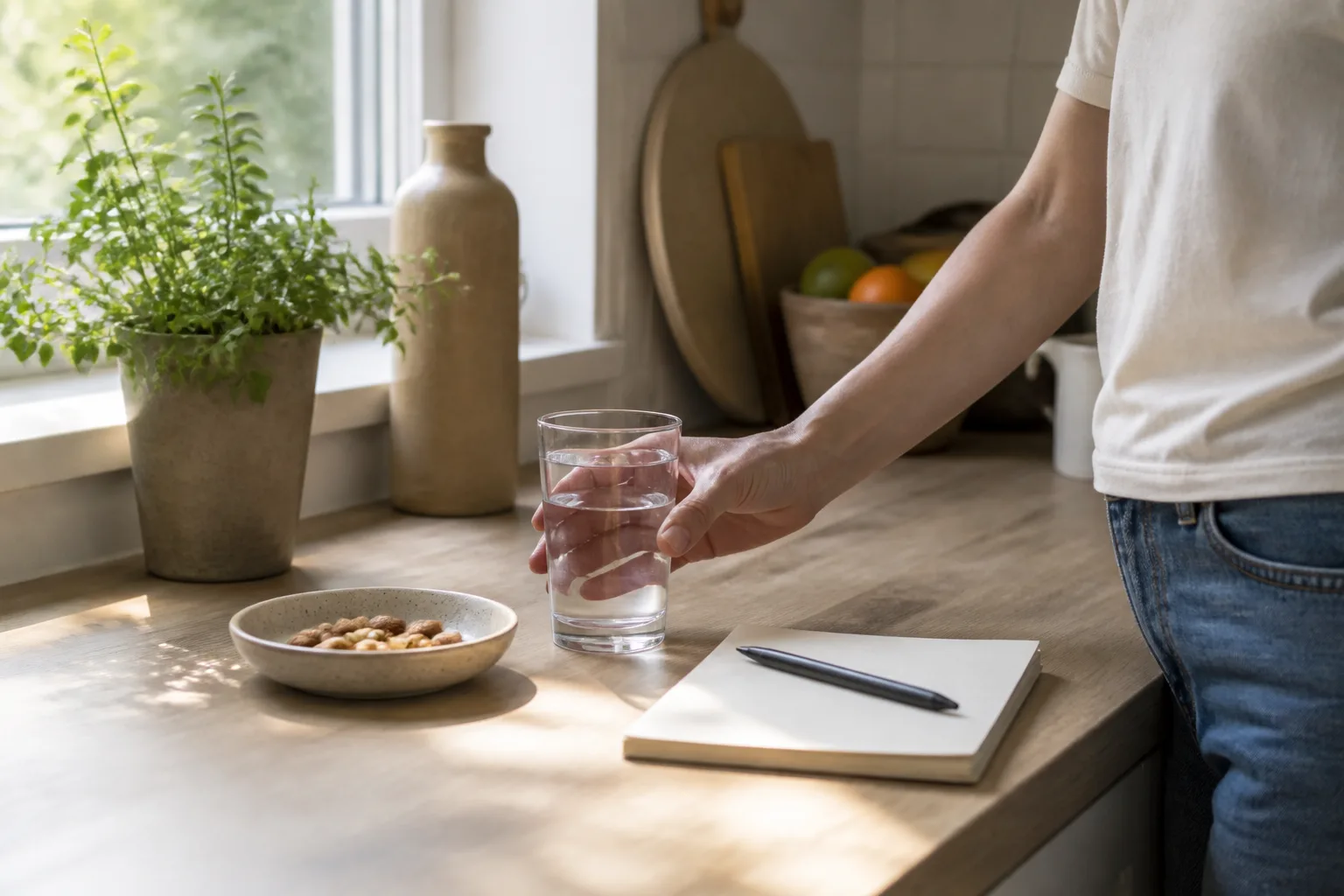
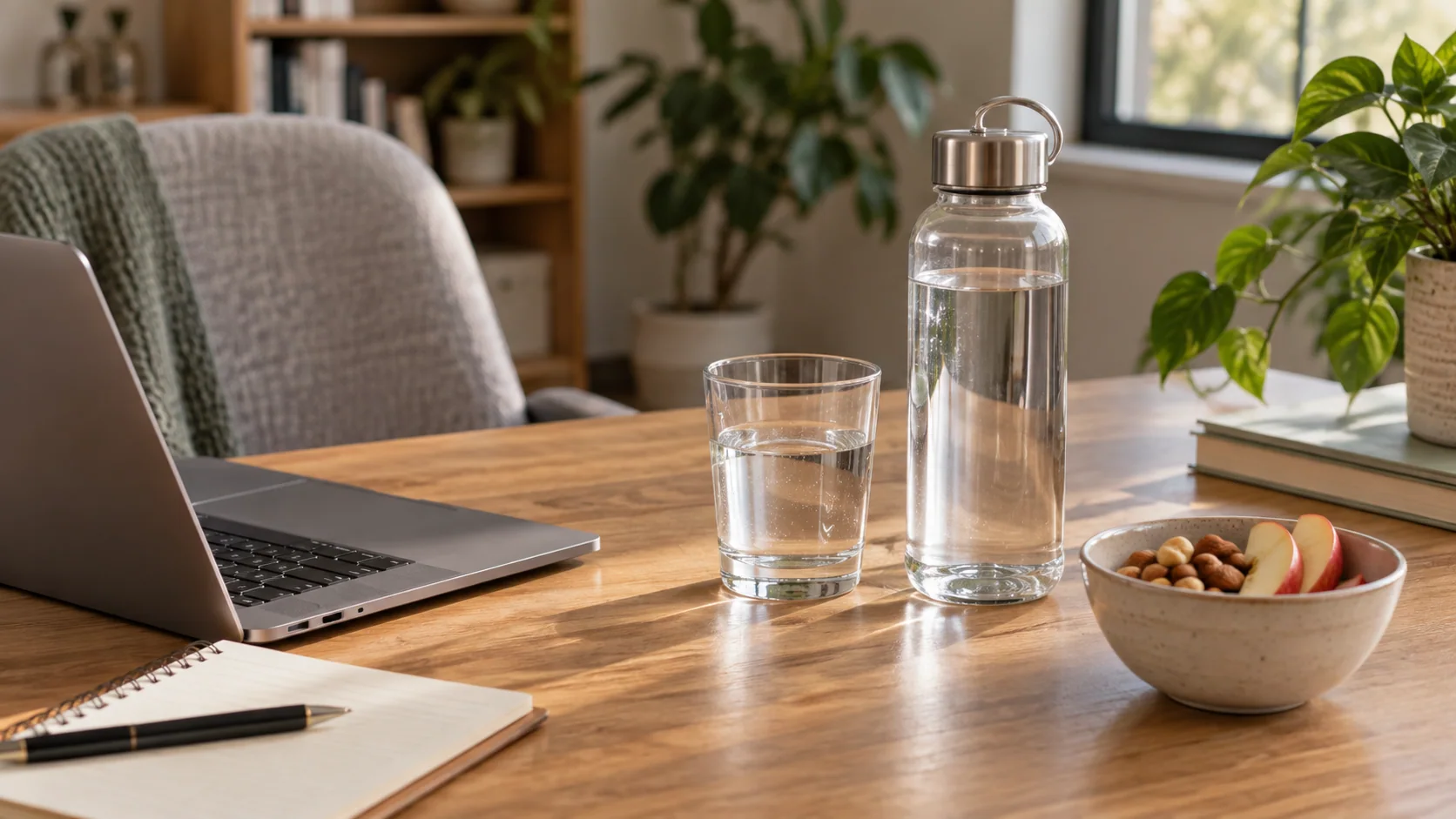
One option is to use a familiar container and learn its size. If you refill the same bottle, cup, or glass, you can estimate your plain-water pattern without counting every sip. Another option is to connect drinking with moments that already happen, such as sitting down to work, having a meal, or returning home. These are memory cues, not medical timing instructions.
If large servings feel difficult, you might keep a smaller amount within reach and return to it at intervals that feel manageable. If plain water is not the only fluid in your day, write down the broader picture instead of assuming every fluid has to come from a water bottle.
For example, imagine a workday interrupted by errands. A large bottle left on the kitchen counter tells you very little at 6 p.m. A smaller bottle at the desk, a glass with lunch, and a quick note after the afternoon errand create a clearer picture. The value is not in copying that exact setup. It is in placing the routine where the day actually happens.
The same principle applies to tracking. Choose the smallest record that answers your next question: perhaps approximate total fluid, unusual heat or activity, and whether nausea, vomiting, or diarrhea affected drinking. Our broader guide to hydration on GLP-1 medicines offers more ways to think about the routine without turning it into an all-or-nothing task.
When the number should not decide
A general range should step back when more specific information is present.
If you have a clinician-directed fluid restriction, do not use a general article to raise your intake beyond that instruction. If you are dealing with persistent nausea, vomiting, or diarrhea, the Ozempic label points toward reporting those symptoms to a healthcare professional. A bottle count cannot determine what those symptoms mean for you, and this article cannot diagnose dehydration.
The number should also step back when it becomes detached from the situation. Missing a self-selected target on one day does not, by itself, explain why. Reaching it does not prove that the amount was personally appropriate. The total is one observation. Activity, heat, tolerance, stomach symptoms, and existing instructions give that observation meaning.
This framing can make a follow-up question more precise. You might ask whether the broad range you found is appropriate given your fluid restriction, or explain how persistent stomach symptoms have affected what you can drink. You are not asking a professional to approve an internet number. You are giving them the context needed to address the actual uncertainty.
Use an estimate as a question prompt
If you want a starting estimate, the Glowise Water Intake Calculator provides a general adult educational estimate rather than a prescription. It makes inputs and assumptions such as weight, activity, heat, and extra sweating visible, which can help you see why a result changes.
The most useful part of an estimate may be the questions it reveals. Does the activity setting resemble your usual day? Is hot weather temporary or routine? Did stomach symptoms make today unusually difficult? Are you following a fluid limit that a general tool cannot account for?
You can take the estimate and those questions into a conversation instead of treating the output as a command. That turns a single number into a short, concrete context note—and keeps the tool in its proper role.
The practical takeaway
A more useful way to think about the number
- Treat a general total-water reference as context, not an Ozempic prescription.
- Keep total water, beverages, and the number of plain-water bottles distinct.
- Notice when activity, heat, tolerance, vomiting, or diarrhea changes the context.
- Let a clinician-directed fluid restriction take priority over general guidance.
- Report persistent nausea, vomiting, or diarrhea to a healthcare professional, as the Ozempic label advises.
- Use an estimate to prepare a better question, not to override personal instructions.
Frequently asked questions
How much water should I drink on Ozempic?
There is no single Ozempic-specific amount that fits everyone. A general, age- and sex-specific total-water reference may offer context, but your activity, heat exposure, tolerance, stomach symptoms, and any clinician-directed fluid limit can change what is appropriate.
Does a total-water reference mean I need that much plain water?
No. Total water includes water from drinking water, other beverages, and food; it is not a required amount of plain water. A population reference is also not a personal instruction.
What if Ozempic nausea makes drinking difficult?
Choose a routine format that feels manageable rather than forcing a general target. If nausea is persistent, or you have persistent vomiting or diarrhea, the Ozempic label says to report it to a healthcare professional.
Should I use a water intake calculator while taking Ozempic?
A calculator can provide a general educational estimate and make its assumptions visible. Use the result as a prompt to consider activity, heat, sweating, symptoms, and existing fluid instructions—not as a medicine-specific prescription.
Sources
- DailyMed: Ozempic prescribing information (accessed September 10, 2026)
- National Academies: Dietary Reference Intakes for Water — definitions and population reference context for total water, beverages, and food.

About the author
Maya Lee
Glowise Senior GLP-1 Content Editor
Maya Lee is a Glowise Health Content Editor. Her guides turn product records, authoritative sources, and everyday organization questions into clear, practical GLP-1 information.
She helps readers ask better questions and keep the details relevant to a care conversation together.
See more Glowise on Google
Add Glowise as a preferred source to find our GLP-1 guides more easily in Google Search.