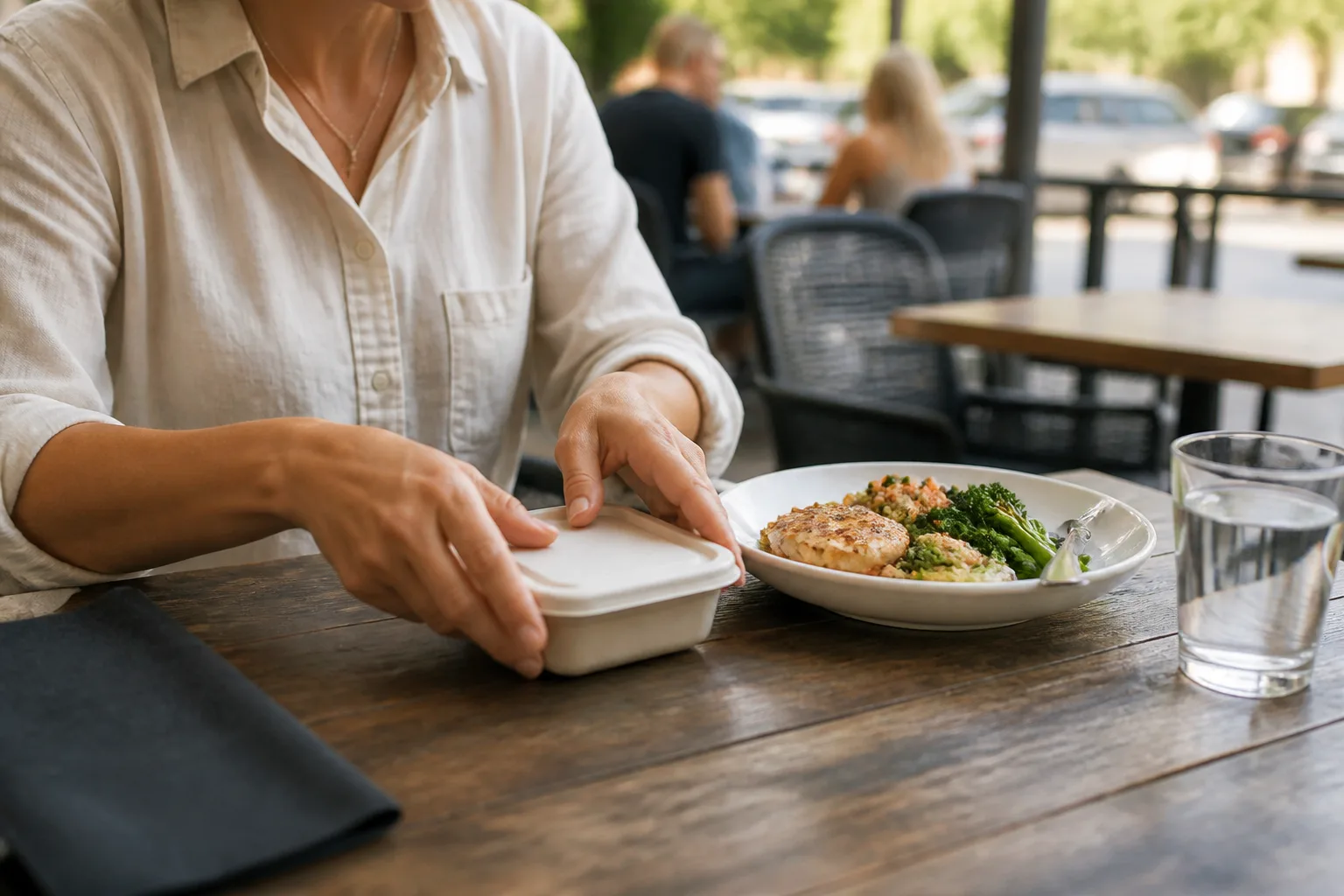
If you ate past comfortable fullness on a GLP-1, stop eating for now, stay upright, and take small sips of water as tolerated. Give yourself room to feel better before trying more food, then return to smaller, manageable meals. You do not need to punish yourself with fasting or an extra workout.
That approach is for mild fullness or queasiness. Severe abdominal pain that will not go away needs immediate medical attention, even if it began after a large meal. The medication-specific stop-use instruction is below; do not assume the meal explains every symptom.
What to do while you feel too full
Put the remaining food aside. Finishing the plate is no longer the useful goal. For mild discomfort without warning signs:
- Sit upright rather than lying down. This is particularly useful when fullness comes with heartburn.
- Sip instead of chugging. Small amounts of water may be easier to tolerate than a large glass at once. Follow any fluid restriction your clinician has given you.
- Keep activity gentle. If you feel comfortable enough, a little easy movement is an option. Avoid a strenuous workout while you feel unwell; exercise is not a way to undo the meal.
These measures draw on expert guidance for GLP-1 digestive side effects. They are comfort measures, not a treatment for severe or worsening symptoms.
If nausea remains when you are ready to eat, a small amount of bland, low-fat food, such as toast or rice, may be easier than another rich meal. The Ozempic manufacturer's nausea advice includes those options and avoiding fried or greasy foods. A temporary bland choice is a bridge back to your usual varied meals, not a new restrictive diet.
Why a familiar meal can feel like too much
Semaglutide and tirzepatide delay stomach emptying, meaning food moves out of the stomach more slowly. They also affect appetite. A portion that used to feel ordinary may now bring earlier fullness or leave you feeling full longer. The US prescribing information for Wegovy and Zepbound describes delayed emptying and gastrointestinal side effects.
After a meal larger than you comfortably tolerate, you might notice pressure, bloating, belching, nausea, or reflux. Those symptoms can also occur during treatment without overeating. One uncomfortable meal does not establish that you have a stomach-emptying disorder, and the timing alone does not prove what caused the discomfort.
There is no reliable countdown for when this particular meal will feel settled. Pay attention to whether symptoms are easing and whether you can drink, rather than waiting for a promised number of hours to pass.
What to avoid doing to compensate
Do not take an extra dose or change your medication schedule to make up for food. A larger meal is not a reason to increase, skip, or reduce a dose on your own. Use your prescription as directed, except when a specific urgent stop-use warning applies. If symptoms are continuing when a dose is due, contact the prescriber for instructions.
Do not make yourself vomit or use laxatives to compensate. If you are considering an antacid or anti-nausea medicine for the symptom itself, a pharmacist can check whether it fits your other medicines and health conditions.
Avoid turning the next day into repayment. Taking a break from food while actively uncomfortable is different from deciding you must go without meals tomorrow. The 2025 joint nutrition advisory on GLP-1 treatment favors regular meals and cautions about long fasting periods without adequate nutrition.
When to get medical help
A large meal should not become a reason to dismiss a warning sign. For US semaglutide and tirzepatide products discussed here, the Medication Guides give these important actions:
| What you notice | What to do |
|---|---|
| Severe stomach-area pain that will not go away, possibly extending to the back, with or without vomiting | Stop using your medicine and call your healthcare provider right away. This is the pancreatitis warning in the Ozempic, Wegovy, Mounjaro, and Zepbound guides. Do not wait for vomiting to appear. |
| Upper-abdominal pain, fever, yellow skin or eyes, or clay-colored stools | Contact your healthcare provider promptly; these are gallbladder warning symptoms. You do not need all of them together. |
| Nausea, vomiting, or diarrhea that does not go away | Tell your healthcare provider right away. Fluid loss can cause dehydration and kidney problems. |
| Stomach problems that are severe or will not go away | Tell your healthcare provider rather than continuing to treat the episode as ordinary fullness. |
These actions come from the US Medication Guides for Ozempic, Wegovy, Mounjaro, and Zepbound. Check the guide supplied with your exact product.
Seek urgent medical care if you keep vomiting and cannot keep fluids down. Call 911 for an emergency, including collapse or difficulty breathing. Do not drive yourself if you feel faint or confused. If you have swelling of the face, lips, tongue, or throat, or difficulty breathing or swallowing, stop using the medicine and get medical help right away, as the guides instruct for signs of a possible serious allergic reaction. These signs do not have to occur together.
How to handle the next meal
Once mild symptoms have eased and eating feels manageable, try a smaller serving of something you usually tolerate. Eat slowly and pause before adding more. For example, you could serve part of your usual lunch, keep the rest available, and see how the first portion sits. There is no requirement to eat half your usual amount or follow a universal portion limit.
Aim to return to a regular eating pattern rather than alternating between a large meal and deliberate restriction. If you use insulin or a sulfonylurea, follow your diabetes team's meal and low-blood-sugar plan; eating substantially less may need their guidance.
For the next similar occasion, change one practical thing: start with less on the plate, slow the pace, or put leftovers away when fullness first appears. A brief note about the portion, pace, and symptoms can help you remember which change is worth trying. For planning a future restaurant meal, use the separate dining-out guide.
If comfortable portions repeatedly leave you unable to eat or drink enough, contact your prescriber. That pattern deserves a review of symptoms and treatment, not an ever-shrinking meal plan.

About the author
Maya Lee
Glowise Senior GLP-1 Content Editor
Maya Lee is a Glowise Health Content Editor. Her guides turn product records, authoritative sources, and everyday organization questions into clear, practical GLP-1 information.
She helps readers ask better questions and keep the details relevant to a care conversation together.
See more Glowise on Google
Add Glowise as a preferred source to find our GLP-1 guides more easily in Google Search.