
Research on tirzepatide can tell us that a study group lost both fat mass and lean mass over time. It cannot tell you whether you personally have lost muscle. That distinction matters because “lean mass” is a body-composition measurement category, not another name for muscle, and a result averaged across a research group is not an individual assessment.
The most relevant evidence comes from a 160-person DXA substudy within SURMOUNT-1. After 72 weeks, researchers reported that about 75% of the weight lost by participants was fat mass and about 25% was lean mass. Those figures describe how the group’s measured weight change was divided on average. They are useful context, but they are not a personal ratio, a diagnosis, or a prediction of what will happen to every person taking Mounjaro.
What the tirzepatide body-composition study measured
Tirzepatide is the active ingredient in Mounjaro. However, the product name and the research population should not be blended together. The Mounjaro prescribing information describes its US indication for specified uses in people with type 2 diabetes. The body-composition evidence discussed here comes from a substudy within SURMOUNT-1 involving adults with obesity or overweight. Results from that obesity trial are not a description of every Mounjaro user’s circumstances.
In the SURMOUNT-1 body-composition substudy, 160 participants had DXA measurements at the beginning of the study and again at week 72. The researchers reported changes in body weight, fat mass, and lean mass. Over that period, all three measures decreased.
The widely repeated 75/25 result describes the composition of the group’s weight loss: approximately three quarters was fat mass and one quarter was lean mass. It does not mean that every participant lost those exact proportions. It also does not mean that one quarter of the weight a person loses on Mounjaro will necessarily be muscle.

Lean mass and muscle are related, but not interchangeable
The phrase “lean mass loss” can sound like a direct verdict about muscle because muscle is part of the body that is not fat. But the study reported a broader DXA measurement category. Treating that category as if it measured muscle alone adds a conclusion the study did not make.
Keeping four ideas separate makes the evidence easier to read:
| Term | What it means in this discussion | What it does not establish |
|---|---|---|
| Lean mass | A body-composition category reported by the DXA substudy | That every change in the category was muscle |
| Muscle | A specific tissue and the concern many readers have in mind | A personal amount of change based on the study’s lean-mass number |
| Study average | A summary of what was measured across the research group over 72 weeks | The exact proportions for every participant or future user |
| Individual assessment | Information about one person, interpreted in the context of that person’s measurements and circumstances | Something a population-level paper or personal tracking app can provide by itself |
This is not a technicality. If “25% lean mass” is silently rewritten as “25% muscle,” the result becomes more alarming and more personal than the evidence supports. The study’s value lies in what it actually measured: it adds body-composition context to total weight change in a defined group over a defined period.
What the 75/25 split can and cannot tell you
The reported split helps answer a group-level research question: when participants’ measured body weight decreased, how much of that change was categorized as fat mass and how much as lean mass? It shows that the weight change was not exclusively fat mass.
It cannot answer several questions a reader may understandably bring to the result. It cannot tell you whether your own body followed the same proportion. It cannot identify what part of a personal lean-mass change, if any, was muscle. It cannot explain why an individual measurement changed. And it cannot substitute for an assessment of a concern such as a change in strength, function, appearance, or a result from a body-composition test.
The time frame matters too. These were baseline and week-72 DXA measurements, not a running picture of what happened each day or week. A personal scale trend and the study’s body-composition measurements are therefore different kinds of information. One shows recorded body weight over time; the other separated measured body composition at specified study visits.
This boundary leaves room for a useful conclusion without overstating it: the study provides evidence that both fat mass and lean mass decreased in this population, with a larger share of the group’s weight loss coming from fat mass. It does not provide an individual muscle-loss verdict.
Prepare a more answerable personal question
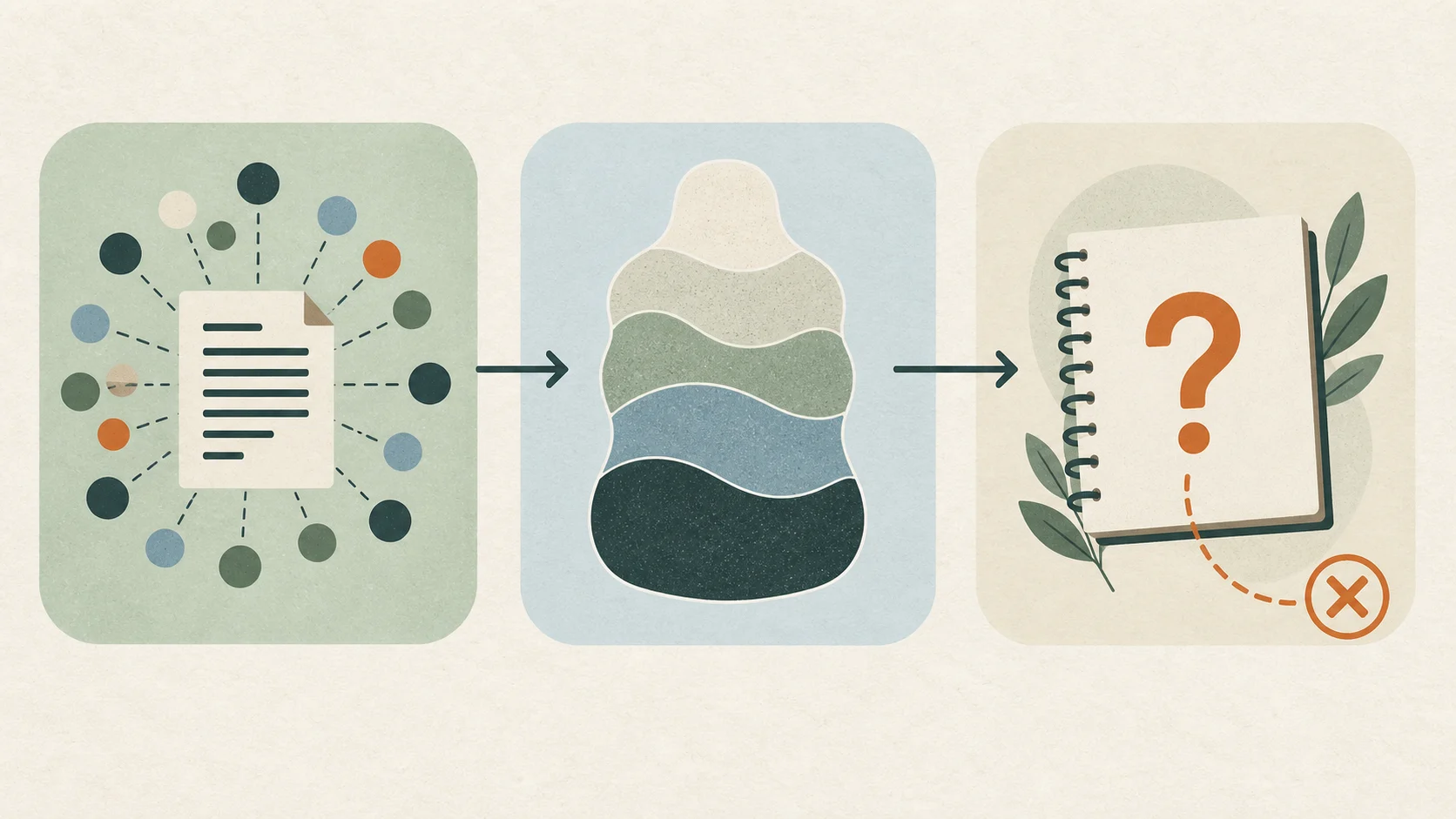
If the research has raised a concern about your own body, it helps to separate what you noticed from what you think it might mean. You do not need to turn your observations into a diagnosis before discussing them. A short record can simply preserve the details that might otherwise blur together.
Four categories can make that record more useful:
- Changes you noticed. Write down the specific observation in ordinary language. That might be a change in a repeated activity, a clothing fit, a scale trend, or something else you can describe without assigning a cause.
- The measurement source. Note whether the information came from a home scale, a body-composition report, a repeated activity, or your own observation. Different sources are not interchangeable, so the label belongs beside the number or note.
- Routine context. Keep any user-observed context you want to remember, such as medication, food, water, activity, weight, or side-effect notes. These details can support recall, but they do not determine why a change occurred.
- Open questions. Write the question that remains after the facts are listed. For example: “What does this measurement represent?” or “What information would help assess the change I have noticed?”
Notice what this framework does not do. It does not calculate body composition, prescribe a protein or calorie target, create an exercise plan, or tell someone how to prevent or recover lean mass. The supplied study does not establish a personal protocol, so turning it into one would outrun the evidence.

Where Glowise fits—and where it does not
The Glowise GLP-1 Tracker can organize user-entered medication, food, water, side-effect, weight, activity, and progress context. Used for this question, its job is modest: keep routine notes and a weight trend together so they are easier to review when preparing a conversation.
Glowise does not measure body composition. A weight trend in the app cannot show how much of a change came from fat mass, lean mass, or muscle. It also cannot diagnose a concern, determine urgency, identify a cause, or recommend a medication dose, schedule, nutrition target, or exercise plan.
That division of labor is useful. A body-composition report remains identified as a body-composition report. A personal observation remains an observation. Routine notes remain context. Keeping each item in its proper category makes the eventual question clearer without asking a log to perform an assessment it cannot make.
The practical takeaway
How to read the evidence
- The 160-person SURMOUNT-1 substudy compared DXA measurements at baseline and week 72.
- About 75% of the study group’s weight loss was fat mass and 25% was lean mass.
- Lean mass is not a synonym for muscle, and a group average is not a personal result.
- Record noticed changes, their source, relevant routine context, and the questions that remain.
- Use Glowise for organizing user-entered context, not for measuring body composition or deciding what a change means.
Frequently asked questions
Does Mounjaro cause muscle loss?
The cited body-composition substudy cannot answer that as an individual conclusion. It found reductions in fat mass and lean mass among a group of adults with obesity or overweight receiving tirzepatide in SURMOUNT-1. Lean mass is broader than muscle, and the group result cannot determine what happened in one person.
Does the 25% lean-mass figure mean 25% of my weight loss was muscle?
No. The figure describes the approximate share of weight loss categorized as lean mass across the study group. It is neither a personal percentage nor a muscle-only measurement.
Can a smart scale or tracking app confirm muscle loss?
This study does not establish that a personal scale trend or tracking app can confirm muscle loss. Record the source of each measurement rather than treating different sources as equivalent. Glowise can organize user-entered weight and routine context, but it does not measure body composition or interpret an individual change.
Sources
- Mounjaro Prescribing Information — official US product information used to keep Mounjaro’s indication distinct from the SURMOUNT-1 obesity-study population.
- SURMOUNT-1 body-composition substudy — the 160-person DXA substudy reporting baseline-to-week-72 changes in weight, fat mass, and lean mass, including the approximate 75/25 composition of weight lost.

About the author
Maya Lee
Glowise Senior GLP-1 Content Editor
Maya Lee is a Glowise Health Content Editor. Her guides turn product records, authoritative sources, and everyday organization questions into clear, practical GLP-1 information.
She helps readers ask better questions and keep the details relevant to a care conversation together.
See more Glowise on Google
Add Glowise as a preferred source to find our GLP-1 guides more easily in Google Search.