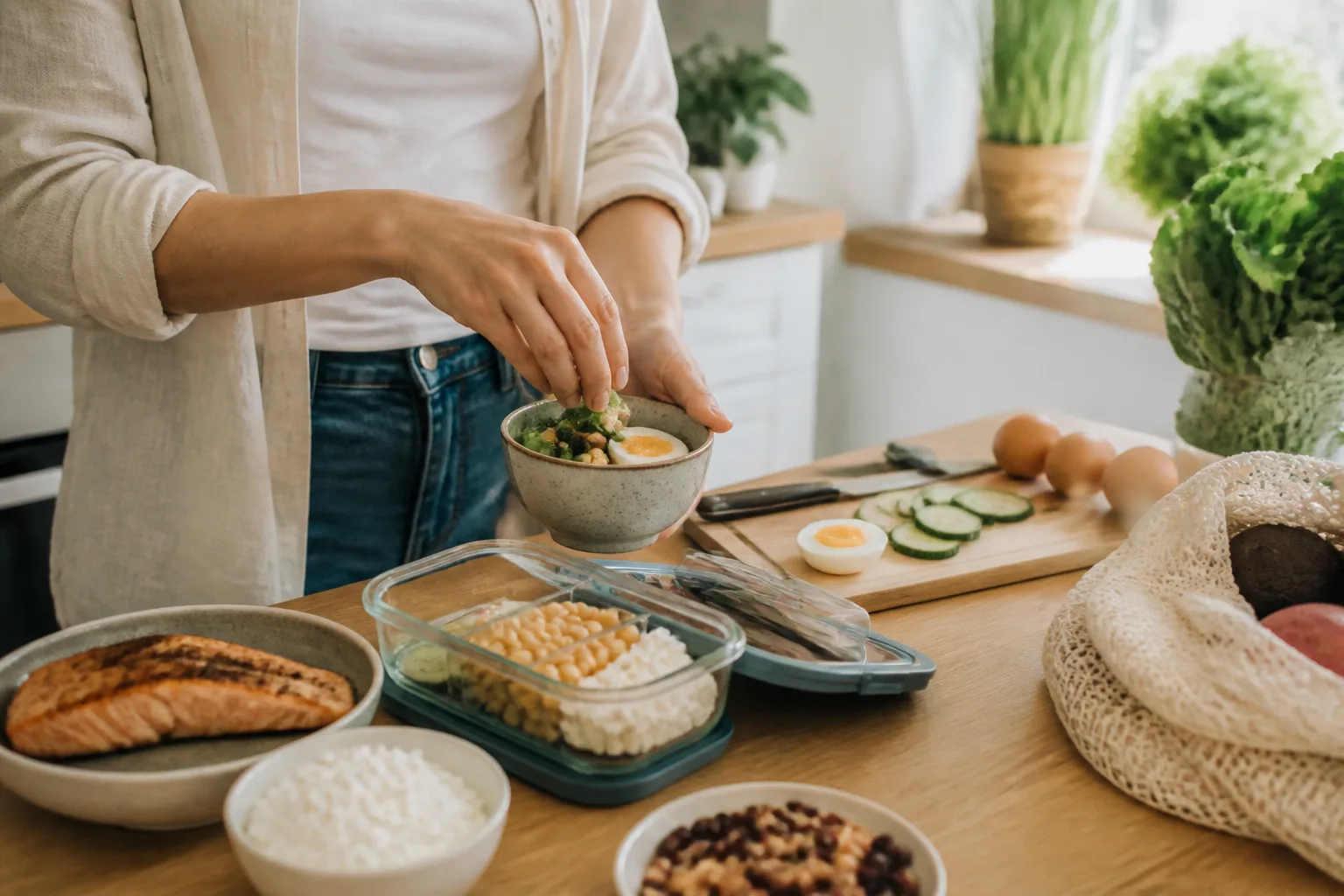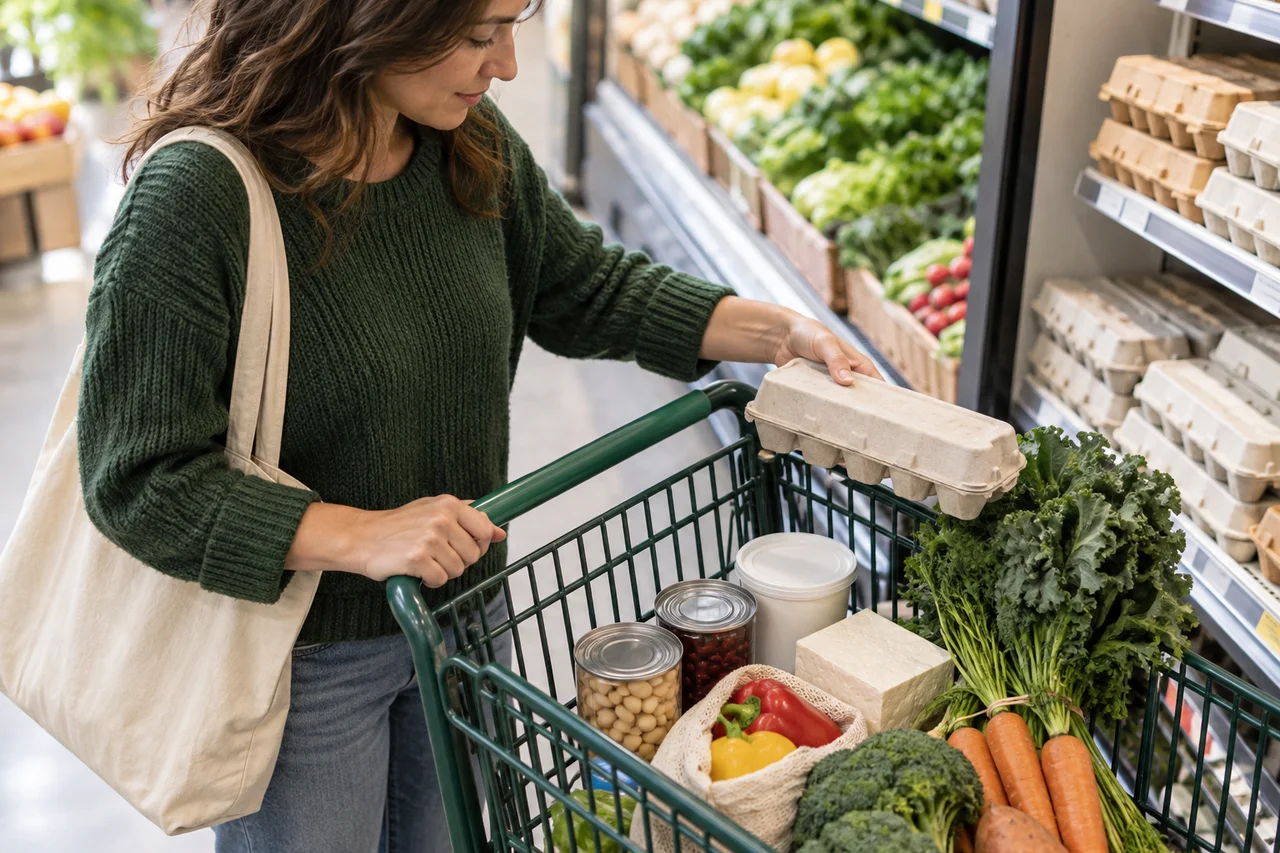
A useful high-protein grocery list is a plan for meals you will actually make, not a cart full of products labeled “protein.” Start with two or three protein anchors you like, one fast backup, and the fruit, vegetables, grains, or bread that turn those anchors into meals. Buy amounts for the days you expect to eat at home. If your week changes, your list should be able to change with it.
A high-protein grocery list you can take to the store
Choose across the columns; you do not need every item. The amount to buy depends on household size, appetite, and how many meals you want to cover.
| Section | Foods to consider | One easy use |
|---|---|---|
| Refrigerated | Eggs; plain Greek yogurt; cottage cheese; tofu or tempeh | Eggs on toast, yogurt with fruit, or tofu with rice and vegetables |
| Meat and seafood | Chicken or turkey; fish; lean ground meat | Cook one batch for bowls, wraps, or a sheet-pan dinner |
| Shelf-stable | Canned tuna or salmon; beans; lentils; nut butter | A tuna sandwich, bean-and-grain bowl, or lentil soup |
| Frozen | Edamame; frozen fish; frozen poultry; vegetables | A quick meal when fresh food runs out |
| Meal builders | Oats; whole-grain bread or tortillas; rice; fruit; vegetables | Make the protein food into breakfast, lunch, or dinner |
The same food can fill several jobs. A tub of yogurt might be breakfast, a dip base, and a small snack. A can of beans can stretch ground meat in chili or become lunch with rice and salsa. A shorter list with repeat uses is often easier to finish than a longer, more impressive one.
Buy for meals, then check the package
Before you put an item in the cart, name its first meal. “Chicken for two rice bowls” is more useful than “more chicken.” If you cannot picture when you will prepare it, choose a shelf-stable or frozen option instead.
Packaged foods require one extra check: protein per serving, serving size, and servings per package are three different facts. A large yogurt container may show nutrition for part of the tub. A bag of frozen edamame may contain several servings. Compare the same amount of food when choosing between products, then buy the pack size you are likely to use. The Nutrition Facts label is a guide to the packaged product, not a promise about the portion you will eat.
For a flexible week, build around three kinds of purchase:
- A ready-now food: yogurt, cottage cheese, canned fish, or another option you can eat without cooking.
- A cook-once food: eggs, tofu, chicken, turkey, or lentils for several meals.
- A reserve: frozen edamame or fish, or a can of beans for the day your plan falls apart.
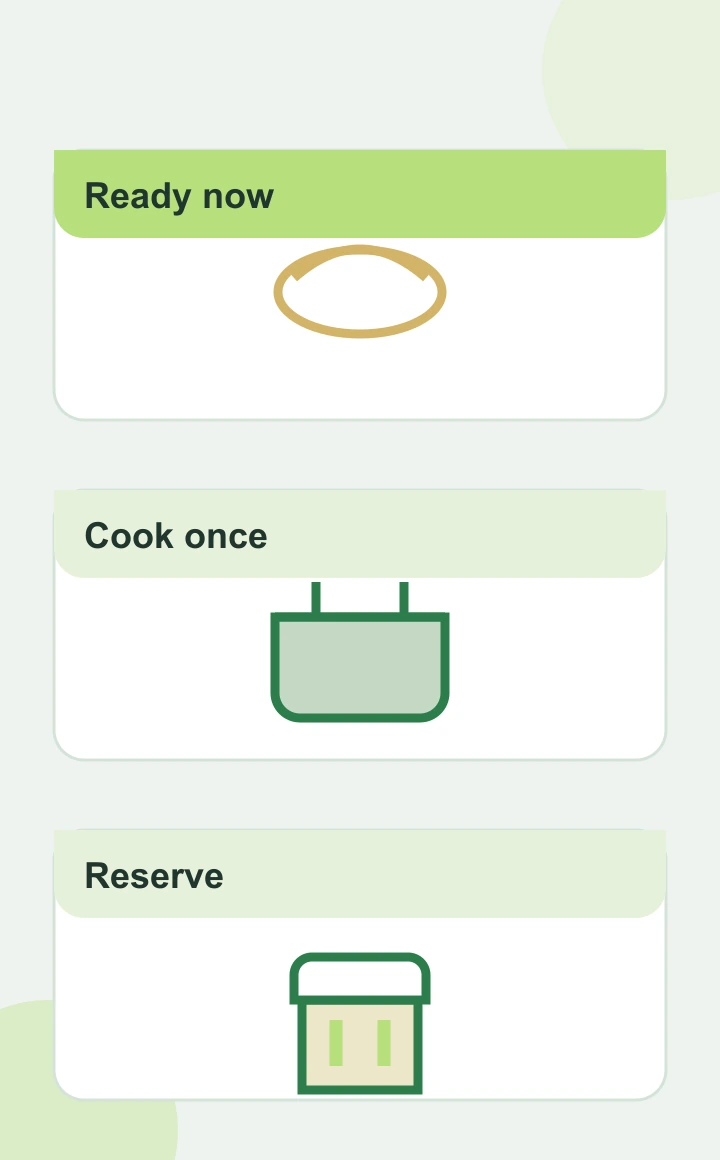
Give each protein purchase a job before you put it in the cart.
You can swap within each role without starting over. If chicken is expensive, tofu, eggs, lentils, or canned fish may fit the meals you planned. If a large tub will spoil before you use it, smaller containers may be a better buy even when the shelf price per ounce is higher.
Keep the budget and the leftovers in the plan
Compare usable portions, not just sticker prices. A family pack only saves money if you can cook, refrigerate, or freeze the extra food safely. Frozen and canned options can reduce waste because you can open only what you need. Plain versions often give you more ways to use the same ingredient than a highly flavored single-use product.
Before shopping, look in your refrigerator, freezer, and pantry. If you already have beans and rice, perhaps you need only eggs, vegetables, and a yogurt you enjoy. Pick two meals that share ingredients, such as a chicken-and-vegetable bowl and a chicken wrap. That makes the package size work harder without asking you to eat the exact same plate every day.
For perishable foods, use the package instructions and the FoodSafety.gov cold-storage chart for the specific food. Put a date on cooked leftovers and freeze portions you cannot use promptly; do not treat one storage window as applying to raw poultry, cooked fish, opened dairy, and every other food. A freezer backup is only useful if you can remember what is inside and when you put it there.
Turn the list into meals with little prep
Try a simple pairing instead of a rigid menu:
- Breakfast: eggs and toast with fruit, or Greek yogurt with oats and berries.
- Lunch: canned salmon or chickpeas with greens and a grain; add dressing or sauce you like.
- Dinner: tofu and frozen vegetables over rice, or chicken with potatoes and a vegetable.
- Small or no-cook option: cottage cheese and fruit, a bean-and-cheese tortilla, or yogurt with nut butter.
These are combinations, not protein prescriptions. If you are eating less than usual, a small portion you can manage may be more useful than planning a large meal you will not start. Our guide to eating with low appetite addresses that situation directly. For why protein may need individual attention during GLP-1 treatment, see protein on GLP-1; this shopping list is for getting food into the kitchen and onto a plate.
A five-minute shopping plan
Count the meals you expect to eat at home, then write down one protein anchor for each meal type. Add a ready-now choice and a reserve. Finally, add the ingredients that make those foods appealing: bread, grains, vegetables, fruit, seasonings, and a sauce you will use. Cross off what you already own.
If you want to see whether the groceries became meals you enjoyed, record the foods and portions you actually ate. The Glowise Food and Protein Tracker can keep that meal context together. You do not need a perfect log to notice that the tofu was used twice and the large yogurt tub was not finished; that is enough information to make a better list next time.
Sources

About the author
Maya Lee
Glowise Senior GLP-1 Content Editor
Maya Lee is a Glowise Health Content Editor. Her guides turn product records, authoritative sources, and everyday organization questions into clear, practical GLP-1 information.
She helps readers ask better questions and keep the details relevant to a care conversation together.
See more Glowise on Google
Add Glowise as a preferred source to find our GLP-1 guides more easily in Google Search.