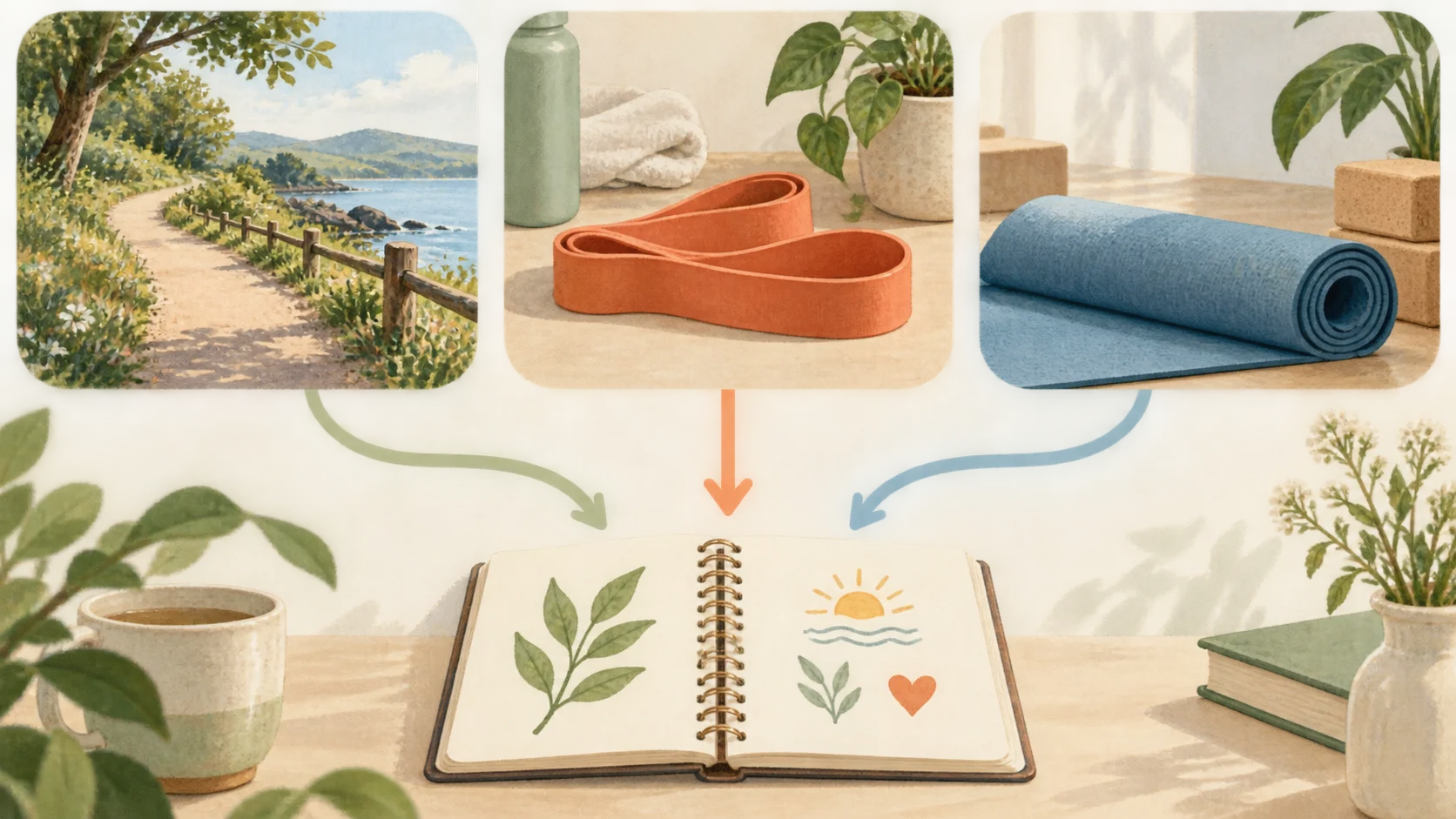
Taking a GLP-1 medication does not create one special workout plan that everyone needs to follow. A workable approach starts with four things: the type of activity, your current starting point, how the routine fits around recovery, and what you learn when you review the week. Walking, resistance bands, and a favorite active hobby can all be options. None is automatically the right choice for every person.
Public-health guidance offers a useful reference point, but it is not an individual exercise prescription. The CDC says adults need at least 150 minutes of moderate-intensity activity each week, or 75 minutes of vigorous activity, or a combination of the two. It also recommends muscle-strengthening activity on two or more days and notes that activity can be divided into smaller chunks. Those categories can help you understand the overall shape of an active week without requiring you to copy someone else's routine (CDC).
Start with categories, not a borrowed schedule
The CDC reference separates activity into broad categories: moderate-intensity aerobic activity, vigorous aerobic activity, and muscle-strengthening activity. It also allows aerobic minutes to come from a mix of moderate and vigorous movement. This matters because a weekly target is not the same thing as a daily template. It does not tell you that Monday must be a gym day, that every session must last a certain number of minutes, or that a particular activity is mandatory (CDC).
Think of the guideline as a map legend. It explains the kinds of movement counted in the public-health reference, while leaving room for many routes through the week. One person might prefer several walks. Another might choose a mix of walking and resistance-band sessions. Someone else might build around an activity they already enjoy. These are ordinary examples of ways to organize movement, not promises about results or instructions for an individual.
Your starting point belongs in the picture too. A routine that looks simple on paper may still be unrealistic if it assumes time, equipment, or a level of activity that is not part of your present week. Beginning with what is actually repeatable gives you something concrete to review. It also makes the question more useful than “What is the best GLP-1 workout?” The better question is often, “What kind of movement can I place in this week and understand well enough to revisit?”
Build a flexible weekly loop
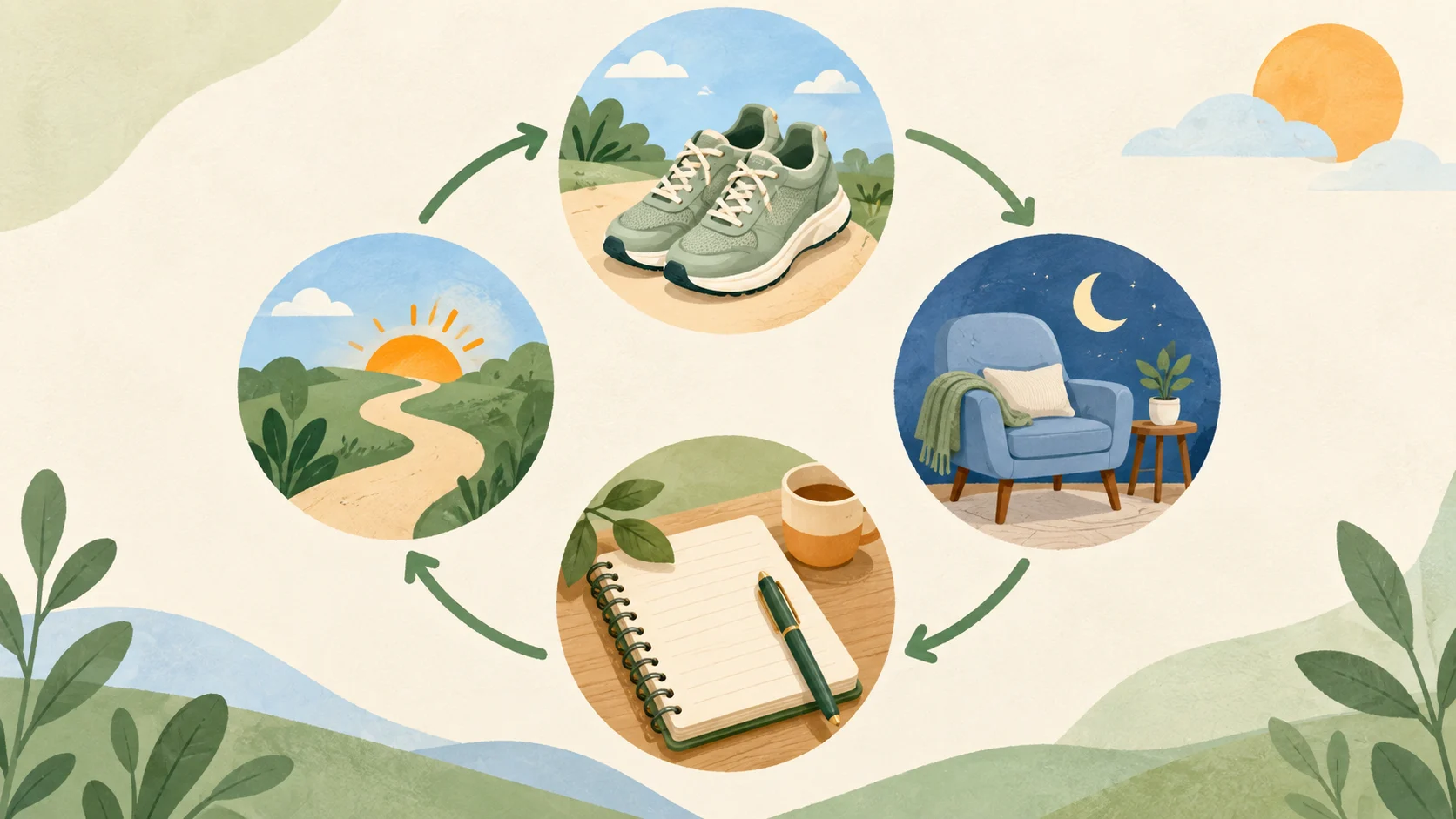
A weekly loop turns broad guidance into a small planning and review exercise. It does not decide medical readiness or prescribe intensity. Its job is to keep the pieces visible so you can describe the routine clearly and avoid changing several things without remembering what changed.
| Part of the loop | Question to ask | Ordinary options |
|---|---|---|
| Choose | What kind of movement am I considering? | A walk, resistance bands, or a preferred active pastime |
| Place | Where could it realistically fit? | One longer period or smaller chunks across available days |
| Notice | What context would help me remember the week? | Activity type, approximate duration, timing, and a short recovery note |
| Review | What stayed workable, and what was difficult to repeat? | Keep the same structure, simplify it, or prepare a question before changing direction |
The “place” step is deliberately flexible. The CDC notes that weekly activity can be divided into smaller chunks, so a busy week does not have to be treated as a choice between one long session and doing nothing (CDC). The table does not convert that population guidance into a personal target. It simply gives you a way to see whether the routine you imagined resembles the week you actually had.
Keep activity and recovery in the same review
An activity entry is more informative when it is not isolated from the rest of the week. “Walked” tells you less than a short note that includes when the walk happened, roughly how long it lasted, and what the surrounding routine looked like. The purpose is not to grade the session or prove why anything happened. It is to preserve context that would otherwise be easy to lose.
Recovery can be reviewed with the same restraint. Instead of turning one impression into a conclusion, note what you would want to remember later. Perhaps the timing was inconvenient. Perhaps the chosen activity was easy to fit in but the duration was not. Perhaps the routine competed with another commitment. These observations can help you decide whether the next useful step is an organizational change, a question, or simply another week with the same structure. They do not establish whether medication caused an experience or whether an activity is medically appropriate.
It is also helpful to resist attaching exercise to a precise medication dose, calorie target, expected weight change, or body-composition promise. Those links can make a neat-looking plan feel more certain than the supplied information supports. Keep medication decisions separate from the exercise-planning loop. The loop is for making activity and routine context reviewable, not for calculating a dose response or guaranteeing an outcome.
Review one week without turning it into a verdict
A weekly review works best when it asks a few specific questions instead of declaring the week a success or failure:
- What activity did I plan, and what did I actually do?
- Did the timing and format fit the week I had?
- Was the activity completed in one period or in smaller chunks?
- What surrounding context is worth remembering?
- What is the smallest clear question or adjustment to carry into the next review?
The last question does not mean escalating the routine every week. Sometimes the clearest next step is to keep it unchanged long enough to understand whether it is workable. Sometimes it is to simplify the format. If a question involves individual readiness, medication, or a medical concern, the record can help you describe what happened, but it cannot answer that question by itself.
Glowise's GLP-1 Tracker can organize user-entered activity alongside medication, food, water, side-effect, weight, and progress context. That can make a weekly review less dependent on memory and give you a more coherent record to look back on. Glowise does not determine whether you are ready for an activity, prescribe a workout, or recommend a medication dose or schedule.

Let the next step come from the review
The useful outcome of a review is not a universal “best” routine. It is a clearer description of what you tried and what needs attention next. If short walks fit naturally but a planned band session never found a place, the lesson is about the structure of that week, not your worth or motivation. If the plan was too complicated to recall, fewer details may make the next record more usable. If the same question keeps returning, write it down plainly rather than guessing at an answer.
This approach keeps public-health guidance in its proper role. The CDC categories provide an overall reference for adult activity, including aerobic and muscle-strengthening activity and the option to divide movement into smaller chunks (CDC). Your weekly loop then helps you organize what you chose, what occurred, and what you want to review. It does not turn a population guideline into individual clearance or a guaranteed result.
The practical takeaway
A reviewable GLP-1 and exercise routine
- There is no single universal workout plan required for someone taking a GLP-1 medication.
- Use public-health categories as a reference, not as an individual prescription.
- Choose an activity, place it realistically in the week, record useful context, and review what was repeatable.
- Keep medication dose, calorie targets, weight-loss expectations, and body-composition promises outside this planning loop.
- Use a record to improve recall and prepare clearer questions, not to diagnose a cause or determine readiness.
Sources

About the author
Maya Lee
Glowise Senior GLP-1 Content Editor
Maya Lee is a Glowise Health Content Editor. Her guides turn product records, authoritative sources, and everyday organization questions into clear, practical GLP-1 information.
She helps readers ask better questions and keep the details relevant to a care conversation together.
See more Glowise on Google
Add Glowise as a preferred source to find our GLP-1 guides more easily in Google Search.