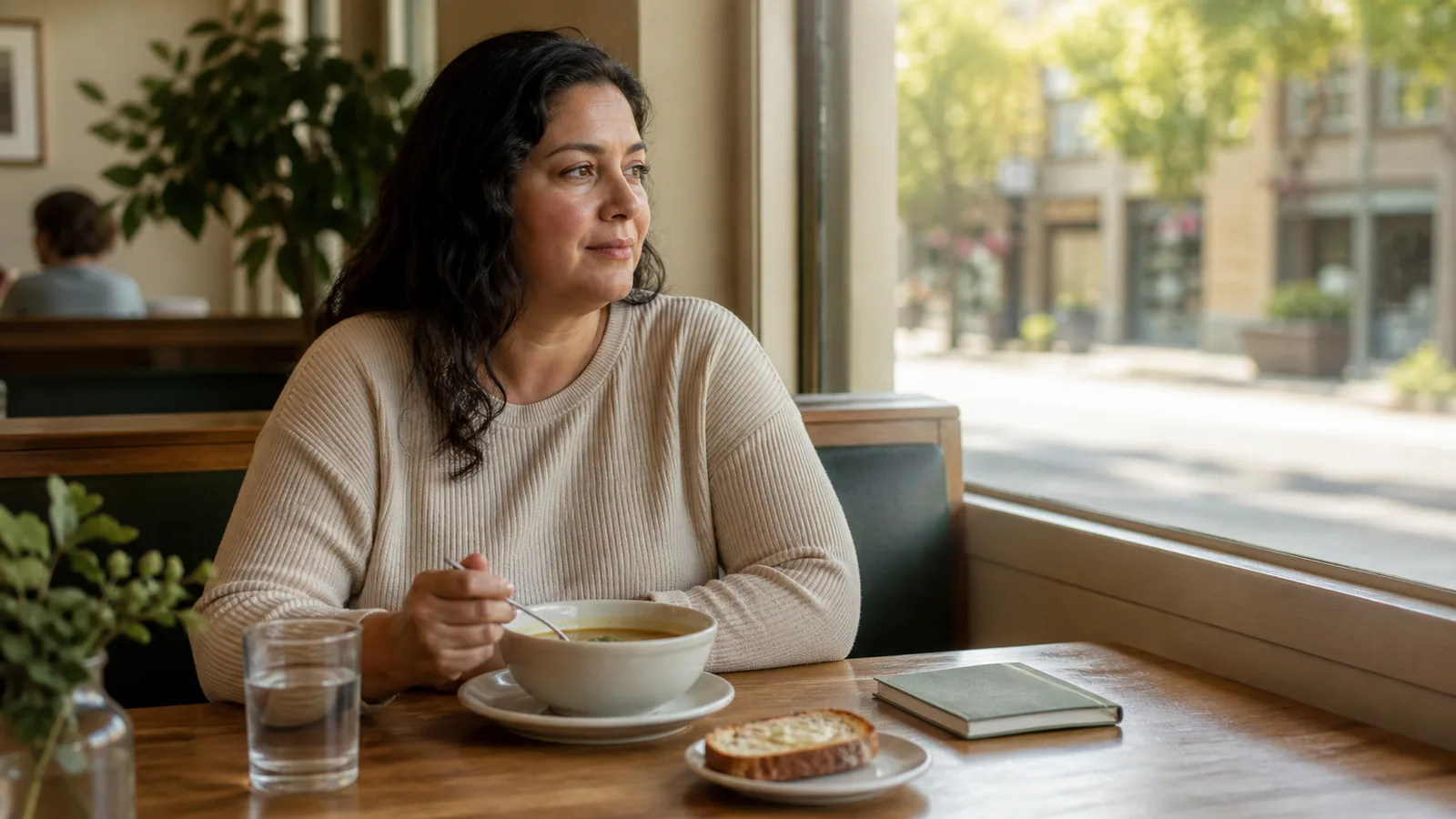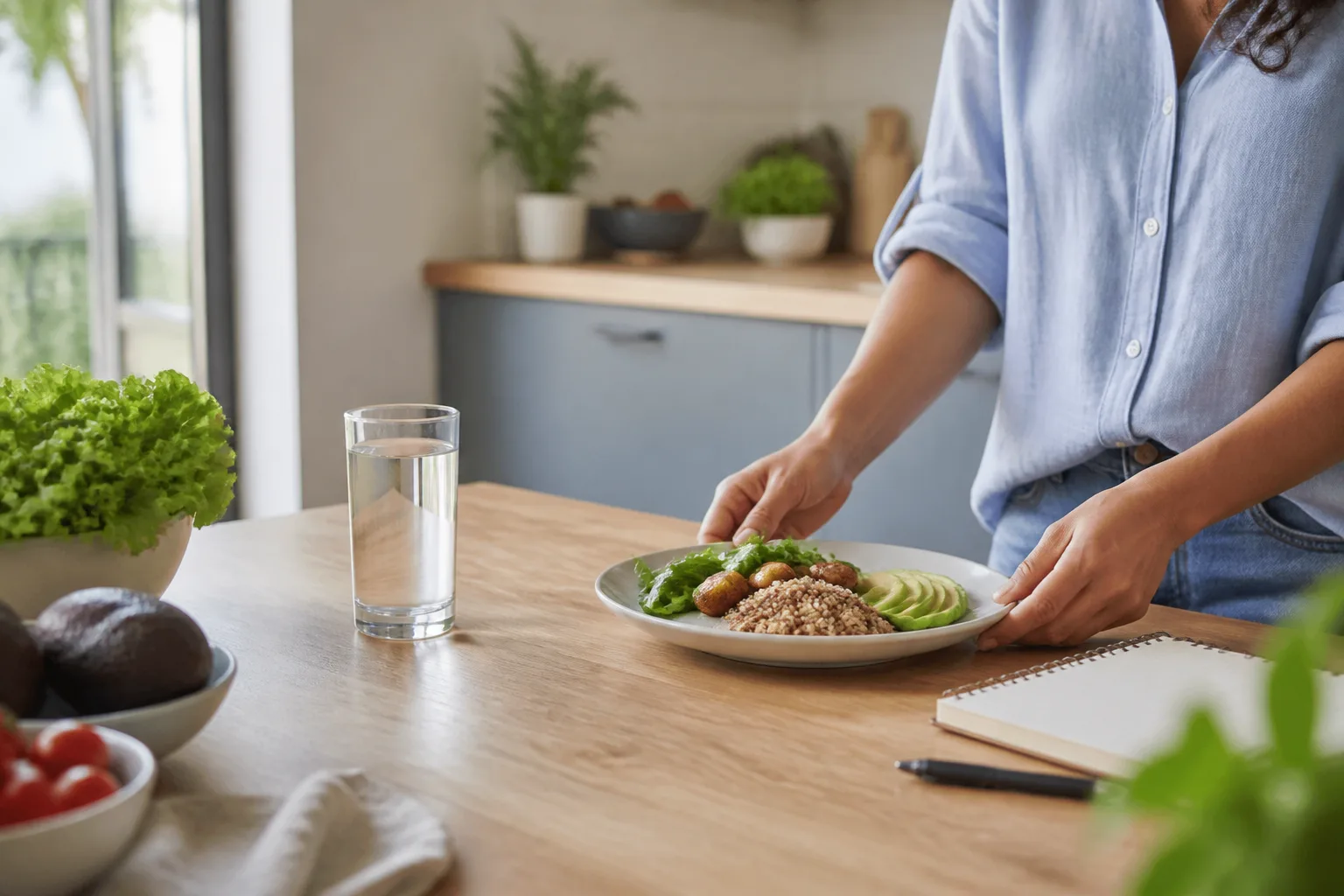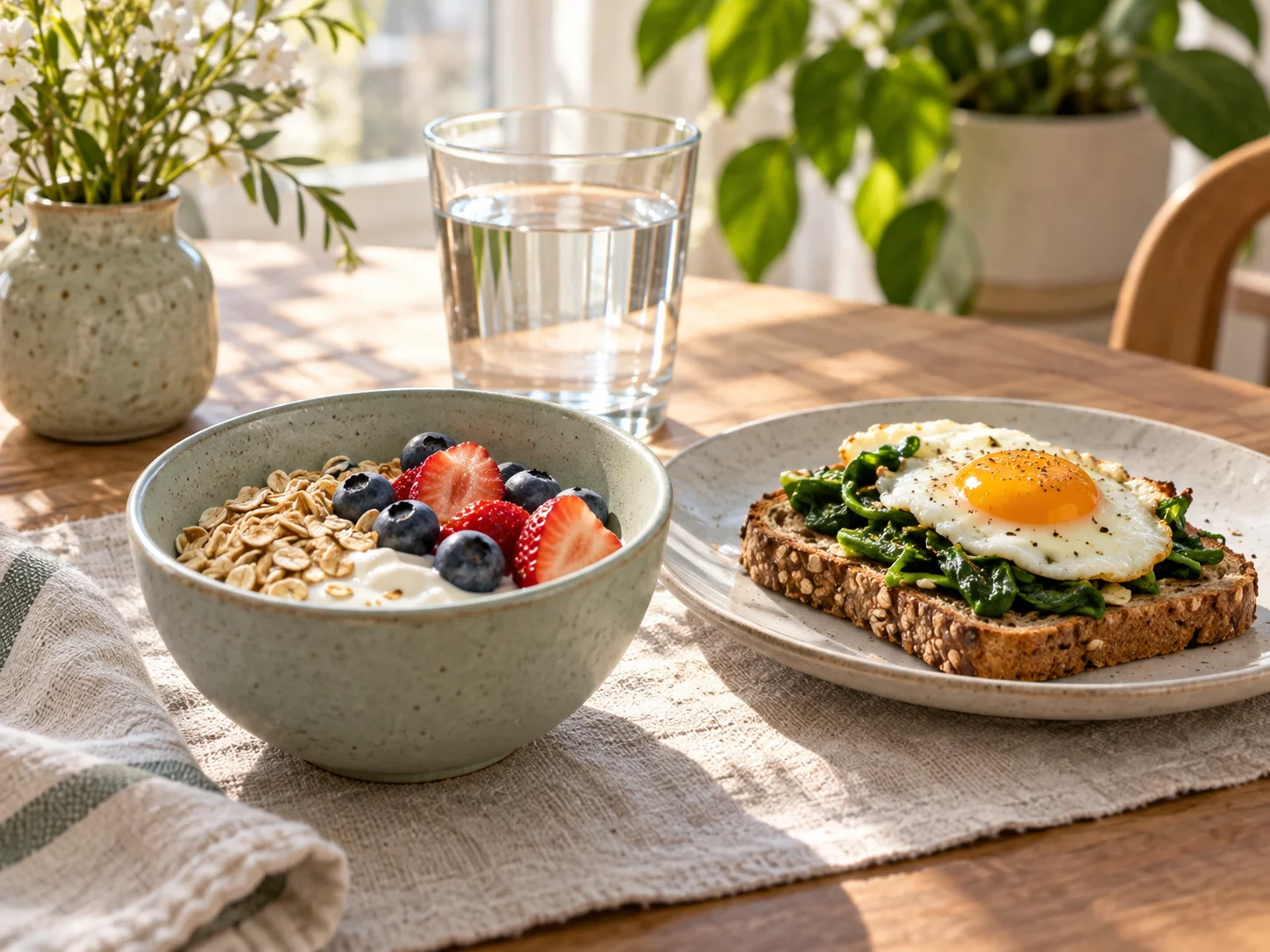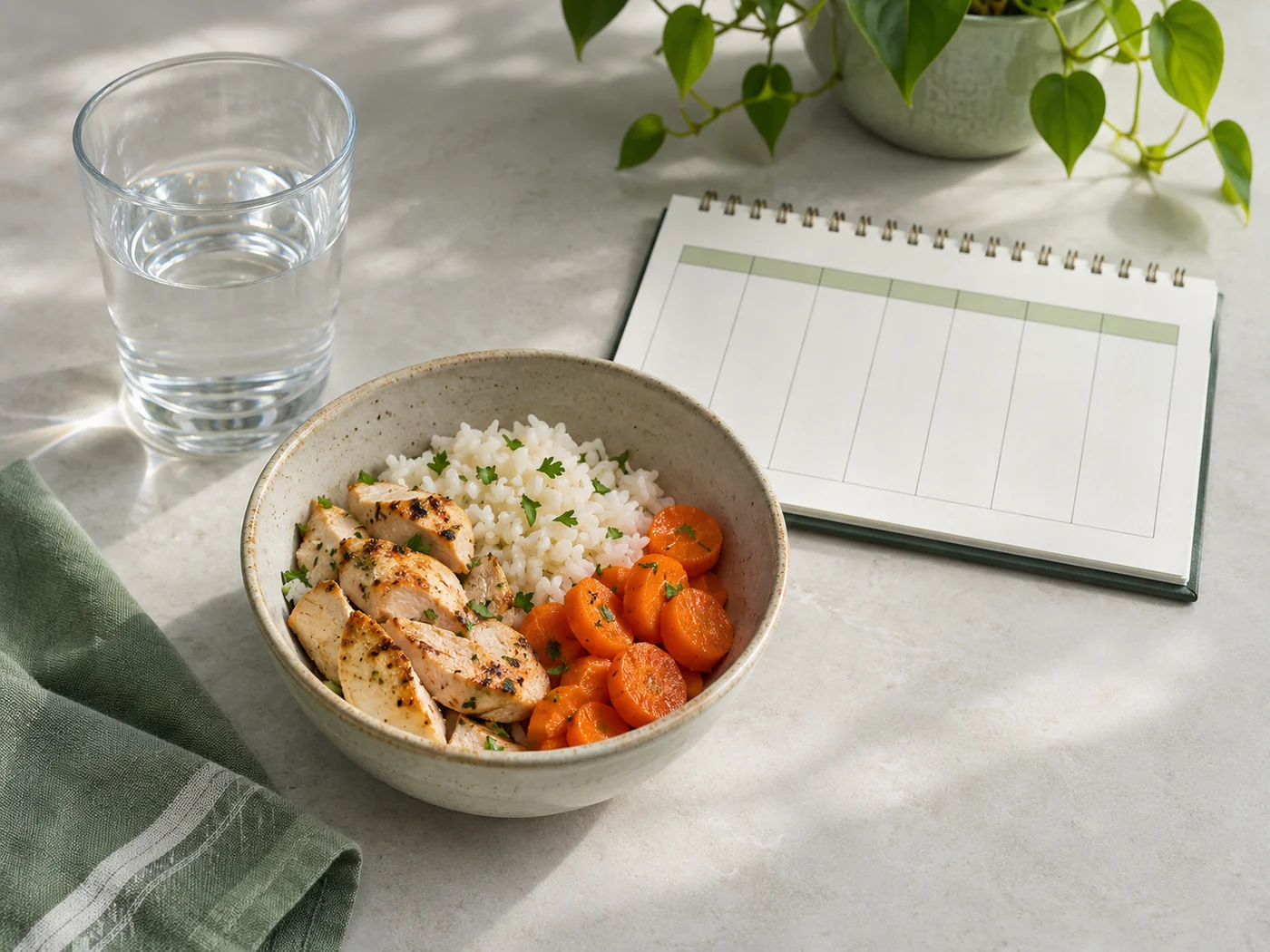
On GLP-1 shot day, eat familiar meals that fit your appetite: yogurt or egg on toast in the morning, a sandwich or soup at lunch, and chicken, fish, or tofu with rice and vegetables at dinner. Start smaller if you feel full quickly. These are options for an ordinary day, not a special menu you must follow before an injection.
You do not need an empty stomach for weekly Wegovy, Ozempic, Zepbound, or Mounjaro injections. Their US prescribing information allows dosing at any time of day, with or without meals. You can eat before or after your shot; the injection instructions do not impose a waiting period around food. See the labels for Wegovy, Ozempic, Zepbound, and Mounjaro.
The useful distinction is between what your medication requires and what feels comfortable to eat. Meal timing is flexible for those injections. Your appetite, symptoms, and personal care plan still matter.
Before or after the shot: choose a routine you can keep
If your weekly injection is in the morning, breakfast can come before or after it. If you inject in the evening, there is no need to hold dinner until afterward or eat an extra meal to prepare. Choose a time that works with your prescribed weekly schedule and follow the instructions for your exact product and device.
Check the form as well as the brand name. Oral semaglutide has different food instructions. For example, the current Wegovy label includes both injections and tablets; the tablets have an empty-stomach morning routine. The flexibility described here applies to the weekly injections listed above, not automatically to a tablet or another medication.
Separate fasting instructions for a procedure or medical test also need their own plan. Tell the team performing it that you take a GLP-1 medication rather than applying an ordinary shot-day eating routine.
A flexible day of eating
You do not need to rearrange a day that is already working. The following example gives you a few decisions to make before food feels like another task.
| Part of the day | One possible meal | How to keep it flexible |
|---|---|---|
| Morning | Egg on toast, or yogurt with fruit | Make the version you usually enjoy; there is no required pre-shot breakfast. |
| Midday | Chicken or tofu soup with bread, or a familiar sandwich | Serve a smaller amount to begin with if your appetite is lower. |
| Afternoon | An available snack, such as yogurt, fruit, or crackers with cheese | Keep an option nearby if lunch was small or the workday runs late. |
| Evening | Fish, chicken, or tofu with rice and cooked vegetables | Put a little on the plate first, with more available if you want it. |
| Throughout the day | Water or another drink that fits your care plan | Keep it accessible instead of depending on meals to remind you. |
The menu is illustrative. Portions, protein needs, carbohydrates, and fluid allowances depend on your health and treatment plan. You do not need a special shake or a particular number of protein grams just because today is injection day. For broader everyday eating guidance, use the GLP-1 nutrition guide.
An evening shot does not require “banking” food with an oversized dinner. Equally, permission to inject without food is not an instruction to fast all day.
If you feel queasy, change the meal rather than forcing it
For mild nausea, smaller, more frequent eating opportunities may be easier than a large meal. The joint nutrition advisory from four medical and nutrition organizations recommends this approach and limiting fatty foods during early treatment when digestive symptoms occur. It also notes that a long stretch without eating can worsen nausea for some people.
A practical adjustment might be a little toast or rice first, then a small amount of egg, yogurt, chicken, or tofu when it appeals. A large fried meal may be a less comfortable choice while you are nauseated. Start with food you already tolerate; no food can guarantee a symptom-free injection day.
Use these adjustments when symptoms call for them. A comfortable shot day does not need to become a crackers-only day. If low appetite is the recurring problem across the week, the more detailed guide to eating with low appetite addresses that separate question.
Do not assume the calendar predicts your symptoms
Keep an easy meal available for the next day if that helps you prepare, but do not assume nausea must start immediately after the injection or be over by morning. The checked product instructions do not establish one universal shot-day symptom schedule.
Starting treatment or increasing a dose can also change tolerance. In adult Mounjaro trials, most reports of nausea, vomiting, or diarrhea occurred during dose escalation and decreased over time, according to its prescribing information. That finding does not predict your most difficult weekday.
If a pattern repeats, write down when you injected, when symptoms began, and what you could eat or drink. Bring that information to your prescriber if side effects are interfering with meals; a stricter menu is not the only possible response, and dose decisions belong with the treating team.
When a meal adjustment is not enough
If you use insulin or a sulfonylurea, make sure you have a plan for days when you eat much less. These medicines can increase low-blood-sugar risk when used with GLP-1 treatment. Follow your glucose-checking and low-blood-sugar treatment instructions, and contact your diabetes team if you cannot follow your usual eating plan. Do not independently change medication doses. This risk is described in the Ozempic Medication Guide.
Contact your healthcare provider promptly for severe or persistent digestive symptoms, or if you cannot keep fluids down. Ongoing nausea, vomiting, or diarrhea can cause dehydration and kidney problems. For severe abdominal pain that does not go away, which may extend to your back and may occur with or without vomiting, stop using your GLP-1 medicine and call your healthcare provider right away. The current Wegovy Medication Guide gives this pancreatitis warning; check your own medication guide too. Do not try to solve that pain by changing dinner.

About the author
Maya Lee
Glowise Senior GLP-1 Content Editor
Maya Lee is a Glowise Health Content Editor. Her guides turn product records, authoritative sources, and everyday organization questions into clear, practical GLP-1 information.
She helps readers ask better questions and keep the details relevant to a care conversation together.
See more Glowise on Google
Add Glowise as a preferred source to find our GLP-1 guides more easily in Google Search.