Weight regain after stopping GLP-1 has been observed in withdrawal studies, but those results describe particular study groups and do not predict any one person's next year. If a treatment change is being considered, keep the exact prescription information, your recent routine context, and the questions you want answered together—then take the medication decision to a prescriber or pharmacist.
That sounds like a small distinction. It is actually the whole point. A study result is a description of a measured group, under defined conditions, over a defined period. Your situation is one person, with one prescription, one routine, and one set of questions. The calmer way to use research is to let it shape better questions—not to let it stand in for an answer about you.
What the Withdrawal Studies Actually Measure
Withdrawal studies follow a specific design. Participants receive a treatment under a protocol, then some stop, and researchers measure what happens to the group afterward. The published result is an average across that group, inside that protocol, across that timeframe.
For general background before reading a withdrawal result, how GLP-1 medicines work can give the medicine context without deciding what should happen next for you.
The STEP 1 extension analysis included 327 people who had completed a 68-week trial of semaglutide or placebo alongside a lifestyle intervention. At week 68, treatment and the lifestyle intervention stopped. In the semaglutide group, mean weight loss from week 0 to week 68 was 17.3%. During the following off-treatment year, mean regain was 11.6 percentage points by week 120, leaving a mean net loss of 5.6% from baseline. Those are measured group results from that extension—not a forecast for every person, every GLP-1 medicine, or every treatment transition.
The study group matters
A study group is assembled on purpose. Eligibility criteria decide who joins, the protocol decides what they do, and the analysis decides what gets counted. Two people in the same study can have very different individual experiences while the published number still lands on a single average.
So when a headline compresses a withdrawal study into one dramatic line, something is always lost: the population, the protocol, and the spread of individual results underneath the average. Reading the finding accurately means keeping those qualifiers attached to it, the way you would keep a label attached to a container.
Why a Study Result Is Not a Personal Forecast
It is natural to read a group average and feel it as a prediction. If most participants in a study regained weight on average after stopping, the mind quickly completes the sentence: so that is what would happen to me. But an average is a summary of many different individual paths, not a description of any one of them.
A personal forecast would need inputs a study does not have: your exact prescription history, your current routine, what your prescriber is trying to accomplish, and what "next" even means in your situation. Those details live in your records and your conversations, not in a published table.
Group pattern versus personal next step
The useful way to hold a study result is as context for a conversation. It tells you that weight change after stopping is a real, measured topic worth asking about—not an answer to the question of what you should do.
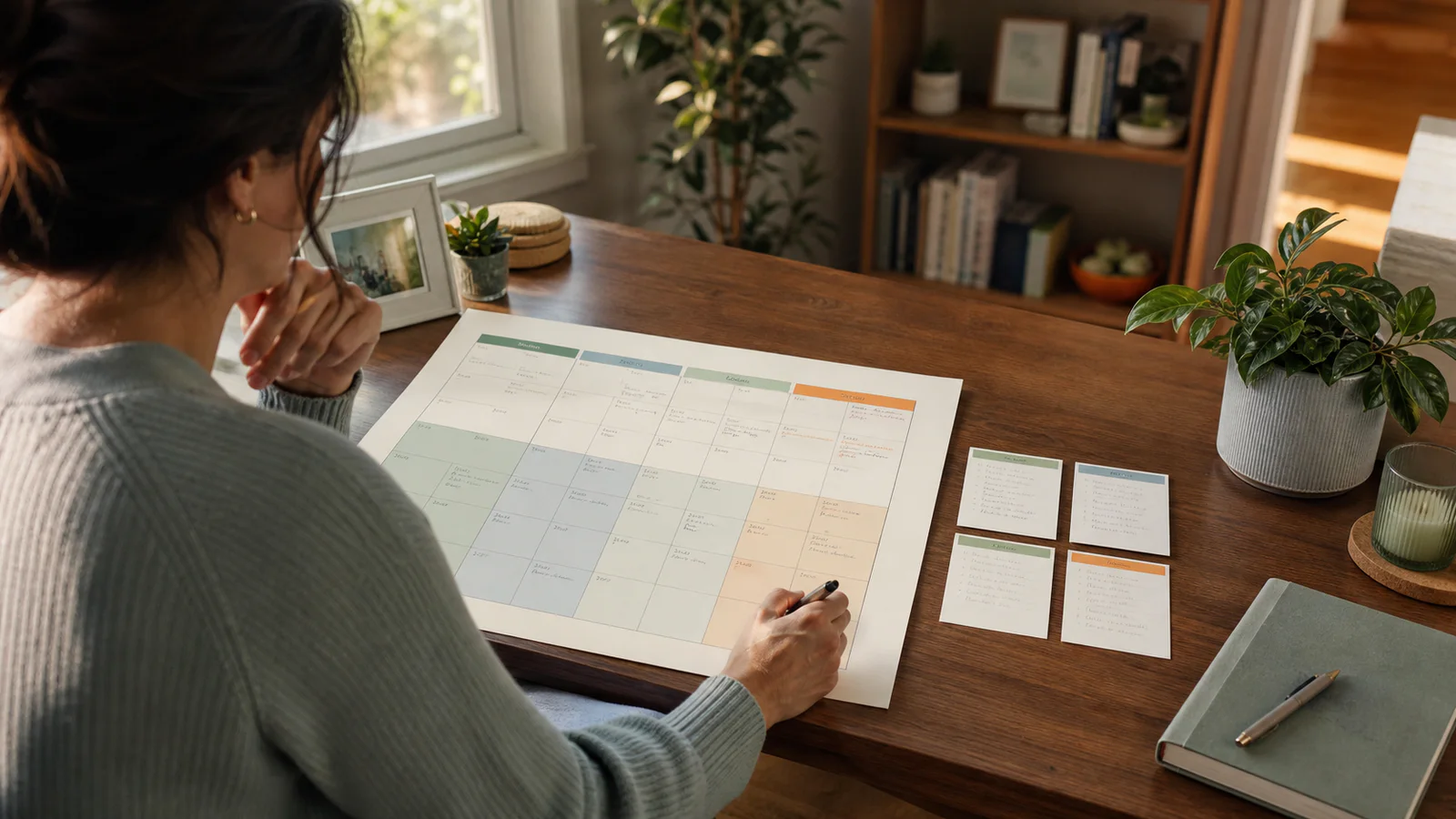
This is also where a personal record earns its place. A transition record is not a decision tool. It supports recall: it helps you remember what your routine looked like, what your prescription details were, and which questions you meant to ask. The decision itself belongs elsewhere—with the prescriber or pharmacist who can see the whole picture.
What to Put in a Transition Record
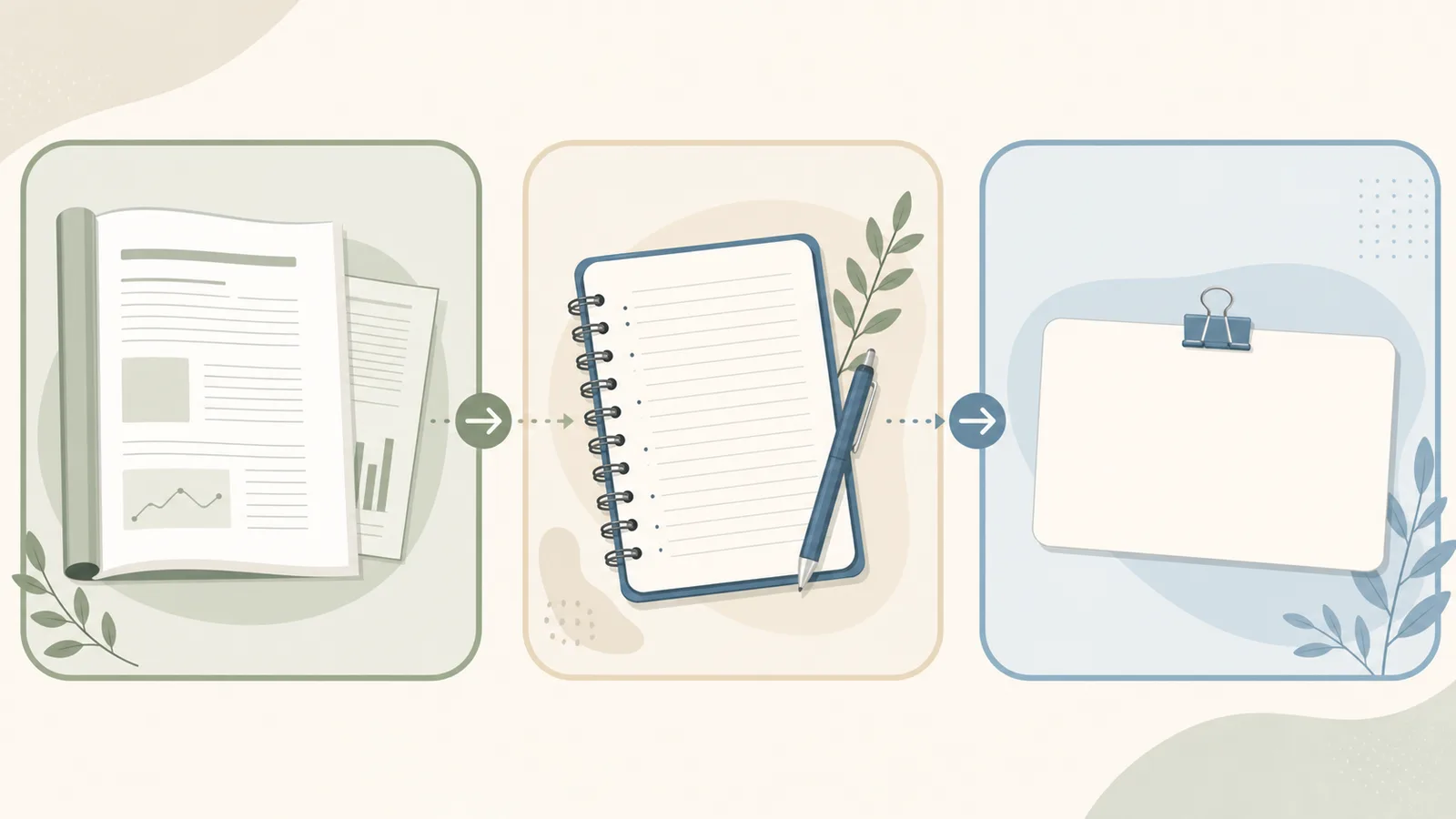
A transition record is simply a place where the details you would otherwise lose stay together. It does not need to be elaborate. It needs to hold three kinds of things: the exact prescription information, the recent routine context you want to remember, and the questions you want answered.
Keep the question and context close
The record works best when the question sits next to the context it depends on. A question like "what happens if my schedule changes" means something different when it sits beside a recent set of actual meals and notes than when it floats alone in your head.
| Section | What to note |
|---|---|
| Prescription details | Medication name and strength exactly as written on the label |
| Routine context | Recent meals, water, activity, and anything that changed |
| Questions | The specific things you want to ask, in your own words |
| Who to ask | Prescriber or pharmacist, with the record in hand |
None of these rows makes a treatment decision. They make the conversation shorter and clearer, because the details are already gathered instead of reconstructed from memory under pressure.

The Questions to Settle Before Any Medication Change
Before any medication change, there are questions only a qualified professional can answer for your situation, and there is homework only you can do. The homework is bringing the right materials. The exact prescription information—the name, the strength, the directions as written—is the foundation, because general advice cannot speak to a specific prescription.
It also helps to separate what you have read from what you have been prescribed. General mechanism is not personal instruction, and a clear record keeps the two from blurring together.
Use the exact prescription as the source
When a question touches your medication, the label and the prescriber outrank everything else. Online discussions, averages, and other people's experiences are background. The prescription in your hand, interpreted by the person who wrote it or the pharmacist who filled it, is the source.
Write your questions down before the appointment, in plain language, next to the context they refer to. "What should I watch for" is a fine question; "what should I watch for, given these recent notes" is a better one. You might also ask:
- What changes should I monitor during this transition?
- Which details in this record would help you assess my current prescription?
- What follow-up should I plan for, and when?
- What options, if any, should we discuss before any medication change?
What a Week of Food and Routine Notes Can Do
A short set of honest notes does more than a month of vague memory. Meals, water, sleep, movement, and the small disruptions—a trip, a busy stretch, a change in appetite—form the texture that makes your questions concrete. You are not building evidence for a decision; you are building recall for a conversation.
This is also where tooling can quietly help. When you keep routine context together in one place, the week stops being something you have to reconstruct and becomes something you can simply open. The point is not precision for its own sake. The point is that a clear record is easier to describe than a blurry one.

A calmer place for transition details
Keep the question and the week together
Bring medication notes, food, water, progress, and the questions you want to revisit into one personal record.
A Calorie Estimate Is Not a Treatment Plan
Numbers have a way of feeling authoritative, so it is worth saying plainly: a calorie estimate is an estimate. It is a general reference point built from general inputs. It is not a personal treatment plan, and it cannot account for your prescription, your history, or your prescriber's intent.
Used with that understanding, an estimate is still useful. A calorie and macro calculator can give you a rough frame for a conversation about food, the same way a set of notes gives you a rough frame for a conversation about routine. The frame informs the question. It does not replace the answer.
If the estimate and your lived notes disagree, the interesting part is the disagreement—not the number. Bring both to the conversation, and let the professional sort out which matters more for you.
The practical takeaway
What to carry into the next question
- Read withdrawal studies as group evidence with a defined population and timeframe.
- Keep the exact prescription information separate from general online advice.
- Record the routine context you want to remember without asking it to make a treatment decision.
- Do not stop, restart, or change medication on your own.
Frequently Asked Questions
Does everyone regain weight after stopping a GLP-1?
No study result applies to everyone. In the 327-person STEP 1 extension analysis, the semaglutide group had a mean regain of 11.6 percentage points during the year after treatment and the lifestyle intervention stopped. That is a measured result in one study group, not a statement about every person or every GLP-1 medicine.
Can a withdrawal study tell me what will happen to me?
No. A withdrawal study describes what a defined group experienced under a defined protocol. It cannot see your prescription, your routine, or your goals, so it cannot forecast your personal outcome. What it can do is confirm that this is a real, measured topic—one worth raising with your prescriber or pharmacist as a specific question.
Should I stop or change my GLP-1 on my own?
That is a decision to make with your prescriber or pharmacist, not on your own. Your role is to arrive prepared: the exact prescription information, your recent routine context, and the questions you want answered. Their role is to weigh those specifics against your situation. The record supports the conversation; it does not replace it.
Can a calculator replace personal nutrition advice?
No. A calculator produces a general estimate from general inputs. It cannot account for your prescription, your history, or your circumstances, so it cannot stand in for personal advice. It works best as a reference frame you bring into a conversation—one input among several, not the plan itself.
Sources

About the author
Maya Lee
Glowise Senior GLP-1 Content Editor
Maya Lee is a Glowise Health Content Editor. Her guides turn product records, authoritative sources, and everyday organization questions into clear, practical GLP-1 information.
She helps readers ask better questions and keep the details relevant to a care conversation together.
See more Glowise on Google
Add Glowise as a preferred source to find our GLP-1 guides more easily in Google Search.