
Hot flashes are not listed as a common Wegovy side effect in the current U.S. prescribing information. That does not prove Wegovy could never contribute to an individual's episode. It means the label does not establish the sudden waves of heat associated with menopause as an expected drug effect or give a reliable rate for them. If you feel hot or wake up sweating after starting Wegovy, the next useful question is what kind of episode you are having and what happens with it—not simply which day you took your dose.
What the Wegovy label actually says
The current U.S. Wegovy prescribing information and Medication Guide cover both the injection and tablets. Their common-side-effect list includes digestive symptoms, headache and fatigue, among others; it does not name hot flashes or hot flushes. The guide does mention sweating as a possible sign of low blood sugar, particularly relevant to people with type 2 diabetes who also use insulin or a sulfonylurea. A symptom listed under a warning is not the same as a measured rate of menopausal-style hot flashes.
You may find personal reports of feeling suddenly hot after a dose. Those experiences deserve attention, but a report and its timing cannot show whether Wegovy caused the sensation, whether another condition is involved, or how often it happens. The label's silence also cannot rule out an uncommon effect. It leaves the cause of an individual episode open.
A hot flash, sweating and a low-blood-sugar episode are different questions
A hot flash is a sudden feeling of warmth, often in the face, neck or chest; it may bring sweating and may happen at night. During perimenopause, changes in periods and sleep can accompany these episodes. MedlinePlus describes this pattern, but it cannot tell you from a symptom alone that menopause is the cause. People of different ages and sexes can have sweating for other reasons.
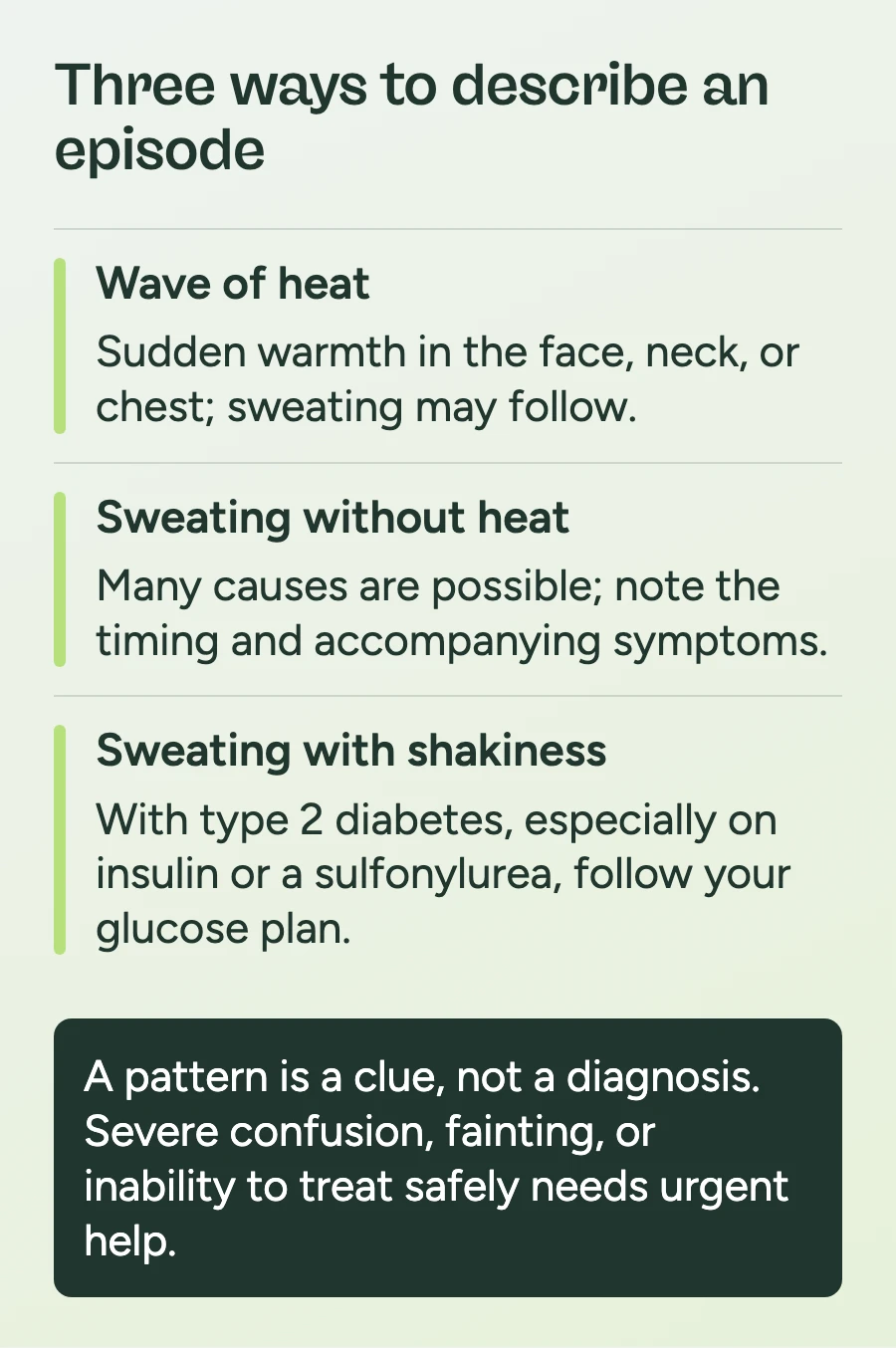
Sweating without a wave of heat is a broader symptom. Heat, exertion, illness, medicines, low blood sugar and other conditions can be involved. That is why “I was drenched at 3 a.m.” and “heat rushed up my face for a few minutes” are different descriptions to bring to a clinician. Neither one identifies its cause by itself.
If you have type 2 diabetes, pay particular attention when sweating comes with shakiness, hunger, dizziness, confusion, blurred vision or a fast heartbeat. The Wegovy Medication Guide lists these among signs of low blood sugar and says to discuss how to recognize and treat it with your healthcare provider and to check your blood sugar before and during treatment. The risk is higher when Wegovy is used with insulin or a sulfonylurea. Follow the glucose-checking and low-blood-sugar treatment plan your care team gave you; seek urgent help if someone is severely confused, faints or cannot safely take treatment by mouth. Do not assume an episode is “just a hot flash” while those warning signs are present.
These patterns can overlap. Someone in perimenopause can also take Wegovy and have diabetes. A warm feeling after an injection can occur during an ordinary hot flash or alongside another problem. Looking for accompanying symptoms and context narrows the question without pretending a home observation is a diagnosis.
What to notice before you call
Write down one or two actual episodes while the details are fresh: when they happened, whether heat rose through your face or chest or you mainly sweated, how long they lasted, and whether they woke you. Note any shakiness, hunger, fever, pain, rash, breathing trouble or pounding heartbeat. Include your Wegovy form, dose and last dose date, other medicines (especially diabetes medicines), and any recent change in periods or sleep if relevant. If you already monitor glucose under a care plan, record the reading and time rather than guessing from how you felt.
For example, “I woke sweating twice this week, without a feeling of heat in my face; once I also felt shaky before breakfast” gives a clinician a more useful starting point than “Wegovy gave me hot flashes.” A short record helps you remember the pattern; it cannot establish whether Wegovy, menopause or something else caused it. Contact your prescriber if episodes are new, recurring, disruptive or hard to explain. They can review the symptoms and medicines together and decide whether evaluation is needed. Do not change or stop a prescribed dose solely to test a theory, except when the Medication Guide specifically instructs you to stop and seek help for a warning symptom.
When the symptoms need faster attention
Stop using Wegovy and get medical help right away if a possible serious allergic reaction brings swelling of the face, lips, tongue or throat; trouble breathing or swallowing; severe rash or itching; fainting or dizziness; or a very rapid heartbeat. This is the Medication Guide's instruction, even if the episode began with warmth or flushing. If you have severe stomach-area pain that will not go away, with or without nausea or vomiting and sometimes spreading to the back, stop using Wegovy and call your healthcare provider right away; the guide identifies this as a possible pancreatitis warning.
Tell your healthcare provider right away about nausea, vomiting or diarrhea that does not go away, because fluid loss can lead to dehydration and kidney problems. Tell them if your heart races or pounds at rest for several minutes. Sweating with chest pain, shortness of breath, fever or unexplained weight loss also warrants prompt medical assessment, as MedlinePlus advises for sweating with these symptoms. Use emergency services for a medical emergency. A symptom log can wait until help is underway.
The useful conclusion is narrower than either “Wegovy causes hot flashes” or “Wegovy cannot be involved.” The label does not establish hot flashes as a common effect; sweating can appear in a specific low-blood-sugar warning; and a menopausal pattern or another cause may fit better. The details around the episode—and any warning signs—decide what question to take to your care team next.
Sources

About the author
Maya Lee
Glowise Senior GLP-1 Content Editor
Maya Lee is a Glowise Health Content Editor. Her guides turn product records, authoritative sources, and everyday organization questions into clear, practical GLP-1 information.
She helps readers ask better questions and keep the details relevant to a care conversation together.
See more Glowise on Google
Add Glowise as a preferred source to find our GLP-1 guides more easily in Google Search.