
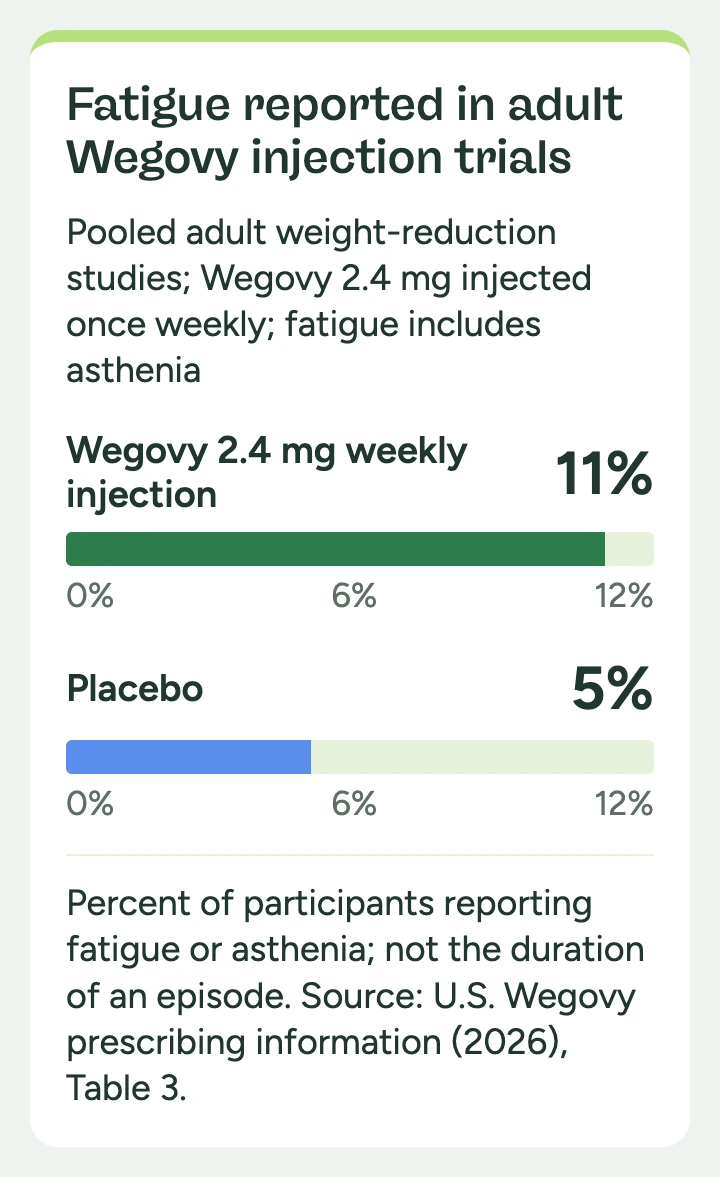
Yes, tiredness can happen on Wegovy. In pooled studies of adults using the 2.4 mg weekly injection for weight reduction, fatigue (including weakness) was reported by 11% of people taking Wegovy and 5% taking placebo. Those numbers do not establish a tablet-specific rate or timeline. If your energy has changed, its pattern and accompanying symptoms are more useful than an online countdown.
How long does Wegovy fatigue last?
The sources reviewed here do not establish a usual number of days for fatigue. The current U.S. prescribing information reports how many people in a defined injection-trial group experienced it, but gives no fatigue-specific median duration or week-by-week recovery curve. That leaves no sound basis in this evidence to predict whether _your_ tiredness will clear after the next dose, recur, or need a separate evaluation.
You may see exact timelines borrowed from Wegovy studies of stomach side effects. A STEP 1–4 analysis followed the timing and duration of nausea, diarrhea, vomiting, and constipation, which were most common during or soon after dose increases. Those are digestive-symptom results, not measurements of fatigue duration. They can help explain why someone who is losing fluids or sleeping poorly during stomach upset might feel drained, but they do not establish that fatigue itself follows the same schedule.
Notice whether tiredness is easing, staying the same, or limiting more of your day. The Wegovy Medication Guide says to talk with your healthcare provider about a side effect that bothers you or does not go away. If fatigue worsens or disrupts ordinary activities, contact them sooner; the warning symptoms below call for more urgent action.
What might be contributing?
Wegovy can be one part of the picture, but timing alone does not identify a cause. If nausea or vomiting has made it hard to eat or drink, or diarrhea has continued, tell your prescriber: the label warns that fluid loss can lead to dehydration and kidney problems. Smaller meals than usual, broken sleep, a recent illness, or a change in activity or another medicine may also matter. MedlinePlus describes fatigue as a symptom with many possible causes, including conditions unrelated to medication. These are possibilities to discuss, not diagnoses to assign yourself.
Blood glucose deserves particular attention if you have type 2 diabetes, especially if you also use insulin or a sulfonylurea. Wegovy's Medication Guide lists weakness, shakiness, sweating, confusion, drowsiness, and a fast heartbeat among possible signs of low blood sugar. Follow the glucose monitoring and treatment plan your care team gave you, and tell them about symptoms; this article cannot set a glucose threshold or change your medicines.
While you arrange advice, keep food and fluids manageable, rest when needed, and avoid driving if you are too tired or dizzy to do so safely. Follow any existing fluid restriction or diabetes plan. Do not change your Wegovy dose, other prescriptions, or supplements to chase energy without your prescriber, except where the Medication Guide specifically tells you to stop Wegovy and seek help for a warning symptom.
Bring a short timeline to the conversation
A note does not need a score or a long diary. Write down the Wegovy form and prescribed dose, when the tiredness began, whether it is constant or comes and goes, and whether a prescribed dose change preceded it. Add one daily-life effect (“I stopped halfway through my usual walk”), any nearby vomiting, diarrhea, pain, dizziness or shakiness, and changes in meals, drinking, sleep, illness, activity, or other medicines. Include glucose readings only if you already monitor under your care team's plan.
For example: “I have been unusually tired since Monday. I stopped halfway through my normal walk twice this week, and I vomited yesterday.” That gives your clinician a sequence to investigate without claiming the injection caused it. The Glowise Side Effect Tracker can keep details you choose to enter together for recall and discussion; it cannot diagnose the cause or decide whether a warning symptom is safe to wait on.
Keep a useful record
Bring the pattern, not a guess
Save the timing, daily impact, and nearby changes you want to discuss with your care team.
When tiredness comes with a warning sign
The Medication Guide says to tell your healthcare provider right away if nausea, vomiting, or diarrhea does not go away, and to contact them about severe or persistent stomach problems. If you cannot keep fluids down, seek prompt advice too: fluid loss can become a concern. Also contact your care team about symptoms that might fit low blood sugar or a heart rate that races or pounds at rest for several minutes. Follow your existing emergency plan for severe low blood sugar.
The Wegovy Medication Guide gives specific instructions for these symptoms, whether or not you also feel tired:
- Severe stomach-area pain that will not go away, with or without nausea or vomiting, sometimes reaching the back: stop using Wegovy and call your healthcare provider right away. This may be pancreatitis.
- Upper-abdominal pain, fever, yellow skin or eyes, or clay-colored stools: call your healthcare provider if you have _any one_ of these possible gallbladder signs.
- Swelling of the face, lips, tongue, or throat; trouble breathing or swallowing; severe rash or itching; fainting or dizziness; or a very rapid heartbeat: stop using Wegovy and get medical help right away for a possible serious allergic reaction.
Use emergency services for a medical emergency. A fatigue log can wait until help is underway.
What the trial number means
The U.S. label groups fatigue and asthenia (weakness) in the figure. It reflects pooled adult weight-reduction studies of Wegovy 2.4 mg injected once weekly; other doses and populations need separate evidence. The difference between groups does not prove what caused one person’s tiredness.
Sources

About the author
Maya Lee
Glowise Senior GLP-1 Content Editor
Maya Lee is a Glowise Health Content Editor. Her guides turn product records, authoritative sources, and everyday organization questions into clear, practical GLP-1 information.
She helps readers ask better questions and keep the details relevant to a care conversation together.
See more Glowise on Google
Add Glowise as a preferred source to find our GLP-1 guides more easily in Google Search.