
Type "GLP-1 supplement" into a search bar and the results will mix capsules, powders, gummies, drops, and patches, many of them borrowing the vocabulary of prescription weight-loss medicines. Here is the plain answer before anything else: a product sold as a dietary supplement is not a prescription GLP-1 medicine. Those are two different product categories, with different rules, different labels, and different kinds of information behind them.
This guide stays at the moment before purchase. It shows how to pin down one exact product instead of a broad category phrase, what that product's label can and cannot show you, and four neutral questions that turn a marketing claim into a short, focused question you can keep for a pharmacist or another qualified professional.
Start with the exact product, not the category
Category phrases are convenient for sellers because they group many unlike products under one searchable term. Two bottles can both be described with GLP-1 language while sharing no ingredient, format, or claim. If you begin from the phrase, you end up comparing things that were never the same kind of product to begin with.
The useful first move is to shrink the question down to a single item. Not "are GLP-1 supplements worth it," but "what is this one bottle, on this one shelf or this one listing." That means the full product name exactly as printed, including any subtitle, flavor, or package size, because the same brand can sell several different formulas under nearly identical names.
Separate the marketing phrase from the product category
A marketing phrase tells you how a seller wants a product to be found. A product category tells you what rules the product is sold under. Items marketed this way are generally sold as dietary supplements, a category with its own labeling conventions. That category identity matters more than the phrase in the ad, because it tells you what kind of information the package is required to carry, and what kind it is not.
Once you know you are looking at one exact dietary supplement, the label stops being decoration and becomes a document you can read line by line.
What the label can show you
Read the exact product before the broad claim
A dietary supplement label in the United States carries a Supplement Facts panel. According to the FDA's questions and answers on dietary supplements, that panel identifies the listed dietary ingredients and the amount per serving, and the label also identifies other ingredients, such as binders or flavorings. This is real, checkable information: it tells you what the label states is in the bottle and in what listed amounts.
If you want the medicine side explained in plain language, read about what GLP-1 medicines do and keep it in a separate mental folder from the supplement shelf. That explainer describes a prescription drug category; it says nothing about whether any supplement resembles those medicines, and neither does this article.
It also helps to know what stands behind the panel. The FDA's consumer information on dietary supplements explains that the agency does not approve dietary supplements for safety and effectiveness before they are marketed. So the label can identify a product's stated contents, but the presence of a label, an ingredient list, or familiar category language is not evidence that a finished product does anything in particular.
Four details are worth capturing before you rely on any claim:
| What to capture | Where it appears | What it helps you identify |
|---|---|---|
| Exact product name | Front of the package and the seller's listing | One specific item instead of a category phrase |
| Product format | Front label and product description | Whether the item is a capsule, powder, gummy, liquid, patch, or something else |
| Listed ingredients and amount per serving | The Supplement Facts panel | Which dietary ingredients are named and the listed amount of each per serving |
| Exact claim | The ad, listing, or package front | The precise words you could repeat or question later |
The same four details appear in the checklist below, in the order you would meet them on a real package.
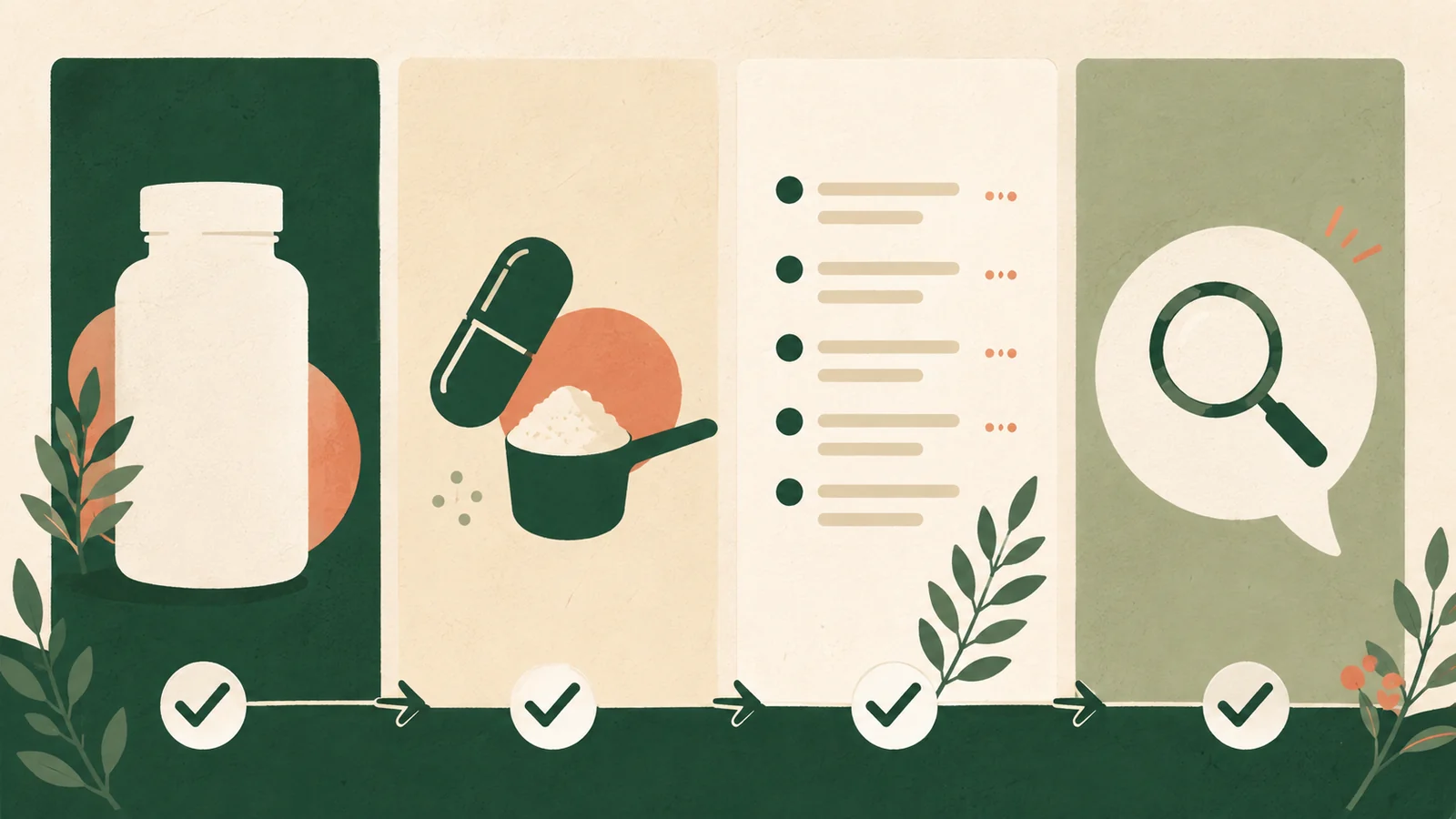
Read together, these details turn a vague impression into a small, factual record. None of them, alone or combined, establishes that a product is effective, safe for a particular person, or a good fit for anyone. They simply make the product identifiable, which is what every later question depends on.
Why a marketing claim is not a medicine label
A category name does not make two products interchangeable
Prescription GLP-1 medicines and over-the-counter supplements live in different information systems. A prescription medicine's labeling is written for one specific approved drug and is meant to be used with a prescriber. A supplement's marketing language is written by sellers to describe a product they offer. When both use the letters GLP-1, it is easy to assume the words point to the same thing. They do not.
The practical consequence is simple: a claim on a supplement page is a sentence written by that seller about that product. It is not a medicine label, not a study result, and not an answer to a personal health question.
Use four questions before you buy
Name the product, format, ingredients, and claim
When a product catches your attention, in a shop aisle or in an online listing, run the same four questions in order. They are questions of identification, not judgment:
- What is the exact product? Write down the full name as printed, including subtitles and package size.
- What format is it? Capsule, powder, gummy, liquid, patch, or something else entirely.
- What ingredients and amount per serving are listed? Copy them from the Supplement Facts panel, not from the marketing copy.
- What exact claim is being made? Record the sentence word for word, for example a line about "supporting" the body's GLP-1, so you are reacting to what was actually said.
The format question matters more than it looks, because formats invite different assumptions. A capsule and a skin patch are labeled and discussed differently, and a claim that sounds ordinary on a gummy can sound stranger on a patch. If the item in front of you is a patch, the same identification steps apply, and the explainer on checking GLP-1 patch claims walks through that format in more detail.
In short, the path runs from the claim, through the label, to a question:

The output of this check is not a verdict. It is a focused question about one identified product, which is a much better thing to carry into a conversation than a category name and a vague feeling.
The practical takeaway
The four-question check
- What is the exact product? Capture the full printed name, subtitle, and package size.
- What format is it? Note whether it is a capsule, powder, gummy, liquid, patch, or other form.
- What ingredients and amount per serving are listed? Copy them from the Supplement Facts panel.
- What exact claim is being made? Record the seller's sentence word for word.
- The purpose of the check is identification: it names one product and its claim so you can ask a focused question, not so you can judge quality, safety, or fit on the spot.
Keep the details with your question
A short factual note can preserve the exact item
Picture an ordinary moment: someone picks up a bottle in a wellness shop, or pauses on a listing late at night, and feels curious but unsure. Instead of deciding on the spot, they take two photos, one of the package front and one of the Supplement Facts panel, and they copy the claim sentence into a note. Next to it they write one question, in their own words, about that exact product. That is the whole method. The bottle goes back on the shelf; the record comes home.
A note like this stays accurate in a way memory does not. Product pages change, listings disappear, and formulas get renamed, but a photo of the label you actually saw keeps the conversation anchored to a real item. If you later want a personal answer, for example because you take a medicine and wonder how a listed ingredient fits alongside it, the NIH Office of Dietary Supplements notes that supplements can interact with medicines, which is one reason a pharmacist or another qualified professional is the right place for that question, with the exact label details in hand.
The kit on the counter is deliberately plain: the item or its photo, the copied details, and a blank card for the question.

And if your supplement question sits next to a larger one about starting a prescribed GLP-1, treat those as two separate conversations. One is about identifying a product on a shelf. The other belongs with a prescriber who knows your situation, and neither this article nor any label can substitute for it.
A clear next step
Start your GLP-1 plan
When you are ready to turn broad questions into a personal plan, begin with a simple next step.
Frequently asked questions
Can I buy a prescription GLP-1 medicine over the counter?
No. Prescription GLP-1 medicines require a prescription. A product sold as a dietary supplement is a different category from a prescription GLP-1 medicine. Check the exact product label and category rather than assuming that GLP-1 marketing language identifies what it is.
Does a Supplement Facts label prove that a product works?
No. According to the FDA, the Supplement Facts panel identifies the listed dietary ingredients and the amount per serving, along with other ingredients. That tells you what the label states; it does not establish that a product does anything for any person.
Can a GLP-1 supplement replace a prescribed medicine?
A dietary supplement is not a prescription GLP-1 medicine, and no label check can turn one into the other. If you are weighing a product against a medicine you were prescribed, that is a personal question for the prescriber or pharmacist who knows your situation, and the exact label details are worth bringing along.
What information is useful to keep before asking about a supplement?
The exact product name, the format, the listed ingredients and amount per serving from the Supplement Facts panel, the exact claim word for word, and one focused question written in your own words.
Sources

About the author
Maya Lee
Glowise Senior GLP-1 Content Editor
Maya Lee is a Glowise Health Content Editor. Her guides turn product records, authoritative sources, and everyday organization questions into clear, practical GLP-1 information.
She helps readers ask better questions and keep the details relevant to a care conversation together.
See more Glowise on Google
Add Glowise as a preferred source to find our GLP-1 guides more easily in Google Search.