
GLP-1 patches sold online are often wellness products using GLP-1 language, not FDA-approved prescription medicines. A specific patch needs evidence for its ingredients, skin delivery, finished formulation, and claimed use.
Ignore the front-label promise for a moment. Check the exact product, ingredients, dosage form, regulatory record, finished-product evidence, and seller. Ask a pharmacist or prescriber before combining it with prescribed medicine.
Two products can both use the words “GLP-1” and still have little in common beyond the label. The details that settle the question are the ingredient panel, dosage form, regulatory record, and evidence for that exact finished product.
What are GLP-1 patches?
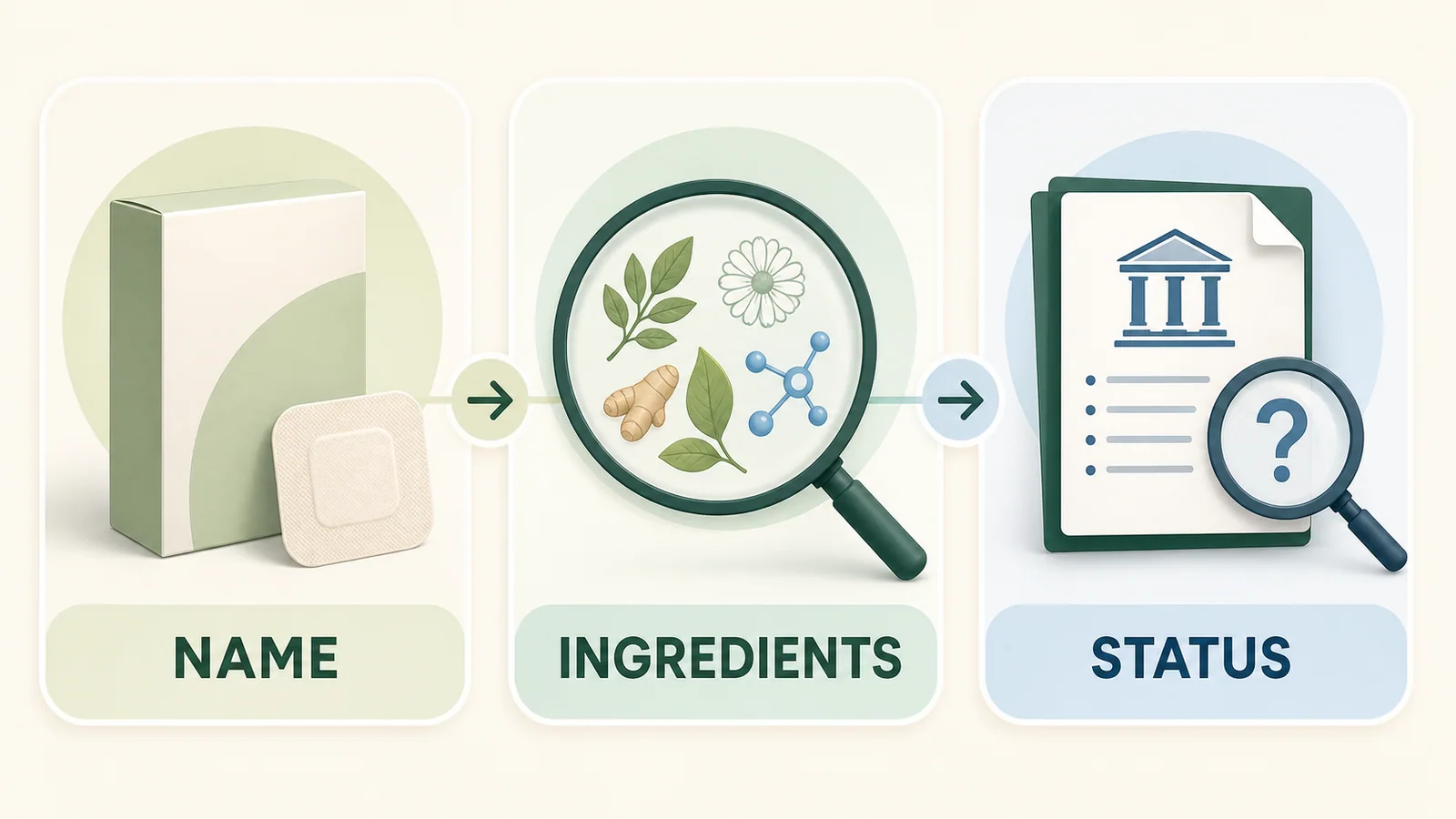
The phrase can describe three different categories. That is the first useful pause: a familiar name can make unlike products sound interchangeable. Evidence for one does not validate another.
| Category | What it is | What the label does not prove |
|---|---|---|
| Retail adhesive wellness patch | May list herbs, nutrients, or other nonprescription ingredients | That it contains or acts like a prescription GLP-1 medicine |
| Approved prescription GLP-1 medicine | Named active ingredient, approved dosage form, and official labeling | That its evidence applies to a different patch formulation |
| Experimental microneedle system | Research platform designed to move a known medicine across skin | That a smooth retail patch uses the technology or completed clinical testing |
A 2026 analysis indexed in PubMed identified 24 natural GLP-1 patch products. Common listed ingredients included berberine, glutamine or glutamate, cinnamon, and pomegranate. The sample does not represent every current product, but it shows why the ingredient panel matters.
The label is a claim about what is in front of you. It is not a shortcut to the evidence behind a different route, formulation, or medicine.
The name and the active ingredient answer different questions
A prescription GLP-1 medicine has a named ingredient, dosage form, labeling, and evidence for specific uses. That evidence does not transfer to a patch with different ingredients or delivery technology.
Do GLP-1 patches really work?
Do not assume a retail patch works like an approved injection or oral medicine. It needs evidence that the ingredient remains stable, crosses skin at a meaningful amount, and produces the claimed result in studies of the finished product.
An oral-supplement study does not validate a patch, and a medicine trial does not validate a retail product borrowing the GLP-1 name. Testimonials and before-and-after photos do not answer formulation or delivery questions.
That distinction can feel fussy when a product page promises an easy answer. It is also the part worth slowing down for: the route and the finished formulation are part of the claim, not small print around it.
What evidence should match the product?
Useful evidence names the finished product, formulation, dose, route, population, outcome, and study design. If those details differ, it cannot establish that the patch works. Think of this as an evidence-transfer rule: a study only travels as far as the product details still match.
Are GLP-1 patches FDA approved?
Approval is product-specific. The FDA does not approve dietary supplements for safety and effectiveness before sale, and unapproved GLP-1 drugs do not undergo premarket review for safety, effectiveness, and quality.
For any claimed medicine, search the exact product in Drugs@FDA and compare the active ingredient, dosage form, and official labeling. A facility registration, seller badge, or phrase such as “FDA compliant” is not approval of the finished product. The record you are looking for should answer the question for the product itself, not merely for a related ingredient or a seller.
Why research patches are not retail wellness patches
Scientists are studying microneedle systems for peptide medicines. A 2026 review of GLP-1 drug-delivery systems describes early-development technologies that still need safety, effectiveness, manufacturing, and clinical study.
Those systems are not interchangeable with a smooth patch listing herbs or nutrients. A prototype shows that delivery research exists, not that a retail product is approved or effective. Research can make a future possibility easier to imagine; it does not complete the evidence for a product already in a shopping cart.
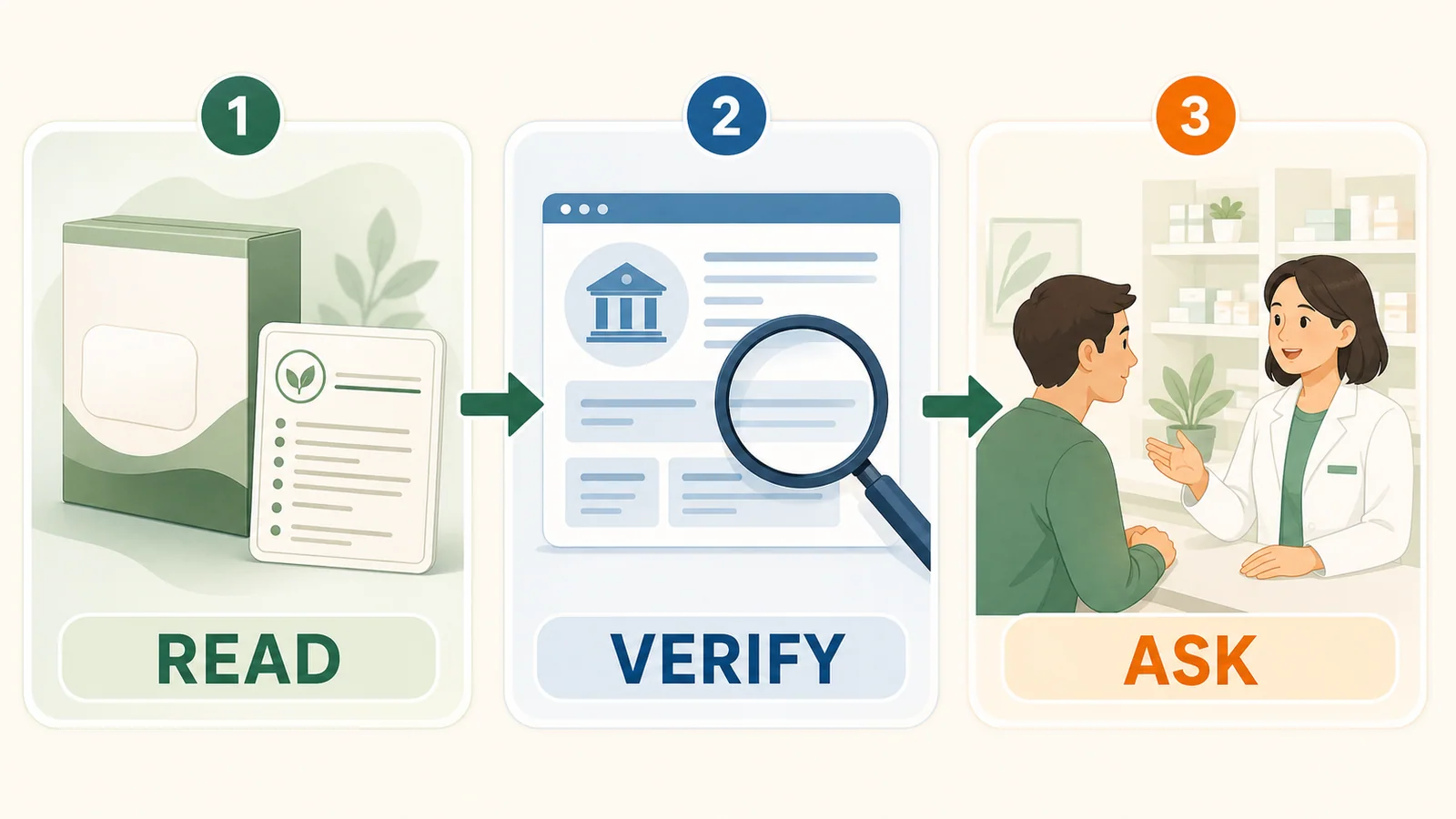
How to check a GLP-1 patch claim
Use the same sequence so one marketing phrase cannot hide unanswered questions. It turns a vague “does this work?” into a set of records you can actually inspect.

| Check | What to look for | Why it matters |
|---|---|---|
| Product identity | Exact name, manufacturer, lot, and form | Similar names can describe different products |
| Ingredient | Named ingredient and amount | Evidence must match what the product contains |
| Regulatory record | Exact product and dosage form in Drugs@FDA or another relevant official record | Seller language does not prove approval |
| Finished-product evidence | Human evidence for this formulation and claimed use | Ingredient or medicine studies may not validate the patch |
| Seller safeguards | Prescription, physical address, license, and pharmacist access when sold as medicine | A marketplace listing is not automatically a pharmacy |
Read the whole label
Record ingredients, amounts, manufacturer, lot, warnings, and product category. Missing identity, amounts, or contact details is a reason to slow down. A label can look busy and still leave the one decisive detail unanswered.
Verify the record independently
Search the official database instead of trusting an ad badge. The FDA's approved-drug guidance points to Drugs@FDA and official labeling. Independent verification is not about winning an argument with a listing; it is how you avoid asking marketing language to prove itself.
Check the seller and ask a qualified professional
For online prescription medicines, the FDA's BeSafeRx checklist recommends a state-licensed pharmacy requiring a prescription, a U.S. address, and pharmacist access. The goal is not to turn every purchase into an investigation; it is to know when a health claim needs a qualified person and a real record behind it.
What if you already bought or used a patch?
Keep the package, receipt, ingredient panel, lot number, listing photos, and seller details for a pharmacist or prescriber to review.
Do not assume a patch is harmless because it is described as natural, and do not assume a new symptom proves the patch caused it. If you have concerning, severe, persistent, or rapidly worsening symptoms, seek prompt professional advice; possible emergencies need local emergency care.
Where Glowise fits with a prescribed GLP-1 medicine
If you use a prescribed medicine, the Glowise GLP-1 Tracker gives you one calm place for medication, meals, water, side-effect notes, weight, activity, and progress.
When a question is scattered across a package, a listing, and a few notes, keeping those details together makes it easier to review what changed and prepare for a useful conversation. If you are starting a prescribed GLP-1 medicine, begin with its labeling and the questions you want to bring with you.
Keep the real details together
Build a calmer GLP-1 tracking routine
Bring medication, meals, water, notes, weight, activity, and questions into one clear routine you can revisit week by week.
The practical takeaway
How to evaluate a GLP-1 patch claim
- Separate retail wellness patches, approved prescription forms, and research delivery systems.
- Match evidence to the exact ingredient, formulation, dosage form, and finished product.
- Verify approval through Drugs@FDA and official labeling, not an ad badge.
- Check prescription sellers through state licensing and pharmacist access.
- Save the package, lot, receipt, and seller details if you already bought a patch.
- Ask a pharmacist or prescriber before changing or combining medication products.
Frequently asked questions
Are any GLP-1 patches FDA approved?
Verify the exact finished product, ingredient, and dosage form in Drugs@FDA. Do not treat a wellness patch as an approved medicine without that record.
Do GLP-1 support patches contain semaglutide or tirzepatide?
The name does not answer it. Products in a 2026 analysis commonly listed botanical or nutrient ingredients. Read the panel rather than inferring a prescription ingredient.
Are microneedle GLP-1 patches the same as adhesive wellness patches?
No. Microneedle research uses engineered projections and controlled formulations. It does not validate a smooth retail patch with different ingredients.
Where is the best place to put a GLP-1 patch?
Products differ in ingredients, design, and status, so there is no universal placement answer. Use the exact instructions and ask a pharmacist when identity or safety is unclear.
Can I use a GLP-1 patch with my prescription medicine?
Bring the patch's exact label, your prescription details, and other medicines to a pharmacist or prescriber so they can review the full picture.
Sources

About the author
Maya Lee
Glowise Senior GLP-1 Content Editor
Maya Lee is a Glowise Health Content Editor. Her guides turn product records, authoritative sources, and everyday organization questions into clear, practical GLP-1 information.
She helps readers ask better questions and keep the details relevant to a care conversation together.
See more Glowise on Google
Add Glowise as a preferred source to find our GLP-1 guides more easily in Google Search.