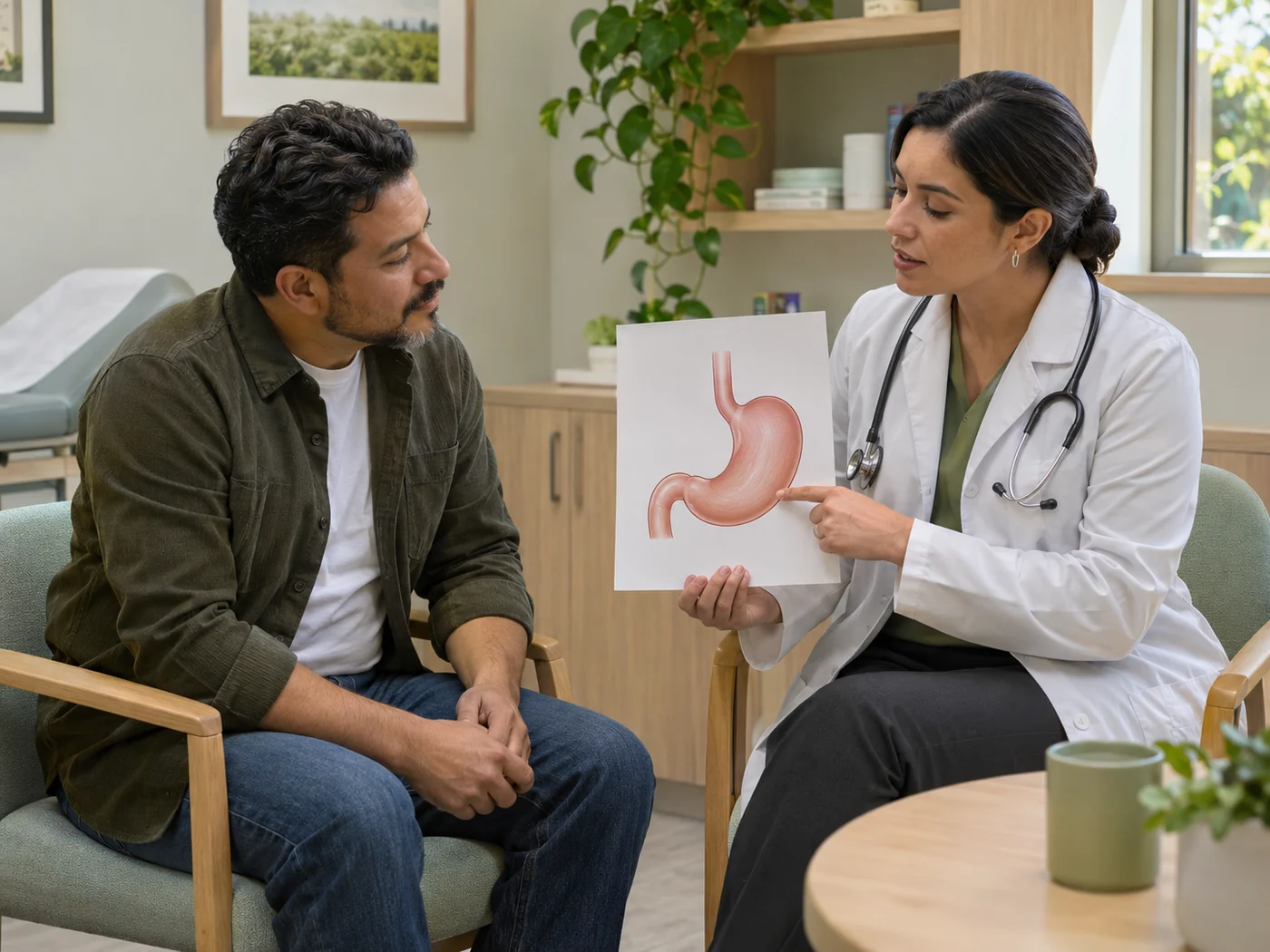
If you take Wegovy, Ozempic or Zepbound and develop severe stomach-area pain that does not go away, stop the medicine and call your healthcare provider right away. The pain may spread to your back, and it can occur with or without nausea or vomiting. Seek care right away for severe or worsening abdominal pain or tenderness, especially with fever, chills, vomiting, a fast heartbeat, shortness of breath, or yellowing of the skin or eyes. Call 911 in the U.S. for severe breathing difficulty, collapse, or another emergency. Wegovy, Ozempic, Zepbound, and NIDDK symptom guidance.
The warning is for possible acute pancreatitis, an inflammation of the pancreas that can become serious. Cases have occurred in people taking these medicines. The labels tell you how to respond to symptoms, while research is still sorting out how much the likelihood changes across medicines and patient groups.
What does the label tell you about the chance of pancreatitis?
The U.S. labels count pancreatitis events separately for different trials. For example, in adult Wegovy weight-reduction trials, there were four confirmed cases in the Wegovy group and one in the placebo group. With time on treatment taken into account, that was 0.2 versus less than 0.1 cases per 100 patient-years. In two pooled Zepbound weight-reduction trials, 0.2% of people in each group had a confirmed case. In the separate Zepbound sleep apnea studies, the exposure-adjusted rate was 0.84 per 100 patient-years on Zepbound and zero observed cases on placebo. Wegovy prescribing information, section 6.1 and Zepbound prescribing information, section 6.1.
A percentage counts the share of trial participants affected. A rate per 100 patient-years takes account of the time people were exposed. One hundred people treated for a year and 50 treated for two years both contribute roughly 100 patient-years. Compare numbers from the same trial and with the same unit first. With few cases, even an apparently large difference can be imprecise. The zero in the sleep apnea placebo group means no cases were observed there during that study period.
How can total pancreatitis be unchanged if one cause goes up?
Gallstones, heavy alcohol use, and very high triglycerides can each contribute to pancreatitis. The studies you read may count all diagnoses together, or focus on cases classified as coming from a particular cause. Those are different questions.
A 2026 VA medical-record study compared more than 333,000 adults with type 2 diabetes who started a GLP-1 receptor agonist or a sulfonylurea. Over one year, researchers found similar rates of acute pancreatitis from all causes combined. They also found more cases classified as drug-induced and fewer classified as related to alcohol or high triglycerides among GLP-1 starters. If one category rises and others fall, the total can move very little. This was an observational comparison with a specific diabetes treatment, and it cannot determine whether medication caused a particular person's episode or give a rate for a different population.
A 2023 claims study compared semaglutide and liraglutide with bupropion–naltrexone in people identified as having obesity. Its estimated hazard ratio for pancreatitis was 9.09, with a wide 95% confidence interval of 1.25 to 66.00. The large headline number came from an imprecise estimate. That ratio cannot be multiplied by a trial percentage from a different population to calculate someone's risk. These studies used different comparison drugs, patients, and ways of identifying cases.
Does a high lipase result mean you have pancreatitis?
Lipase and amylase are enzymes clinicians may measure when investigating pancreatitis. A high result can matter, especially alongside pain or other clinical findings. The Zepbound label reports increases in these enzymes and says the significance is unknown in the absence of other signs or symptoms of pancreatitis. Doctors interpret the result alongside your symptoms, exam and, when appropriate, imaging. If you have the warning symptoms, act on them without waiting for a routine blood test. NIDDK diagnosis guidance.
How does a previous episode change the discussion?
If you've had pancreatitis, bring the records or tell your prescriber what the team thought caused it and whether it happened more than once. A past episode attributed to a gallstone and an episode with no identified cause leave different questions to review before treatment. Mention gallstones, very high triglycerides, heavy alcohol use and your other medicines.
If you stopped because pancreatitis was suspected, ask the treating team what the evaluation found and what to do before another scheduled dose. Improvement in the pain alone does not settle either the diagnosis or the medication decision. If you take the medicine for diabetes, ask what glucose-management plan to follow while the team assesses the episode. For other patterns of discomfort, see the Wegovy stomach pain and Ozempic gallbladder guides.

About the author
Maya Lee
Glowise Senior GLP-1 Content Editor
Maya Lee is a Glowise Health Content Editor. Her guides turn product records, authoritative sources, and everyday organization questions into clear, practical GLP-1 information.
She helps readers ask better questions and keep the details relevant to a care conversation together.
See more Glowise on Google
Add Glowise as a preferred source to find our GLP-1 guides more easily in Google Search.