Yes. Blood pressure can fall during GLP-1 treatment, including treatment with semaglutide or the dual GIP/GLP-1 medicine tirzepatide. For someone with high blood pressure, a sustained improvement can be welcome. A new low reading accompanied by weakness, lightheadedness, or fainting needs a different response.
The useful question is not simply whether the number is lower. It is how low it is for you, whether you have symptoms, whether it changes when you stand, and what else has changed—especially fluid loss and blood-pressure medicines.
If you feel faint, sit or lie down safely now; when lying down, raise your feet above heart level. Do not keep standing to finish a measurement. If someone loses consciousness, seek immediate medical help; call 911 for an ongoing emergency. Cold, sweaty skin with rapid breathing or a weak, fast pulse can indicate shock: call 911 rather than waiting for another reading. MedlinePlus and NHLBI describe these urgent boundaries.
Lower blood pressure is not automatically hypotension
Blood pressure has two numbers: systolic pressure, the upper number when the heart pumps, and diastolic pressure, the lower number between beats. Readings are measured in millimeters of mercury, or mm Hg.
A reading below 90/60 mm Hg is commonly described as low blood pressure. That is a reference point, not a personal diagnosis or the only point at which symptoms matter. Some people normally run low without symptoms; a sudden drop can be troublesome for someone whose usual pressure is higher. The American Heart Association advises contacting a healthcare professional when a low reading comes with dizziness, nausea, or other symptoms.
Consider the difference between these situations:
| What you notice | How to approach it |
|---|---|
| Your usual high readings have gradually fallen, you feel well, and readings remain within your clinician's agreed range | Keep the monitoring plan and share the trend at review. This may reflect improved blood-pressure control. |
| One reading is unexpectedly low, but you feel well | Check your technique and repeat after resting. Keep both results; an isolated number does not establish the cause. |
| Repeated readings are newly low for you, or you feel lightheaded or unsteady | Contact your care team promptly, even if the number stays above 90/60. |
| Symptoms appear mainly after standing | Ask about an assessment for a positional blood-pressure drop. A seated reading alone can miss it. |
These are ways to describe the problem, not rules for adjusting a prescription.
What the studies and product labels actually show
Research on average blood pressure and reports of hypotension answer different questions.
In a secondary analysis of SURMOUNT-1, adults with obesity or overweight and a weight-related complication, without diabetes, received tirzepatide or placebo alongside lifestyle intervention. At 72 weeks, the pooled tirzepatide groups had a mean reduction relative to placebo of 6.8 mm Hg systolic and 4.2 mm Hg diastolic. People with screening blood pressure of 160 systolic or 100 diastolic or higher were excluded. The analysis estimated that weight loss explained much, but not all, of the reduction. It therefore does not support saying that every BP effect is purely indirect—or that every falling reading is dehydration. SURMOUNT-1 blood-pressure analysis
Exploratory analyses of the STEP 1 and 4 trials also found blood-pressure improvements with once-weekly injectable semaglutide 2.4 mg in adults with overweight or obesity without diabetes. These results do not predict an individual's reading or describe every semaglutide product, dose, or population. STEP analyses
Separately, the US labels report low-pressure adverse events:
| Product and studied context | What the label reports |
|---|---|
| Wegovy injection, adult weight-reduction trials | Hypotension-related reactions, including orthostatic hypotension and decreased BP: 1.3% with Wegovy versus 0.4% with placebo. Some were associated with digestive reactions and volume loss; hypotension was more frequent with concurrent antihypertensive treatment. |
| Zepbound, pooled weight-reduction Studies 1 and 2 | Hypotension: 1.6% with Zepbound versus 0.1% with placebo. Among Zepbound recipients, it occurred in 2.2% taking antihypertensives versus 1.2% not taking them, and also occurred with digestive adverse events and dehydration. |
These percentages come from different trial programs; they are not a head-to-head safety comparison or an estimate for Ozempic or Mounjaro. A lower average BP across a trial does not mean everyone developed hypotension. Wegovy prescribing information, Zepbound prescribing information
Why the same prescription may need a fresh review
Several changes can overlap. As weight and blood pressure change, the treatment needed to control hypertension may change too. Blood-pressure medicines can contribute to low pressure, while diuretics, often called water pills, also affect fluid balance. Vomiting, diarrhea, or drinking less can reduce circulating fluid volume. That can make a drop on standing more likely.
This does not mean your prescription was wrong or that the GLP-1 medicine is necessarily the sole cause. A clinician may need to consider other explanations, including heart-rhythm problems or diabetes-related nerve damage. A timeline helps separate a gradual improvement from a new illness or a change in medication effect. MedlinePlus overview
Ask the clinician managing your blood pressure to review your full medication list, including combination pills and diuretics. If the GLP-1 prescriber is a different person, make sure both teams know about the readings. Do not skip, halve, stop, or change the timing of an antihypertensive on your own. Ask for a specific plan for what to do if low readings recur, including whom to contact before the next dose. AHA home-monitoring guidance
Get readings that can be compared
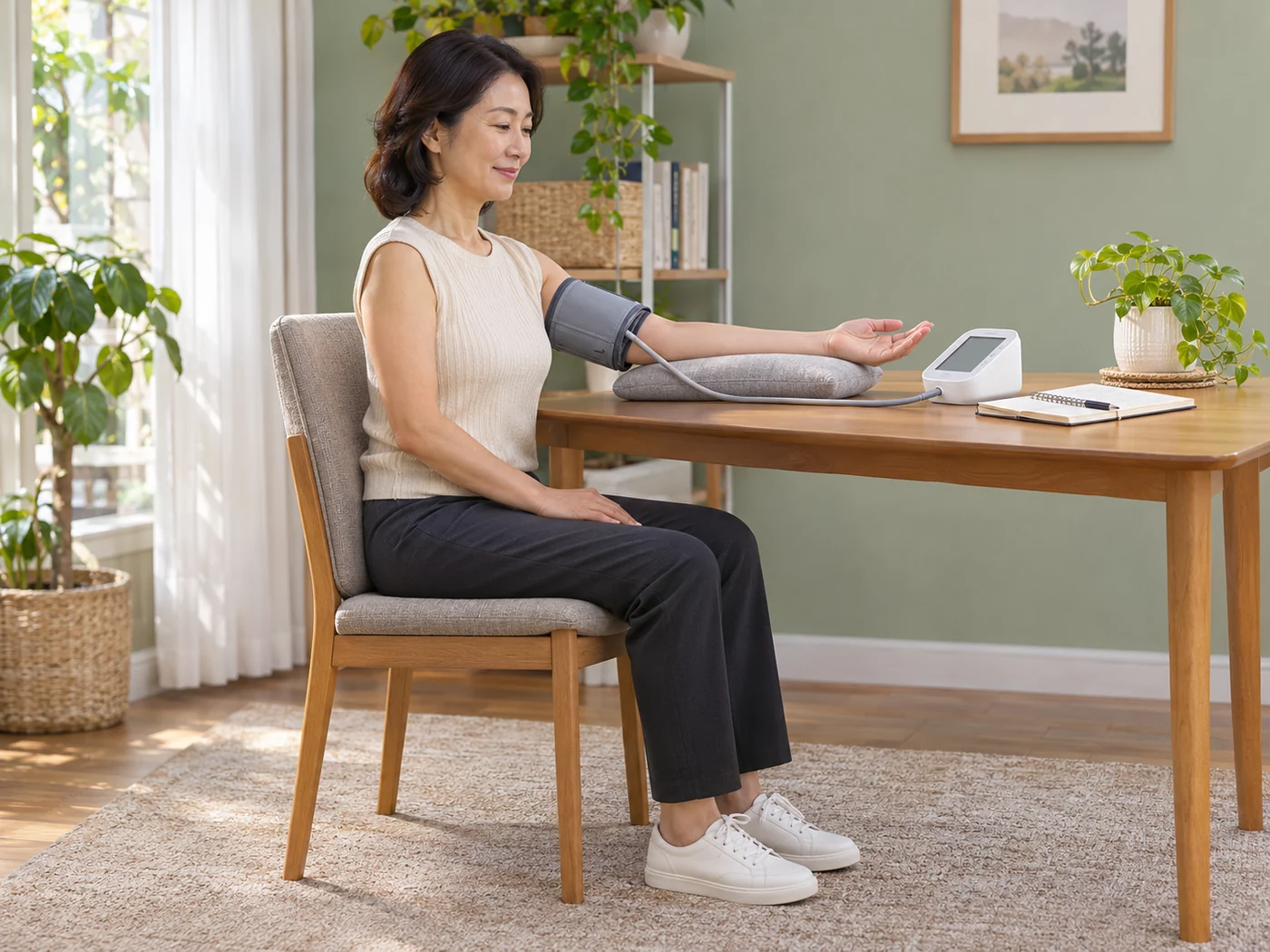
Use a validated automatic upper-arm monitor with a cuff that fits. Bring it to an appointment to check technique and accuracy. For a routine seated check:
- Avoid smoking, caffeine, and exercise for 30 minutes beforehand; empty your bladder.
- Rest quietly for at least five minutes. Sit with your back supported, feet flat, and legs uncrossed.
- Put the cuff on bare skin, with your supported arm and cuff at heart level. Stay quiet and still.
- Take two readings one minute apart and record both. Measure at consistent times, with frequency agreed with your clinician.
The AHA measurement instructions illustrate the position. Do not delay urgent care to obtain an ideal measurement.
If standing is the trigger
Orthostatic hypotension means pressure drops after standing. Clinicians commonly assess it by having someone lie down for five minutes, measuring BP and pulse, then repeating both after one and three minutes standing. A fall of at least 20 mm Hg systolic or 10 mm Hg diastolic is abnormal; lightheadedness or dizziness during the assessment is also important. CDC STEADI measurement protocol
Ask your clinician whether and how to do this safely. If you have nearly fainted, fallen, or cannot stand steadily, arrange supervised assessment rather than trying to reproduce the episode alone. Stop and sit or lie down if symptoms begin. A normal seated number does not settle a standing-related problem.
When fluid loss changes the next step
If you are awake, able to swallow, and can keep fluids down, drinking fluids can help reduce dehydration risk. Follow any existing fluid restriction. Do not try to correct a low number by forcing liters of water or loading up on salt; the right approach depends on your health and the cause.
Tell your prescriber right away if nausea, vomiting, or diarrhea does not go away. The Zepbound Medication Guide gives this instruction because dehydration can lead to kidney problems. There is no reliable rule that a low BP episode should resolve after a day or two of drinking more. Zepbound Medication Guide
If dizziness comes with inability to keep fluids down, chest pain, shortness of breath, an irregular heartbeat, or prolonged loss of alertness after fainting, seek emergency care—call 911 or go to an emergency department. Do not drive yourself while faint or unsteady. MedlinePlus dizziness emergency guidance
For everyday fluid routines after the immediate concern has been addressed, see hydration on GLP-1.
Bring the pattern, then get a personal action plan
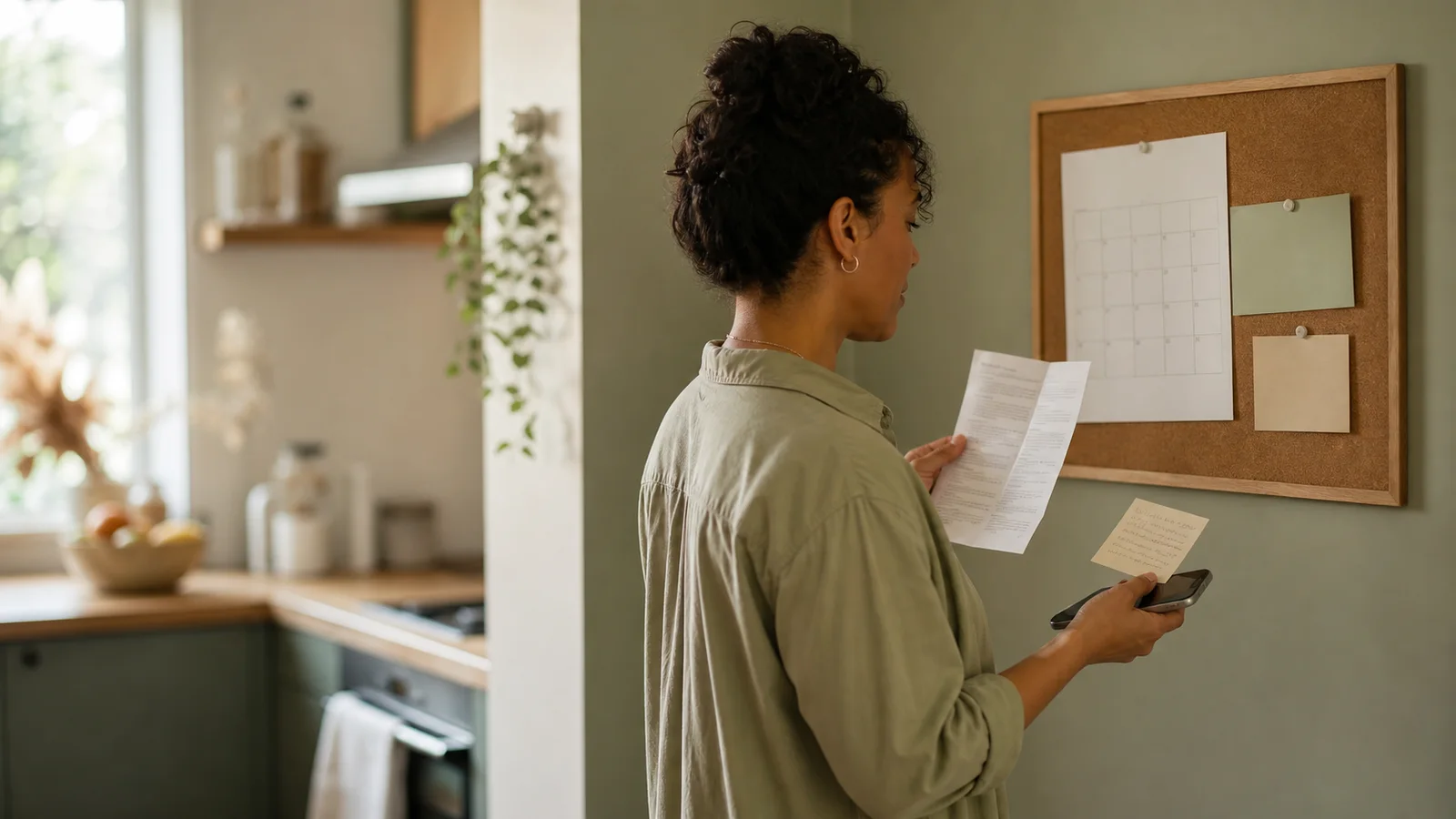
A short note is enough: the two BP readings and pulse, time and body position, symptoms, recent vomiting or diarrhea, and medicine names with the times taken. Include your GLP-1 dose and any recent dose increase, plus the longer weight and BP trend. Keep actual cuff readings in the monitor's memory or a written record; a symptom-tracking app does not measure blood pressure.
A useful message might be: “My readings used to be around this range. These are the new results, and I feel lightheaded when I stand. These are my medicines and any recent fluid losses. What should my monitoring and medication plan be now?”
Ask for your own target range, the readings or symptoms that should trigger a call, and instructions for illness or another low-pressure episode. Better blood-pressure control can be a benefit of treatment. Feeling faint is a reason to check what has changed, even when weight loss is going well.

About the author
Maya Lee
Glowise Senior GLP-1 Content Editor
Maya Lee is a Glowise Health Content Editor. Her guides turn product records, authoritative sources, and everyday organization questions into clear, practical GLP-1 information.
She helps readers ask better questions and keep the details relevant to a care conversation together.
See more Glowise on Google
Add Glowise as a preferred source to find our GLP-1 guides more easily in Google Search.