This 7-day GLP-1 meal plan starts with yogurt and oats, turns chicken and rice into several different meals, then uses lentils, potatoes and salmon for the second half of the week. Each day has breakfast, lunch, dinner and a snack option. Two short prep sessions keep you from having to cook from scratch every evening.
Serve an amount that feels manageable, keep extra food separate, and add more if you want it. The plan is a set of meal ideas, not a calorie limit or a test of how little you can eat. It does not establish whether your intake meets your needs.
The multi-society nutrition advisory on GLP-1 therapy supports individualized, nutrient-dense eating and notes that small, frequent meals may help when hunger and interest in food are low. The menu below is an editorial example of putting that flexibility into a week, rather than a clinically tested diet or a food requirement for any medication brand.
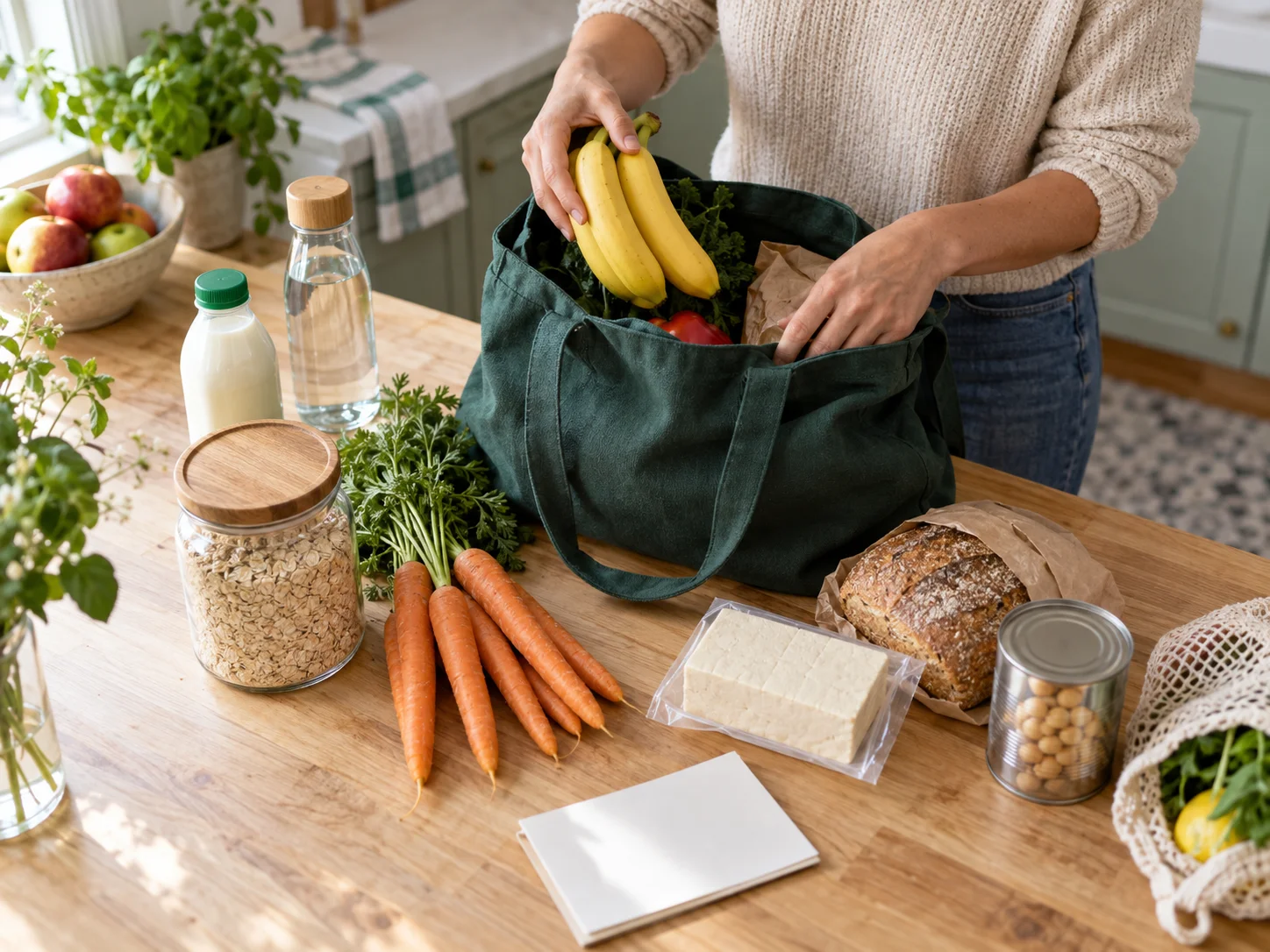
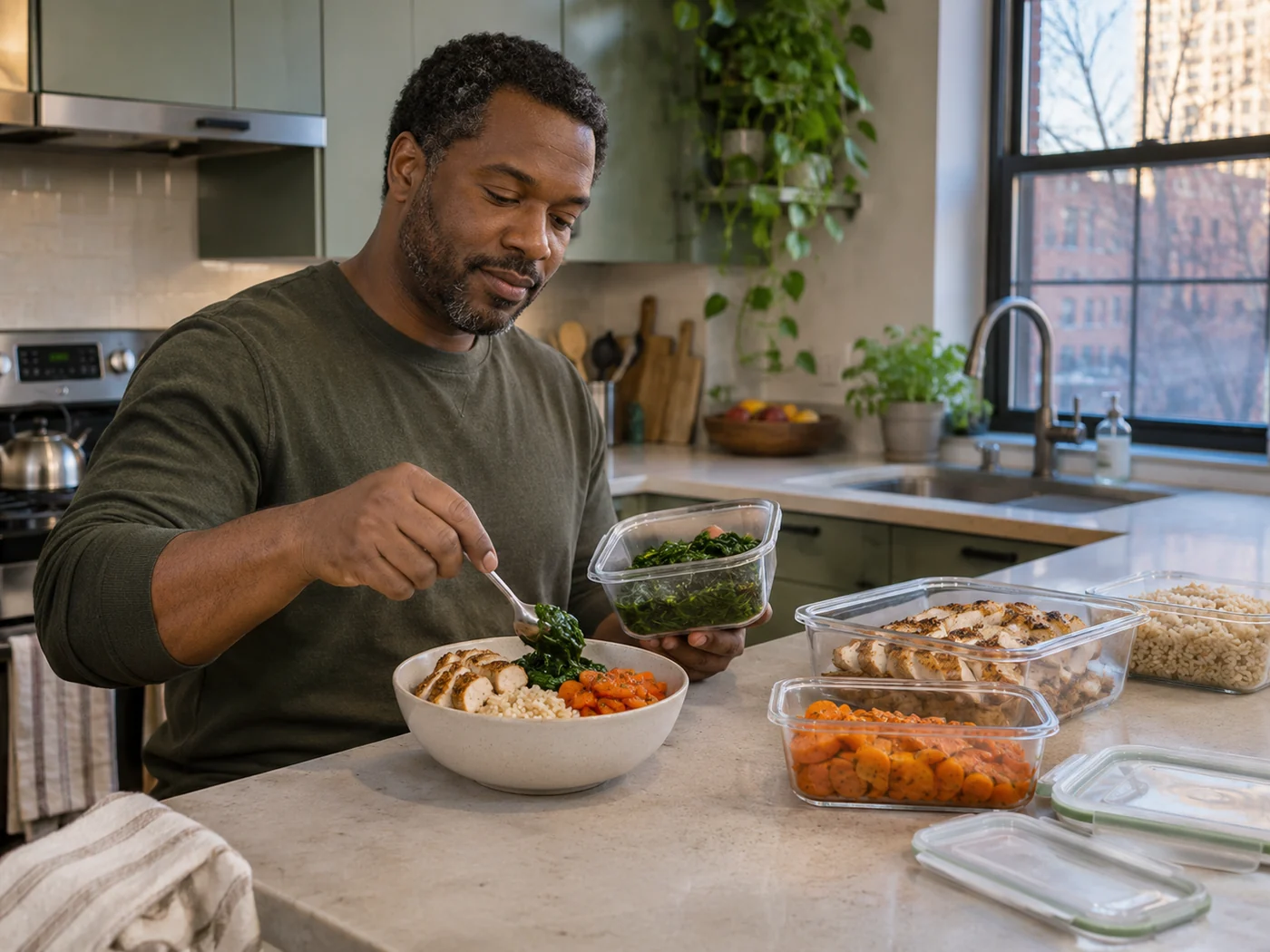
Before Day 1: prepare components, not seven packed dinners
For the first three days, have these ready:
- Chicken: Buy ready-cooked chicken or prepare it using a trusted recipe. Shred enough for the rice bowl, sandwich and soup below. Tofu can take its place throughout.
- Rice: Use a microwave pouch or cook rice according to its package. Make only what you expect to use over the next few days; freeze extra promptly.
- Vegetables: Cook carrots and spinach from fresh or frozen. Keep them separate so they can become a side, a sandwich filling or soup ingredients.
- Breakfast base: Put oats, yogurt, milk or a fortified soy beverage, bananas and berries within easy reach. Frozen berries work after thawing.
Bread, peanut or seed butter, broth and hummus cover the other early-week meals. Choose amounts for the people eating with you and the meals you intend to repeat. The GLP-1 grocery list can help you turn those choices into a shopping trip.
Store the prep safely. Refrigerate perishable food promptly and within two hours, or within one hour when the temperature is above 90°F. Keep the refrigerator at 40°F or below. Use refrigerated leftovers within three to four days, or freeze them for later. Put them in shallow containers so they cool quickly; you do not need to leave them on the counter until cold. These are the USDA's leftover storage rules. Reheat leftovers to 165°F, checked with a food thermometer.
Your seven days of meals
Breakfast, lunch and dinner are convenient planning labels. If a meal feels too large, divide it into smaller eating opportunities and refrigerate the portion you are saving promptly. Snacks are extra options for appetite or gaps between meals, not mandatory additions or substitutes for every meal.
Day 1: chicken bowl and an easy soup
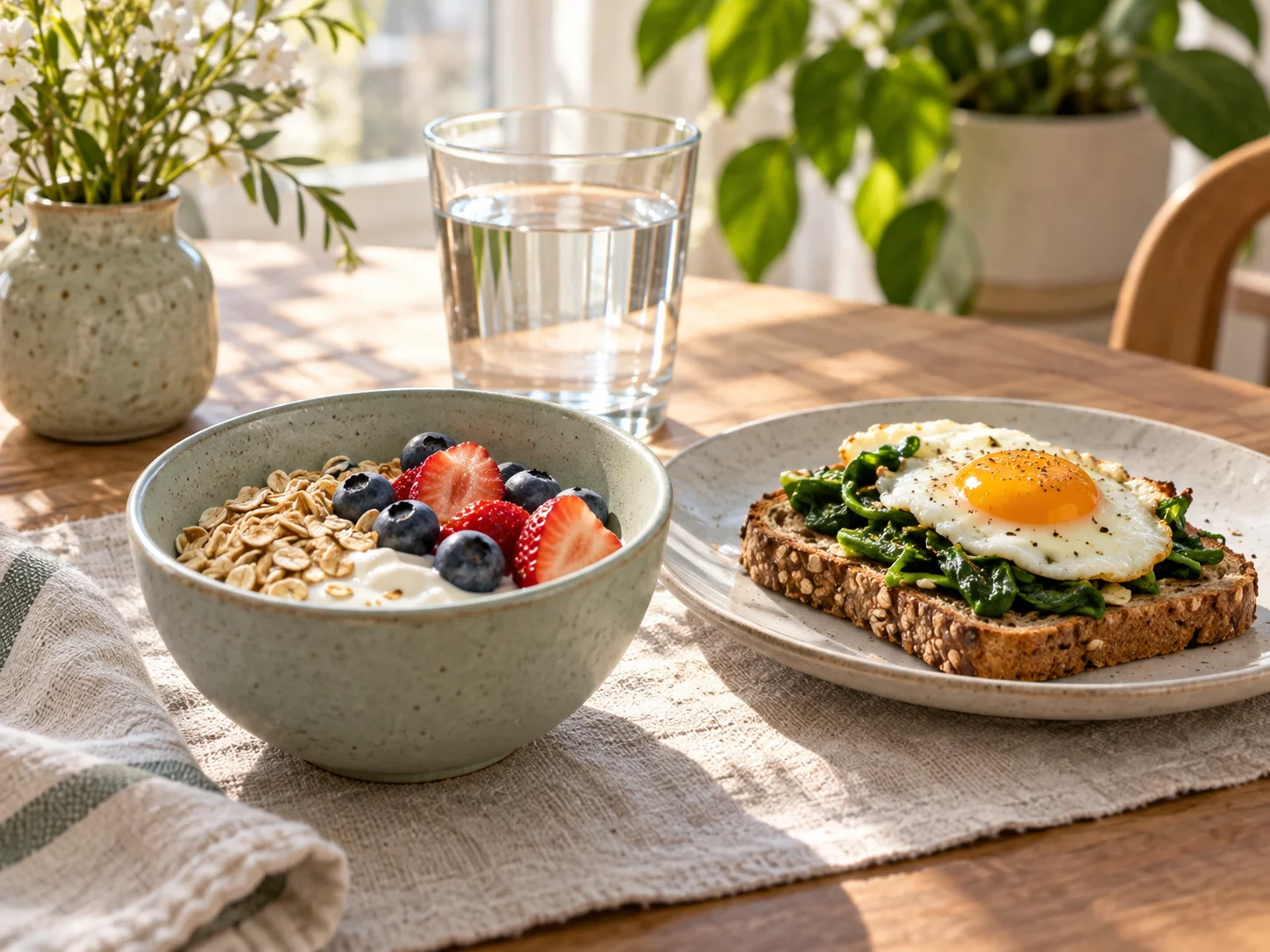
- Breakfast — Berry yogurt oats: Stir rolled oats into plain Greek yogurt, add a splash of milk and thawed berries, then refrigerate overnight or let the oats soften before eating.
- Lunch — Chicken and rice bowl: Warm rice, shredded chicken, carrots and spinach. Add a little olive oil or a dressing you enjoy. Keep the components separate if a mixed bowl feels unappealing.
- Dinner — Chicken vegetable soup with toast: Heat broth with more chicken, carrots and spinach. Add rice if you want a thicker soup; serve toast alongside.
- Snack option: Banana with peanut or seed butter.
Reuse tomorrow: Keep some chicken and cooked spinach for the sandwich. Store the rice separately so it is ready for Day 3.
Day 2: a sandwich without more cooking
- Breakfast — Banana oats: Cook oats with milk or a fortified soy beverage according to the package. Stir in banana and peanut or seed butter to taste.
- Lunch — Chicken and hummus sandwich: Spread hummus on bread, add shredded chicken and some cooked spinach, then close the sandwich or leave it open-faced. Have berries or another fruit alongside.
- Dinner — Tofu, rice and carrots: Warm tofu according to its package instructions with the prepared rice and carrots. Season simply, then add a sauce at the table if you want it.
- Snack option: Greek yogurt with fruit.
Make it smaller: Start with an open-faced sandwich and pack the remaining filling separately. If you want more later, you can build another rather than leaving a half-eaten sandwich out.
Day 3: finish the first batch
- Breakfast — Yogurt and banana toast: Have yogurt with sliced banana and a piece of toast, together or as two smaller eating moments.
- Lunch — Leftover chicken soup: Reheat the Day 1 soup. If you did not save any, combine the remaining chicken and vegetables with fresh broth. Add bread or rice as wanted.
- Dinner — Hummus and tofu rice bowl: Warm the remaining rice, tofu and cooked vegetables. Add hummus after heating, or serve it as a dip beside the bowl.
- Snack option: Crackers with cheese or hummus.
Check the containers: Use the first batch within its safe storage window. Freeze food you will not use in time; do not carry the entire first batch through to Day 7.
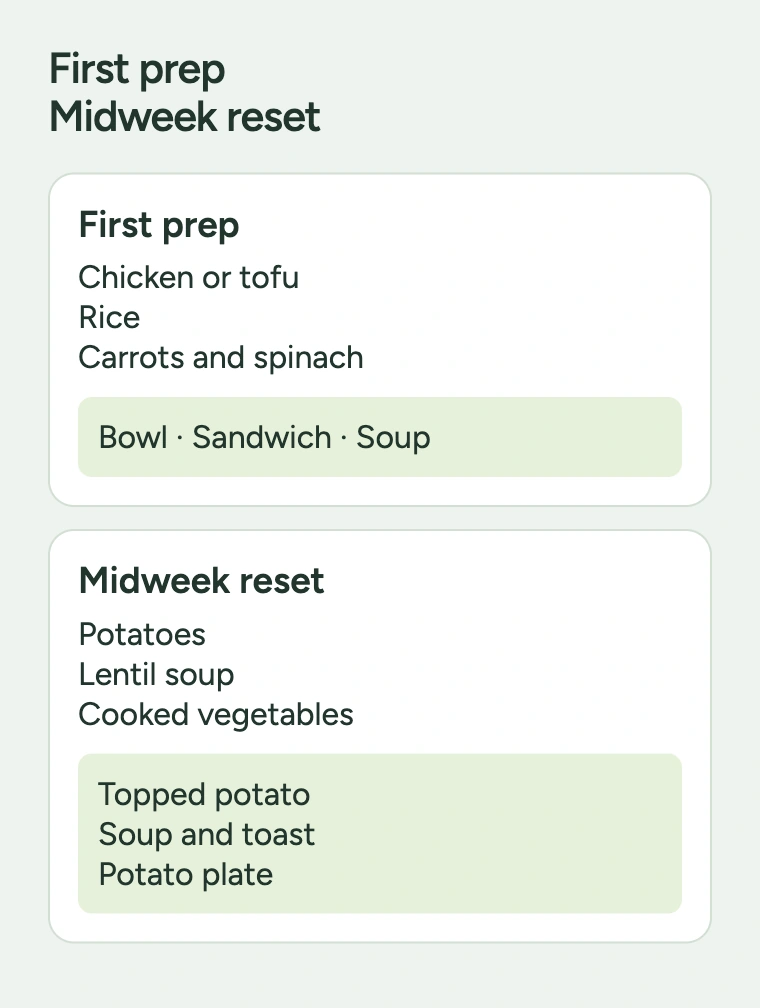
Reuse ingredients across different meals, and make a fresh start halfway through the week.
Day 4: reset with lentils and potatoes
- Breakfast — Overnight berry oats: Mix oats, milk or fortified soy beverage, yogurt and berries in a covered container; refrigerate overnight. Add more liquid before serving if you prefer a softer texture.
- Lunch — Lentil soup and toast: Heat a prepared lentil soup according to the label. Stir in frozen spinach and cook it through. Serve with toast.
- Dinner — Potato with cottage cheese and carrots: Cook a potato using your usual method or its microwave instructions. Split it and add cottage cheese, with cooked carrots alongside. White beans or warmed tofu can replace the cottage cheese.
- Snack option: Banana and yogurt.
Second prep point: Cook extra potatoes and vegetables for Days 5–7, and refrigerate them promptly. Reserve part of the lentil soup for Day 6. Keep an unopened can or pouch of salmon ready for tomorrow. You can buy ready-to-eat hard-boiled eggs for the remaining breakfasts instead of cooking another batch.
Day 5: salmon in two different meals
- Breakfast — Egg and spinach toast: Put a sliced hard-boiled egg and warmed spinach on toast, with fruit alongside if wanted.
- Lunch — Salmon potato bowl: Open canned or pouched salmon and flake it over a warm potato. Add cooked carrots and a spoonful of plain yogurt as a dressing.
- Dinner — Salmon and spinach pasta: Cook pasta according to the package. Toss with spinach, salmon and a little olive oil; add some pasta water to loosen it. Open another salmon package if needed rather than keeping too little food in the meal to preserve leftovers.
- Snack option: Cottage cheese with berries, or a dairy-free alternative that suits you.
Keep it practical: Store unused opened salmon promptly and follow its label's storage instructions. If you do not like fish, use chicken, white beans or tofu in both meals.
Day 6: soup and a flexible potato plate
- Breakfast — Peanut butter banana oats: Repeat Day 2's warm oats. Repeating a breakfast saves effort and uses the ingredients you already have.
- Lunch — Lentil soup with a topping: Reheat the soup reserved on Day 4. Add a spoonful of yogurt or a hard-boiled egg on the side, and toast if wanted.
- Dinner — Potato plate with egg or tofu: Reheat a prepared potato and vegetables, then add a sliced hard-boiled egg or warmed tofu. Keep hummus on the side for dipping.
- Snack option: Fruit and cheese, or fruit and nut or seed butter.
If you are eating with others: Put the potato, toppings and vegetables on the table separately. Everyone can assemble an amount they want without requiring a different dinner for each person.
Day 7: use what remains, with a freezer backup
- Breakfast — Yogurt bowl: Combine Greek yogurt, berries and oats. Swap in banana if the berries are finished.
- Lunch — Hummus and egg toast: Spread hummus on toast and top with a sliced hard-boiled egg. Add cooked vegetables or fruit on the side.
- Dinner — White bean vegetable soup: Heat drained canned white beans, broth and frozen vegetables together until cooked through. Add toast or rice from a newly opened microwave pouch. This meal works even if the week's prepared food is gone.
- Snack option: Crackers with cottage cheese, or yogurt with fruit.
For next week: Keep the two or three meals you liked most. Replace the meals you left unfinished because of taste or effort; repeating a workable meal is more useful than buying ingredients for another ambitious menu.
Swap ingredients without rebuilding the week
These swaps keep the meal recognizable. They are not exact nutritional equivalents; amounts, brands and your needs still matter.
| If this ingredient does not fit | Use in the same meal |
|---|---|
| Chicken or salmon | Tofu, white beans or another protein food you enjoy |
| Greek yogurt or cottage cheese | A tolerated lactose-free version, or soy yogurt; check protein content because plant products vary |
| Rice | Potato, pasta, couscous or bread |
| Oats | Toast with yogurt or egg alongside |
| Carrots or spinach | Cooked zucchini, green beans or another familiar vegetable |
| Peanut butter | Seed butter, hummus or another topping that fits your allergies and preferences |
For a vegetarian week, use tofu in Days 1–3 and white beans instead of salmon on Day 5. For a dairy-free week, choose suitable yogurt and beverage alternatives and use beans or tofu on the potato. If you need gluten-free food, check the bread, oats, pasta, broth and prepared soup labels rather than assuming the whole menu is gluten-free after one swap.
When the planned meal does not fit today's appetite
If you want more food, add more of the meal, another side or an extra eating opportunity. If you fill up quickly, start with less on the plate and make room to eat again later. Keeping food available matters more than finishing a predetermined serving.
For a day when cooking feels unrealistic, use yogurt and fruit, a ready-made sandwich, or prepared soup with toast in place of the scheduled meal. For persistent low appetite or symptoms that make eating difficult, the low-appetite food guide covers that problem more fully. Contact your healthcare team if eating or drinking remains difficult; shrinking the menu further is not the solution to an ongoing intake problem.
Use an existing clinician or dietitian plan where it differs from these examples, especially if another condition changes your food or fluid needs. The useful result of this week is a handful of meals you can make, adjust and repeat—not seven days of identical appetite.

About the author
Maya Lee
Glowise Senior GLP-1 Content Editor
Maya Lee is a Glowise Health Content Editor. Her guides turn product records, authoritative sources, and everyday organization questions into clear, practical GLP-1 information.
She helps readers ask better questions and keep the details relevant to a care conversation together.
See more Glowise on Google
Add Glowise as a preferred source to find our GLP-1 guides more easily in Google Search.