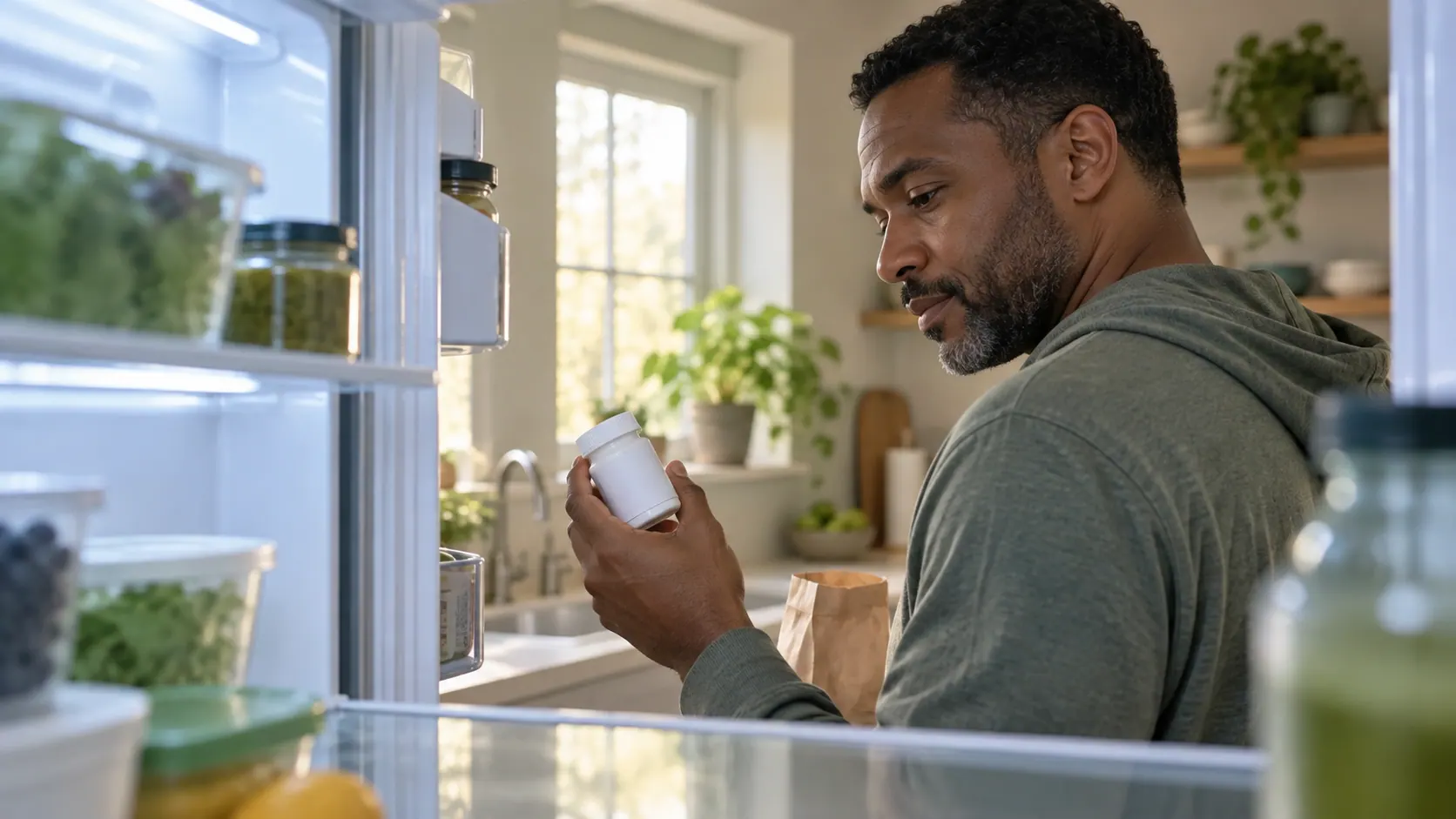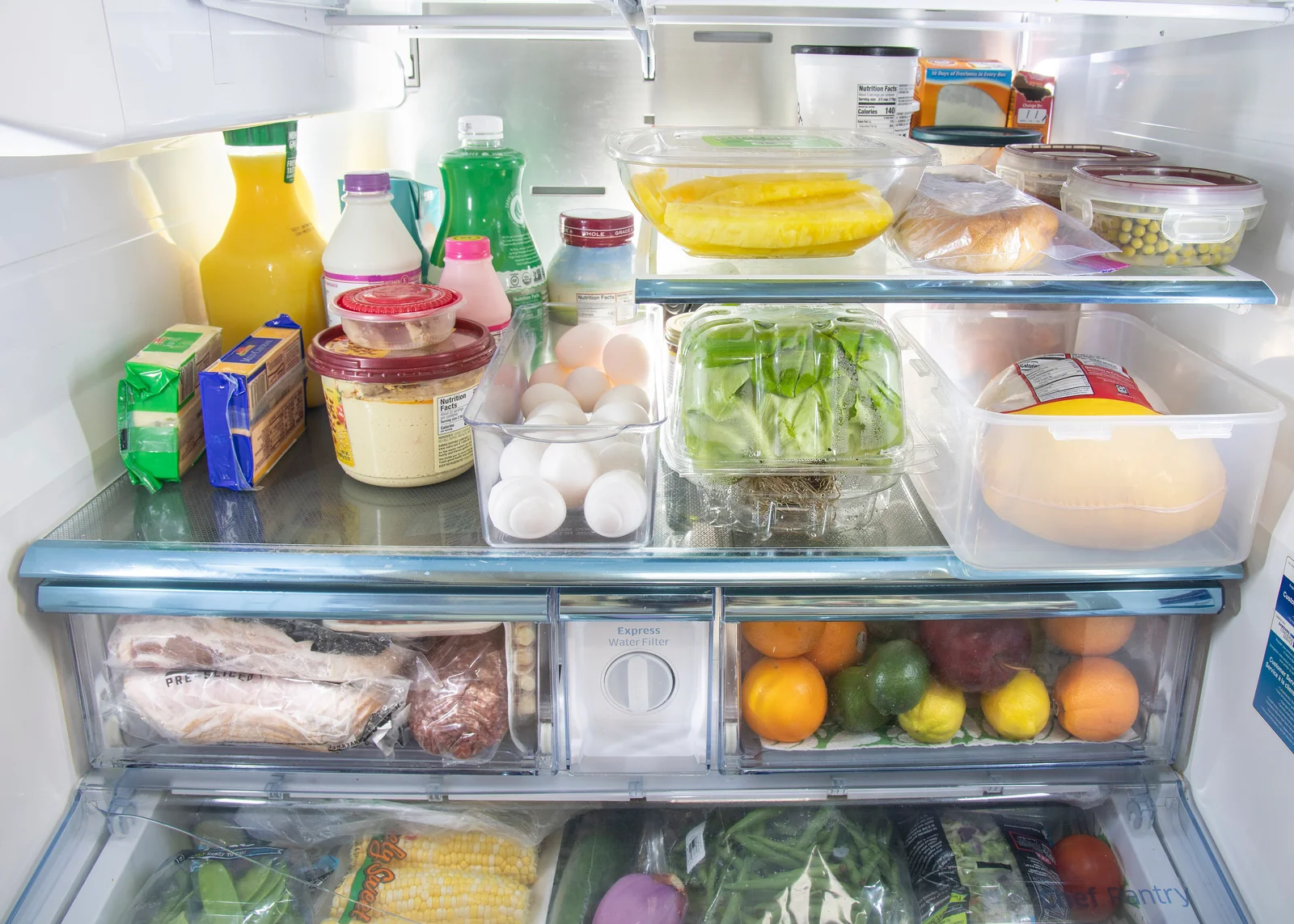
Yes. Zepbound is normally stored in its original carton in a refrigerator at 36°F to 46°F (2°C to 8°C). If refrigeration is unavailable, the current U.S. prescribing information allows limited time at no more than 86°F (30°C). The limit is 21 days for a single-dose pen or single-dose vial and 30 days for an unopened KwikPen or multi-dose vial. Once a four-dose device has been used, it has additional discard rules. The printed expiration date still applies: a room-temperature allowance does not extend it. Check the name and instructions on your own package before applying any number. The U.S. Zepbound label is the source for these limits.
That distinction matters when a delivery sat on the porch or you are packing for a weekend. “Zepbound pen” can mean a single-dose autoinjector or a four-dose KwikPen. A rule for one is not a spare allowance for the other.
A quick decision path for a pen or vial left out
- Name the presentation. Is it a single-dose pen, single-dose vial, multi-dose vial, or KwikPen? If you cannot tell, keep the package and ask your pharmacist before using it.
- Check the temperature history. If it froze, do not use it. If it may have exceeded 86°F (30°C), or you cannot establish the conditions, get a product-specific answer from your pharmacist or Lilly before using it. A normal-looking solution does not clear an unknown storage event.
- Count the right clocks. For a single-dose device, total the time at room temperature against 21 days. For a multi-dose vial or KwikPen, check the 30-day room-temperature limit and, once used, the first-use date and number of weekly doses. In every case, check the printed expiration date. The table below keeps those limits together.
Find your presentation first
Read the carton and the Instructions for Use, then match the device to the label's storage category:
| Zepbound presentation | Usual storage | If kept out of the refrigerator at no more than 86°F | Do not use or discard when |
|---|---|---|---|
| Single-dose pen | Refrigerate at 36°F–46°F in the carton | Up to a total of 21 days | The printed expiration date has passed, 21 total days at room temperature have elapsed, or it froze—whichever applies first |
| Single-dose vial | Refrigerate at 36°F–46°F in the carton | Up to a total of 21 days before use | The printed expiration date has passed, 21 total days at room temperature have elapsed, or it froze—whichever applies first; discard an opened vial after its one use, even if medicine remains |
| Unopened multi-dose vial or single-patient-use KwikPen | Refrigerate at 36°F–46°F in the carton until the printed expiration date | Up to 30 days | The printed expiration date has passed, 30 days at room temperature have elapsed, or it froze—whichever applies first |
| Opened multi-dose vial or KwikPen | Refrigerate in the carton or keep at room temperature, up to 86°F | The room-temperature total still has a 30-day limit | At the earliest of the printed expiration date, 30 days after first use, 30 total days at room temperature, or four weekly doses; do not use if frozen, even if medicine remains |
These are U.S. label instructions, not a calculation of how well an individual device survived an unknown temperature. The same label says to protect Zepbound from heat and light, keep it in the original carton, and never use it if it froze. An unopened four-dose device has a different timeline from one that has already been used; write down the first-use date if that applies to yours.
For a multi-dose vial or KwikPen, the earliest discard point wins
Keep these four checks with the carton. Discard the device when any one is reached, even if medicine remains:
- The printed expiration date.
- A total of 30 days at room temperature, no warmer than 86°F (30°C).
- 30 days after first use.
- Four weekly doses taken from that device.
A useful note has four fields: Expiration date: [date]; Room-temperature time already used: [total]; First-use date: [date]; and Weekly doses taken: [number]. For example, if you have already taken four weekly doses, unused room-temperature days do not make leftover medicine available for a fifth dose. Refrigeration does not give you a new set of clocks. Freezing is a separate reason not to use the medicine at all.
What if it was left on the counter?
First, identify the presentation. Then note when it left refrigeration, whether it has been used, and the highest temperature you can reasonably establish. A single-dose device has a total 21-day room-temperature allowance under 86°F; an unopened four-dose device has 30 days. For a used KwikPen or multi-dose vial, compare all four discard points in the table rather than counting from only the last injection.
Do not assume putting a device back in the refrigerator resets any elapsed room-temperature time. The U.S. label explicitly allows an in-use KwikPen or multi-dose vial to be stored either refrigerated or at room temperature, within its limits. If you are unsure whether to refrigerate a device again after it has warmed, ask your pharmacist or Lilly rather than transferring an answer from the other device.
A hot car, direct sun, a freezing cooler, or an unmeasured power outage is a different problem from a known night in a temperature-controlled room. The label's allowances apply only up to 86°F, and appearance alone cannot establish that a device remained within its storage conditions. Keep the carton, note the timeline you know, and ask the dispensing pharmacist or manufacturer before using medicine whose storage history is uncertain. If the medicine is cloudy, discolored, has particles, or the device was frozen, consult its Instructions for Use and your pharmacist; the label says not to use Zepbound if frozen or if the solution has particulate matter or discoloration.
Packing Zepbound for a trip
Before leaving, check your device's remaining allowed time out of refrigeration against the whole trip, including travel and delays. Keep the carton with you, protect it from light and heat, and avoid direct contact with a frozen pack that might freeze the medicine. For air travel, keeping medication in your carry-on gives you access to it if your checked bag is delayed and makes temperature changes easier to notice. TSA permits liquid medications in carry-on bags in reasonable quantities, with declaration to officers for inspection. Medically necessary gel ice packs are allowed in reasonable quantities even if melted or slushy; tell the officer what they are. TSA screening permission does not change Lilly's storage limits.
At your destination, check whether the refrigerator keeps medicine in the 36°F–46°F range without freezing it. A hotel fridge or ice-filled bag is not automatically a verified storage environment. If the trip will exceed your device's allowed room-temperature window, arrange a suitable storage plan with your pharmacist before departure.
For a four-dose device, the date of first use and number of weekly doses matter alongside temperature. Keep those dates with your medication notes. Glowise's Zepbound tracker can help you keep routine notes, meals, water and how you feel together; it does not assess whether a pen or vial is safe to use after a storage incident. The package instructions and your pharmacist remain the place to settle that question.
Common storage questions
Does the 21-day rule apply to every Zepbound pen?
No. In current U.S. labeling, 21 total days at room temperature applies to the single-dose pen and single-dose vial. The multi-dose vial and single-patient-use KwikPen have 30-day limits and additional after-first-use and four-dose discard rules. Read the presentation on your carton, not just the word “pen.”
Can I use a Canadian KwikPen guide or a compounded-tirzepatide BUD?
Use the current U.S. instructions supplied with your U.S. Zepbound presentation. Another country's label may cover a different presentation or conditions. A pharmacy-compounded tirzepatide vial is a different preparation; its beyond-use date cannot replace Zepbound's storage and discard rules, and Zepbound's allowances cannot establish its stability.
The practical check
If you can name your device, establish its storage history, and match it to the current U.S. label, you can apply the relevant limit. If any of those facts are missing—or the device froze or may have exceeded 86°F—pause and get a product-specific answer before using it. Do not borrow a compounded medication's beyond-use date or another GLP-1 brand's room-temperature allowance for Zepbound.
Cover photo: USDAgov via Wikimedia Commons, public domain. Resized and converted to WebP.

About the author
Maya Lee
Glowise Senior GLP-1 Content Editor
Maya Lee is a Glowise Health Content Editor. Her guides turn product records, authoritative sources, and everyday organization questions into clear, practical GLP-1 information.
She helps readers ask better questions and keep the details relevant to a care conversation together.
See more Glowise on Google
Add Glowise as a preferred source to find our GLP-1 guides more easily in Google Search.