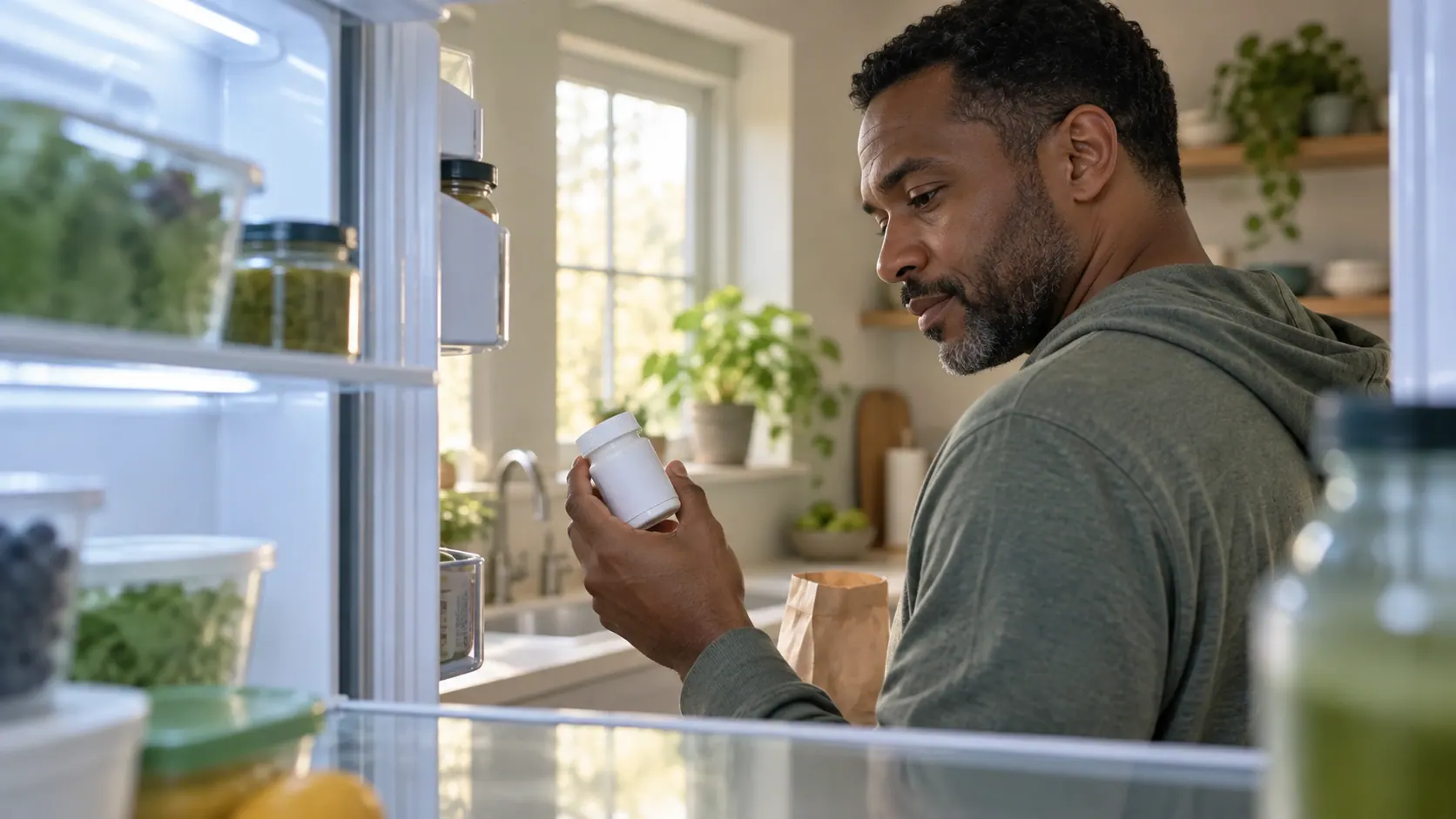
If you have an unopened vial of compounded semaglutide in the refrigerator, there is no single number of days that answers how long it lasts. Start with the instructions and beyond-use date (BUD) on the label from the pharmacy that dispensed _your_ preparation. An online storage timeline—even one that sounds precise—cannot replace that label. If the date or instructions are missing, unclear, or no longer fit what happened to the vial, contact the dispensing pharmacy before deciding what to do with it.
The word _unopened_ matters, but it does not create a universal shelf life. It tells the pharmacy something about the vial's history; the preparation, its packaging, and its specific labeling still determine which instructions apply. The practical question is not “Which internet number should I use?” but “What does this pharmacy say about this particular vial?”
Why there is no universal fridge timeline
“Semaglutide” names the active ingredient, not one identical package with one set of instructions. A compounded preparation may differ in its formulation, container, and pharmacy-specific labeling. Those details are why a shelf-life statement for one vial cannot safely become a rule for every unopened compounded vial. Even two pages discussing “compounded semaglutide” may be describing different preparations without making the difference obvious.
The BUD is the date the dispensing pharmacy provides for its specific preparation. Read it alongside the storage directions rather than treating it as a stand-alone promise: a date on a label does not tell you what to do if the vial was stored outside the labeled conditions. Nor does the fact that the seal is intact answer a question about a possible storage incident. When either the instructions or the history is uncertain, the pharmacy has the preparation details needed to answer a more useful question than a search result can.
Suppose you find a post saying an unopened vial lasts a certain number of weeks, while your label shows a different date. The post's number is not a reason to extend or shorten the date on your vial. First check that you are reading the right label and the right product form; then ask the dispensing pharmacy to clarify anything that seems inconsistent. You do not need to resolve a technical labeling question on your own.
A branded pen is not the same question
Search results for semaglutide storage often mix instructions for branded pens with discussions of compounded vials. Both may contain semaglutide, but the branded product's packaging and official instructions describe that branded product. They do not automatically establish the storage period or BUD for a pharmacy-compounded vial.
Before using a storage article, look at the nouns in it. Is it talking about a manufacturer-supplied pen or the exact vial dispensed by your pharmacy? Does its timeline begin when a device is first used, while you are asking about a vial that has never been opened? Those are different questions. A useful article can help you frame the question, but it cannot see your prescription label or know the preparation's history.
Read the label with the vial in front of you
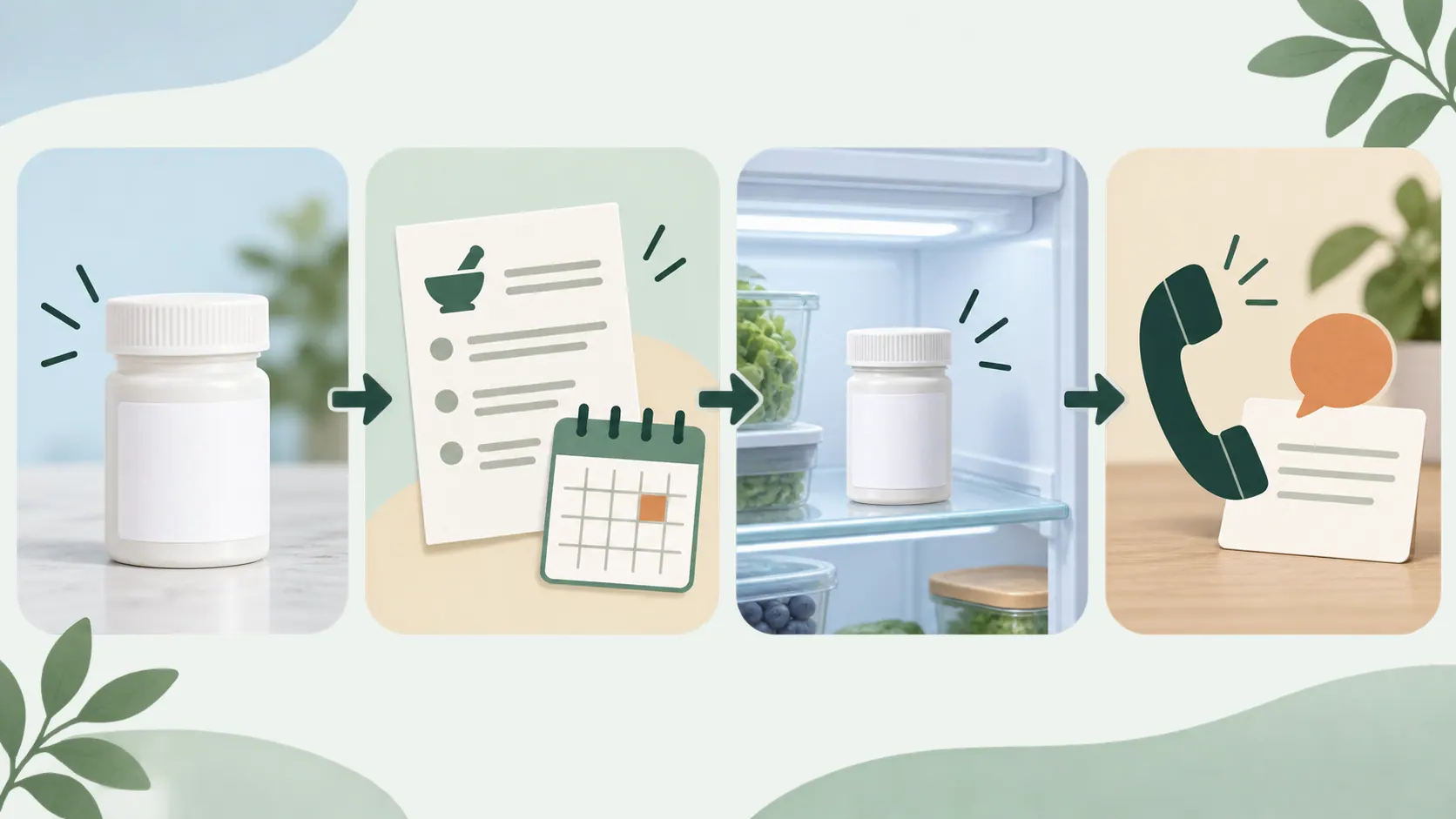
You can make the next step easier by collecting a few facts before calling. This is a way to describe your situation accurately, not a home test of whether the medicine is suitable to use.
- Identify the dispensing pharmacy. Find its name and contact details on the packaging or accompanying paperwork. If you have more than one vial, keep each vial with its own label while you check.
- Find the BUD and storage directions. Note the date as printed and the instructions that accompany it. If a date, abbreviation, or instruction is hard to read, leave it as a question for the pharmacy rather than filling in the blank from memory.
- Confirm the exact product and form. Check what the label calls the preparation and whether the container you are holding is the one those instructions describe. Do not transfer guidance from a pen, another vial, or an older prescription simply because the ingredient name matches.
- Describe whether it is unopened. Say what you know about the seal and whether the vial has been used. If you are unsure, say so; an uncertain history is more useful to communicate than a confident guess.
- Write down any storage event. If it may have been left out, frozen, or stored in a way that might not match the label, note what happened and the timing you actually know. You do not have to invent an exact duration if you cannot establish one.
For example, “This unopened vial arrived on Tuesday; the BUD on the pharmacy label is hard to read, and it may have been left out while the groceries were put away” gives the pharmacy a specific question to investigate. It is more useful than asking for a general refrigerated shelf life without saying which vial you have.
What if it was left out, frozen, or looks different?
A possible storage incident changes the question. The label's date alone may not resolve whether the instructions still apply after the vial was left out or frozen. Likewise, an unreadable label or an unexpected change in appearance deserves a product-specific answer. Do not decide from an online photograph, a general “still good” rule, or appearance alone.
Keep the vial and its packaging available, record the facts you know, and contact the dispensing pharmacy. Tell them what the label says, what happened, and what remains uncertain. If you did not witness the whole event—for instance, you only discovered the vial somewhere other than its usual place—explain that limit. The pharmacy can use the details of its preparation and labeling to advise you on the next step. This article cannot determine that a particular vial is usable or unusable.
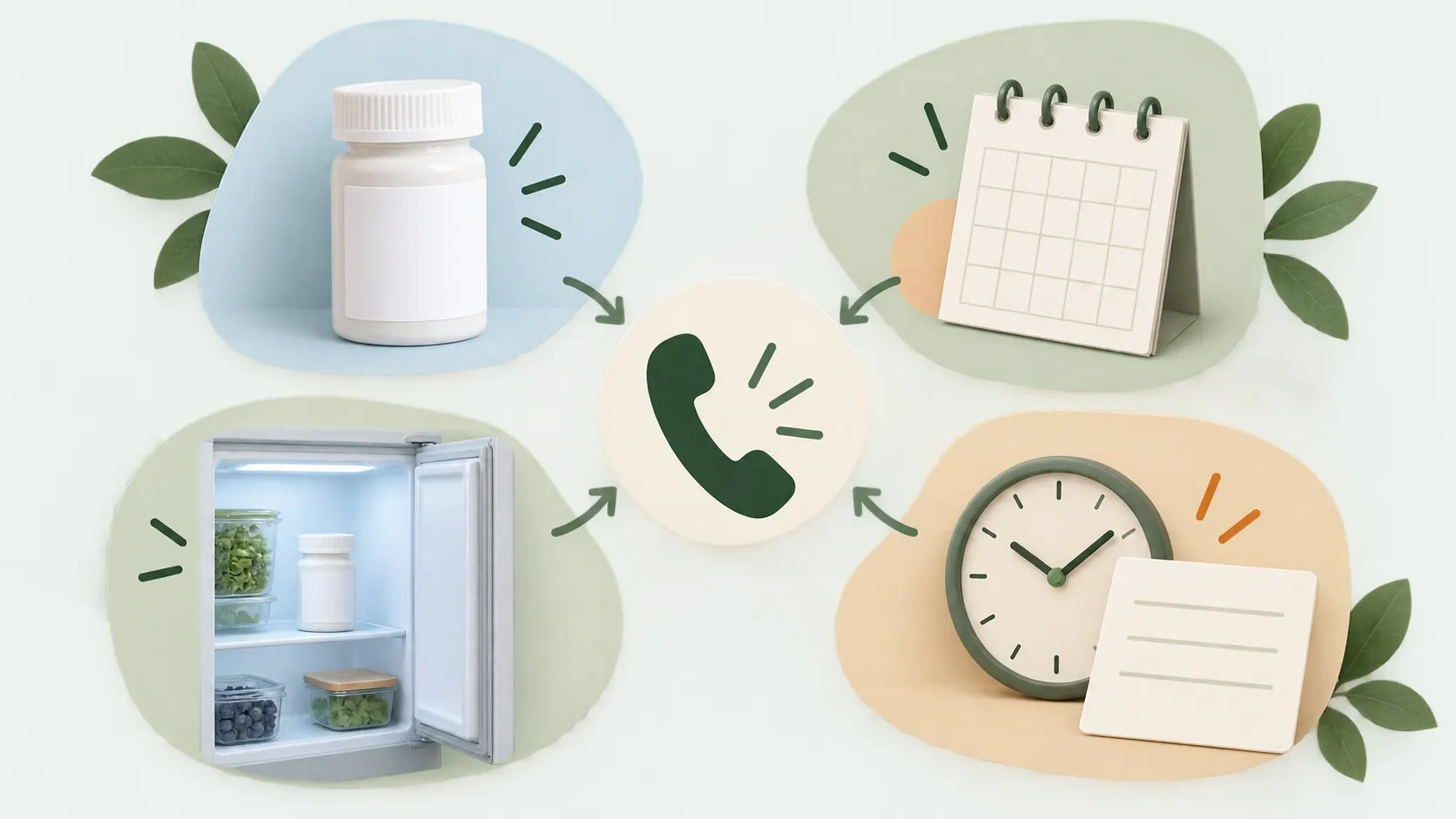
You may also encounter a date that has passed, a missing BUD, or different-looking information on separate pieces of paperwork. Those are reasons to ask for clarification, not invitations to choose whichever date seems most reassuring. Keep the question tied to the exact vial and its dispensing pharmacy.
Why the distinction matters for compounded medication
The FDA explains that compounded drugs are not FDA-approved: the agency does not review their safety, effectiveness, or quality before they are marketed. It also recognizes that compounded drugs can meet important patient needs, while poor-quality or contaminated compounded drugs can cause serious injury. That context calls for care with product-specific information; it does not mean every compounded medicine is unsafe or that a storage guess can settle its quality.
In practical terms, the pharmacy that prepared or dispensed your vial is the appropriate place to clarify its label and BUD. A manufacturer's instruction for a different semaglutide product answers a different question. Neither a reassuring article nor an alarming one can verify the preparation or storage history in your hand.
It can help to separate two kinds of information. General explanations tell you _why_ one timeline may not transfer to another product. Your own label and a conversation with the dispensing pharmacy tell you what instructions were supplied for _this_ preparation. If those instructions do not answer an unusual event, bring the event to the pharmacy instead of trying to derive a new date yourself.
Keep the routine record separate from the storage decision
Once the label question is settled with the pharmacy, a simple record can make an ongoing medication routine easier to follow. Keep the original packaging and pharmacy instructions available for storage questions. For day-to-day patterns, Glowise's GLP-1 tracker can help you record medication or shots alongside water, side effects, and weight trends. That routine record is a different job from determining a vial's BUD or whether a storage incident changed what to do.
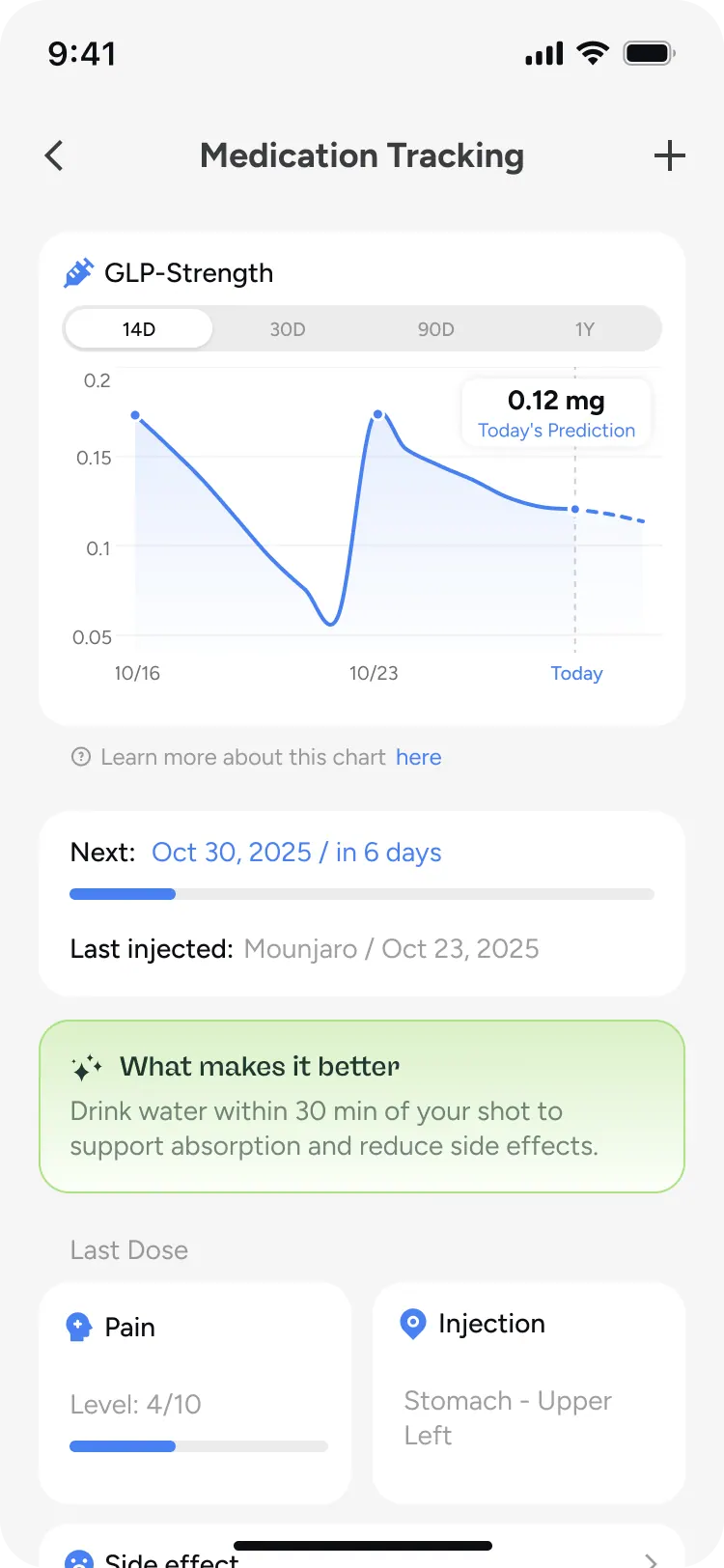
There is value in keeping those jobs distinct. A note about when you took medication can help you reconstruct your routine; it does not establish how long an unopened vial remains suitable in the refrigerator. If a question comes up later, use the pharmacy label and the facts of the storage event for that conversation. A tracking habit can support organization without being asked to make a prescription decision.
The practical takeaway
A label-first way to proceed
- Check the BUD and storage directions on the dispensing pharmacy's label for the exact vial.
- Confirm that the instructions describe a compounded vial, not a different semaglutide product.
- Note whether the vial is unopened and what you actually know about its storage history.
- If a date is unclear, a storage event occurred, or appearance seems unexpected, call the dispensing pharmacy with those details.
- Keep routine records separate from the pharmacy's product-specific storage guidance.
Sources
- FDA: Understanding the Risks of Compounded Drugs — regulatory and quality context for compounded medications. For the BUD and storage instructions of an individual vial, use its dispensing pharmacy's label and ask that pharmacy for clarification.
- FDA: Concerns with Unapproved GLP-1 Drugs Used for Weight Loss — FDA directs people with questions about instructions for use or label information to the compounder or dispensing platform.

About the author
Maya Lee
Glowise Senior GLP-1 Content Editor
Maya Lee is a Glowise Health Content Editor. Her guides turn product records, authoritative sources, and everyday organization questions into clear, practical GLP-1 information.
She helps readers ask better questions and keep the details relevant to a care conversation together.
See more Glowise on Google
Add Glowise as a preferred source to find our GLP-1 guides more easily in Google Search.