
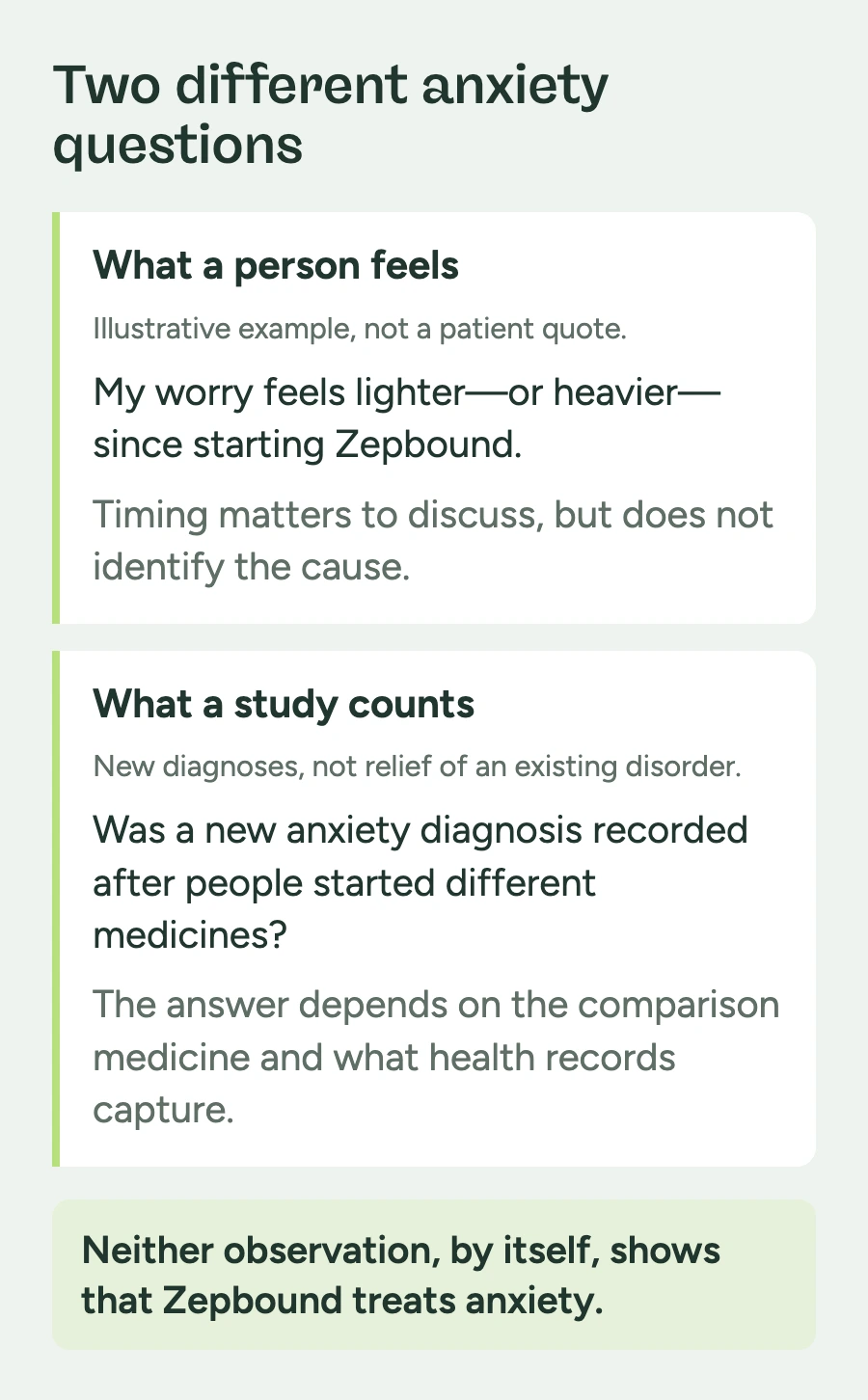
Zepbound is not an anxiety treatment, and we do not yet have good evidence that it reliably treats an anxiety disorder. Some people feel less preoccupied with food or more at ease in daily life while taking it; others report feeling more anxious. Either change is real as an experience, but the timing alone cannot tell you that tirzepatide caused it. The useful distinction is between an anxiety disorder, relief from a particular source of stress, and physical symptoms that can feel like anxiety.
Zepbound is the U.S. brand of tirzepatide used for weight management and for moderate-to-severe obstructive sleep apnea in adults with obesity, alongside diet and physical activity. Its current U.S. prescribing information does not list anxiety as an indication or establish it as a common adverse reaction. Neither fact proves that an individual's mood cannot change on treatment.
What does the evidence say about anxiety?
The clearest answer is limited: Zepbound's weight-loss and sleep-apnea trials were designed to test those outcomes, not whether the medicine treats generalized anxiety disorder, panic disorder, or another anxiety condition. A change in weight, sleep or quality of life cannot stand in for a validated anxiety-treatment result.
A 2026 U.S. electronic-health-record study compared people with obesity who started different weight-loss medicines. Tirzepatide users had fewer recorded new anxiety diagnoses than users of naltrexone–bupropion in the study's matched comparisons. Among participants without type 2 diabetes, tirzepatide users had more recorded anxiety diagnoses than semaglutide users. Those two findings are not a contradiction: the comparison drug changes the question. Prescribing decisions, preexisting symptoms that were not fully captured, and whether someone seeks care can still affect the result. This study cannot show that Zepbound prevents or causes anxiety, much less that it treats someone who already has an anxiety disorder.
A second retrospective study found broadly similar combined psychiatric outcomes for tirzepatide and semaglutide over two years, with a small nominally higher anxiety hazard for tirzepatide in the second year. Its authors caution against reading that isolated finding as a settled drug effect, especially given multiple comparisons. Research on semaglutide alone also cannot be transferred to tirzepatide simply because both act on GLP-1 pathways; tirzepatide also acts on GIP receptors. No established human mechanism here shows that Zepbound directly relieves anxiety through dopamine, serotonin or reduced inflammation.
If you feel calmer, what might have changed?
Notice what feels easier. If thoughts about food are less intrusive, you may have less distress around choosing meals or anticipating cravings. That is a meaningful change, but it is narrower than saying an anxiety disorder has resolved. Anxiety about work, relationships or panic sensations may be unchanged. A person might also sleep better or find daily movement more comfortable as their health changes; those shifts could influence how they feel without showing a direct anti-anxiety action of tirzepatide.
This distinction matters if you already receive treatment for anxiety. Feeling better after starting Zepbound does not, on its own, establish that counseling or an anxiety medicine is no longer needed. Tell the clinician managing your anxiety what has changed before altering that care.
If you feel worse, is Zepbound the cause?
New anxiety deserves attention even though a dose date cannot establish causality. Start by separating anxious thoughts or persistent worry from physical episodes. Nausea, poor sleep, dehydration or a racing heartbeat can leave someone feeling unsettled. Zepbound's label reports a small average increase in heart rate in weight-management trials; that is not a measured rate of panic attacks. Emotional strain may also accompany changes in eating routines or body size. More than one factor can be present at once.
Low blood sugar is a specific possibility to consider, especially if you have diabetes and also use insulin or an insulin-releasing medicine such as a sulfonylurea. The Zepbound label says it can cause hypoglycemia and that the risk rises with those medicines; it also notes cases in adults without type 2 diabetes. CDC guidance lists symptoms such as shakiness, sweating, a fast heartbeat, irritability and confusion. These can resemble or accompany anxiety. If you have a glucose-monitoring and low-blood-sugar treatment plan, follow it rather than guessing from the feeling. The label instructs people with diabetes to monitor glucose before and during treatment and tells all patients to learn the signs of hypoglycemia; ask your care team how those instructions apply to your other medicines.
It is also possible to have an anxiety disorder that began or worsened during treatment for reasons unrelated to Zepbound. Patient reports and adverse-event databases are valuable signals, but they do not supply a reliable rate of Zepbound-caused anxiety. In one European adverse-report analysis, anxiety appeared among psychiatric reports involving several GLP-1-related medicines. The reports lacked the controlled comparison needed to decide what caused an individual's symptoms, and the pooled figures should not be presented as a Zepbound-specific risk.
What should you do with a change in anxiety?
If symptoms are new, recurring or disrupting sleep or daily life, contact the clinician who prescribes Zepbound. A short account is more useful than a verdict: when the change started, whether it followed starting treatment or a dose change, how often it happens, what the episode feels like, and what else changed in sleep, food intake, illness or medicines. Mention any history of anxiety and what treatment you currently use. The clinician can consider both the medication and other causes rather than treating the timing as proof.
Do not wait for a routine appointment if you feel unsafe or have thoughts of harming yourself. In the U.S., call or text 988 for immediate crisis support, or call 911 for an immediate emergency. The latest Zepbound label says its prior suicidal-behavior-and-ideation warning was removed in February 2026; that regulatory change does not make a person's urgent symptoms less important.
For a sudden episode with shaking, sweating, confusion or faintness, follow your established glucose plan if you have one and seek urgent help if you cannot safely manage the episode. Trouble breathing or swelling of the face, lips, tongue or throat may signal a serious allergic reaction: the Zepbound label instructs patients to stop using Zepbound and get medical help right away. These situations need care now, before sorting out whether anxiety played a part.
The practical answer is not a simple yes or no. Research does not support prescribing Zepbound to treat anxiety; personal improvement may reflect a narrower change such as less food-related distress, while worsening needs assessment rather than dismissal. Describe the change precisely, consider physical warning signs, and let the right care team help determine what follows.
Sources

About the author
Maya Lee
Glowise Senior GLP-1 Content Editor
Maya Lee is a Glowise Health Content Editor. Her guides turn product records, authoritative sources, and everyday organization questions into clear, practical GLP-1 information.
She helps readers ask better questions and keep the details relevant to a care conversation together.
See more Glowise on Google
Add Glowise as a preferred source to find our GLP-1 guides more easily in Google Search.