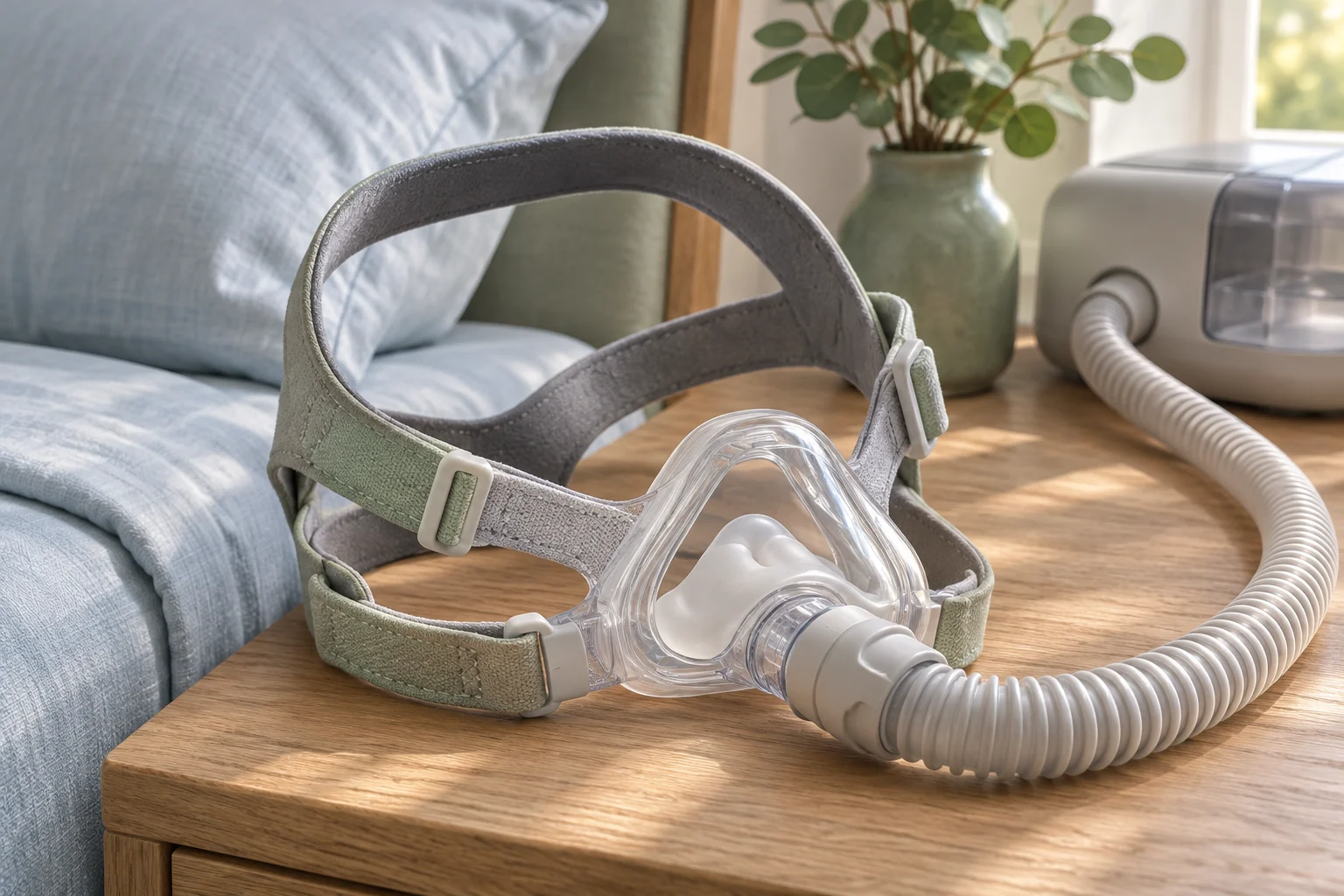
Zepbound, a brand of tirzepatide, is FDA-approved to treat moderate-to-severe obstructive sleep apnea (OSA) in adults with obesity, alongside a reduced-calorie diet and increased physical activity. In two trials, people taking tirzepatide had fewer breathing interruptions during sleep after 52 weeks. If you use CPAP or another form of positive airway pressure (PAP), keep using it as prescribed until your sleep clinician changes the plan. The trials measured changes in breathing severity and left the question of when to stop PAP unanswered. U.S. Zepbound prescribing information, sections 1 and 14.2.
What does a lower AHI tell you?
Obstructive sleep apnea happens when the upper airway repeatedly narrows or closes during sleep. A sleep study counts pauses in breathing (apneas) and reductions in breathing (hypopneas). The apnea–hypopnea index, or AHI, is the average number of these events per hour of sleep.
PAP delivers air pressure to keep the airway open while you wear it. A sleep-study AHI and the event estimate on a PAP machine can therefore reflect different conditions. One question is how your breathing is doing with your current treatment in place. A different question is how much apnea remains if that treatment is changed. Keep the date and testing conditions beside any number you compare. NHLBI guide to sleep apnea treatment.
What changed over 52 weeks in SURMOUNT-OSA?
Both randomized trials enrolled adults with obesity and moderate-to-severe OSA. The two groups started with about 50 events per hour on average. Participants received lifestyle counseling and took either tirzepatide or placebo. The trial dose of tirzepatide was increased to the highest tolerated of 10 or 15 mg weekly.
| Who enrolled | Average decrease with tirzepatide | Average decrease with placebo |
|---|---|---|
| People unable or unwilling to use PAP | 25.3 events per hour | 5.3 events per hour |
| People already using PAP | 29.3 events per hour | 5.5 events per hour |
Those are reductions from each group's starting AHI. For a sense of scale, imagine a sleep-study result falling from 50 to 25. That's half as many breathing events per hour, with moderate OSA still present. Your own follow-up report is what tells you how many events remain. The trials also measured improvement in the burden of low oxygen during sleep. Original SURMOUNT-OSA report.
How many people finished with little or no sleep apnea?
The FDA label gives a combined result. It counts people whose follow-up AHI was below 5, or whose AHI was 5–14 with an Epworth Sleepiness Scale score of 10 or less. That second group still had mild OSA by AHI and met the study's low-sleepiness threshold. In the trial without PAP, 42.2% on tirzepatide and 15.9% on placebo met the combined outcome. In the trial enrolling PAP users, the figures were 50.2% and 14.3%. A headline that says “half were cured” drops the mild-OSA part of the result. Zepbound prescribing information, section 14.2.
Whose results are these?
The trials started with an AHI of at least 15 and a BMI of at least 30. They excluded people with type 1 or type 2 diabetes and those with central or mixed sleep apnea. A diabetes diagnosis limits how directly these trial numbers apply to you. It was an enrollment condition, while the U.S. OSA indication itself specifies moderate-to-severe obstructive sleep apnea in adults with obesity. Zepbound and Mounjaro contain the same active ingredient and have different labels. FDA OSA approval and Glowise medication list.
Can you put the CPAP away after losing weight?
Keep using PAP at the prescribed settings until your sleep clinician reviews whether anything should change. In the trial enrolling PAP users, the protocol instructed participants to suspend PAP for seven days before the primary assessment so researchers could measure their breathing without the immediate effect of the device. The study did not test a long-term plan for coming off PAP. Participants also entered the trials based on their existing PAP use, so comparing the two rows in the table cannot tell you whether PAP makes tirzepatide work better.
For a follow-up visit, bring your original sleep report (including AHI), your current PAP settings or a device report if your team requests it, and your medication and weight timeline. Mention any return of snoring, witnessed pauses, daytime dozing or trouble tolerating the mask. If you feel better and your machine reports few events, you can ask, “How much of that result reflects the PAP I'm still using, and what would we need to measure before changing it?” The American Academy of Sleep Medicine's follow-up guidance allows reassessment after clinically significant weight change or when symptoms persist despite good PAP use. The sleep team can choose whether and how to test.
Difficulty falling or staying asleep is a separate concern to raise with your clinician. The Mounjaro and insomnia guide covers that question.

About the author
Maya Lee
Glowise Senior GLP-1 Content Editor
Maya Lee is a Glowise Health Content Editor. Her guides turn product records, authoritative sources, and everyday organization questions into clear, practical GLP-1 information.
She helps readers ask better questions and keep the details relevant to a care conversation together.
See more Glowise on Google
Add Glowise as a preferred source to find our GLP-1 guides more easily in Google Search.