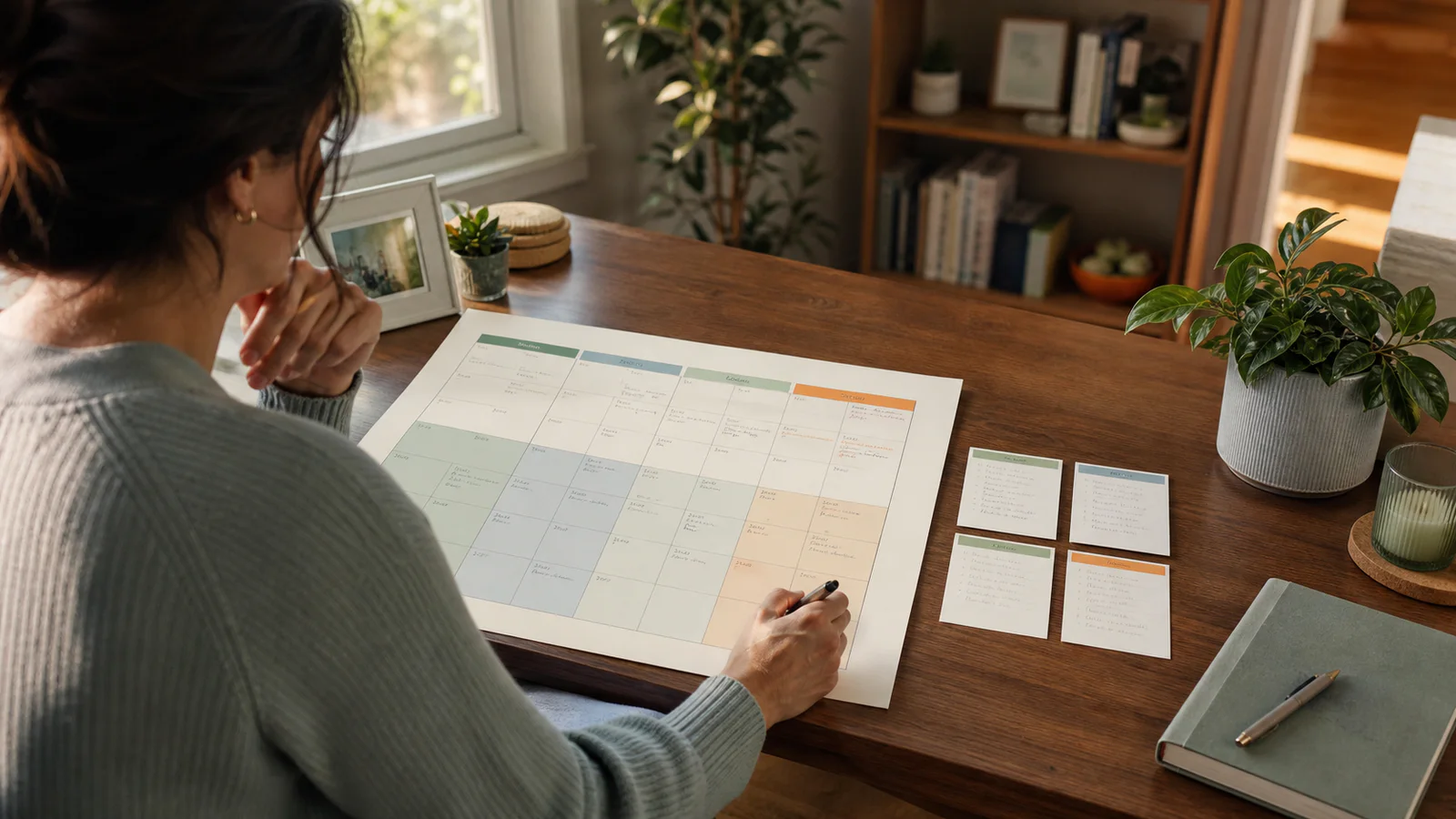
If you searched “does GLP-1 cause headaches?”, the honest answer starts smaller than a yes-or-no verdict. Some product information lists headache, but one headache does not prove why it happened. A label can show what was reported for a particular medicine. It cannot safely interpret one person's day in isolation.
Check the information for the exact prescription, capture the timing and context you noticed, and take that short record to a pharmacist or prescriber if you need to ask. The point is not to turn a headache into a theory. It is to preserve the details that will be hardest to remember later.
What the label can confirm about GLP-1 and headaches
The current Wegovy prescribing information lists headache among common adverse reactions. That is useful, product-specific context. It does not mean every GLP-1 product uses the same wording, and it does not make a label a personal explanation.
A listed effect is not a personal explanation
Read the label for the medicine and form you were prescribed rather than borrowing a claim from another product or a generic class list. A label records results in a defined study context. Your experience is a separate, individual event with details a label cannot see.
For the broader map of listed effects, use the broader GLP-1 side-effect guide. This article stays with the headache question and the details that can make a later question clearer.
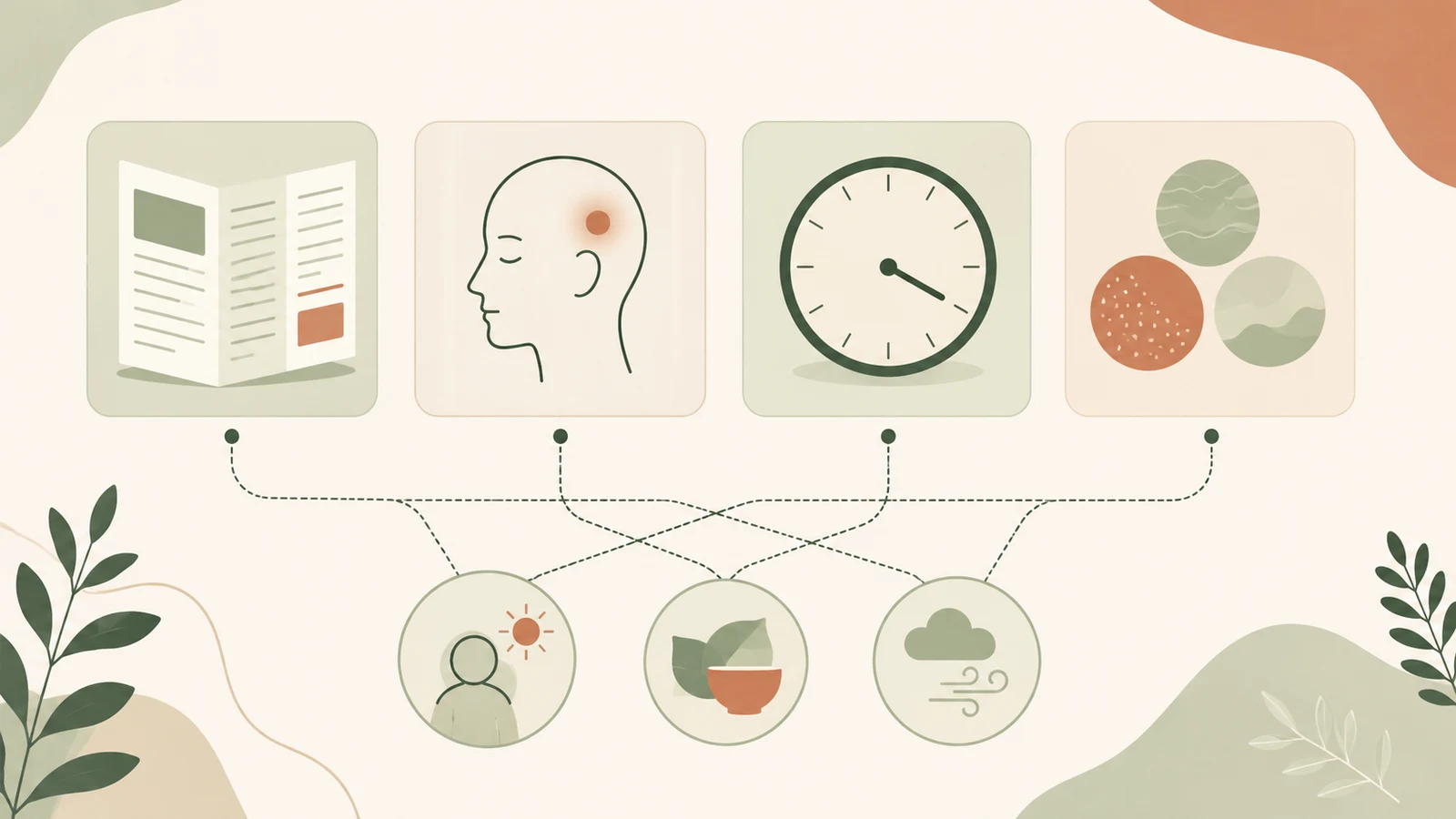
Why headache patterns can vary and are not a one-cause story
Headaches can sit beside many parts of an ordinary day. The fact that one occurred after a medicine change is worth noting; it is not proof that the medicine caused it.
Keep possible context beside the observation
A useful record leaves room for the rest of the day. Was this the first time you noticed it or part of a repeat pattern? Did it begin in the morning, afternoon, or evening? How long did it last? Was there another change you want to remember?
You do not have to solve those questions. Neutral context is not a diagnosis. It is simply what lets a qualified professional see more than one sentence of memory. “Headache for about two hours in the late afternoon” travels farther than “something felt off.”
The same reader can have one episode that never returns and another that appears as a pattern over several days. That variation is exactly why a short record is more useful than trying to match one story from the internet to your own week.
The timing details worth keeping
The best note is short enough to make when you do not feel like writing. Keep only the facts you may need to describe later.
The details that blur by tomorrow
Record:
- the date and rough time it began;
- how long it lasted;
- where it fell beside your usual prescription routine;
- what the day felt like in your own words;
- whether you noticed another similar episode.
If you need a broader early-routine record, the first-month GLP-1 record covers that separate task. This page does not turn one symptom into a fixed first-month timeline.
Turn a note into a clearer question
A note becomes useful when it lets you ask one specific question without first rebuilding the week from memory.
A question with useful handles
“Over two weeks I wrote down three headaches, including the time and how long each lasted. Here are the dates and what else I noticed. Is there anything about this pattern I should understand?” gives a pharmacist or prescriber something concrete to work with.
It does not ask the record to diagnose you. It keeps the observations in their proper place and lets the professional decide what additional context matters.

When not to wait on a record
Recordkeeping is not a waiting room for concerning symptoms. Seek prompt professional advice for symptoms that are concerning, severe, persistent, or worsening, whether you have a note ready or not.
If you think a situation may be an emergency, use local emergency services. Do not document first. A timeline can support a later conversation, but it never replaces prompt help.
How a side-effect record keeps context together
Glowise's Side Effect Tracker is an optional place to keep the details you choose to record. You can enter what you noticed in your own words, add timing and duration, and include optional medication, food, water, and personal-note context. Over time, you can review your own timeline and prepare a focused question. If that would make recall easier, you can keep a side-effect record.
It is a recall tool: a way to keep your own observations from dissolving into a vague memory. Interpretation, urgency, treatment, and dose decisions remain with an appropriate qualified professional.
A clearer record for later
Keep your observations where you can find them
Organize timing, water, food, and symptom notes in one personal record without asking the app to decide what they mean.
The practical takeaway
What to take forward
- Check the label for the exact product rather than treating a class claim as a personal answer.
- Record timing, duration, and the ordinary context you want to remember.
- Use a repeat pattern to prepare a question, not to prove a cause.
- Seek prompt professional advice for symptoms that are concerning, severe, persistent, or worsening.
Frequently Asked Questions
Can GLP-1 medicines cause headaches?
Some product information lists headache, including the current Wegovy label. That is a label-level fact for that product. It cannot confirm why an individual headache happened.
What should I record about a headache on a GLP-1 medicine?
Keep a few neutral details: when it started, how long it lasted, where it fell beside your prescription routine, what you noticed that day, and whether it repeated. Write observations, not conclusions.
Does a headache mean low blood sugar on a GLP-1 medicine?
No article or tracker can tell you what a headache means in your situation. A headache alone is not a diagnosis. Ask a qualified professional who can consider your complete prescription and health context.
When should I get prompt medical advice for a headache?
Get prompt professional advice for symptoms that are concerning, severe, persistent, or worsening. If you think the situation may be an emergency, use local emergency services rather than waiting to record more details.
Can a tracker tell me why I had a headache?
No. Glowise keeps what you enter in a personal timeline. It preserves observations for a later professional conversation; it does not decide what a pattern means.
Sources

About the author
Maya Lee
Glowise Senior GLP-1 Content Editor
Maya Lee is a Glowise Health Content Editor. Her guides turn product records, authoritative sources, and everyday organization questions into clear, practical GLP-1 information.
She helps readers ask better questions and keep the details relevant to a care conversation together.
See more Glowise on Google
Add Glowise as a preferred source to find our GLP-1 guides more easily in Google Search.