GLP-1 medicines can contribute to bloating, but what you mean by bloating matters. A heavy feeling after a meal, a visibly swollen abdomen, and frequent burping are different clues. If symptoms are mild and pass, start by noticing when they happen and trying one small change. If your abdomen stays swollen and you're vomiting and unable to pass stool or gas, go to the emergency department now. Contact your healthcare provider promptly if you cannot pass stool or gas, your abdomen stays swollen, you keep vomiting, or unexplained abdominal pain won't go away. MedlinePlus on intestinal obstruction · MedlinePlus on when to contact a provider
Is it pressure, visible swelling, or gas?
Bloating usually describes a feeling of fullness, pressure, or tightness. Distension means your abdomen visibly swells. Gas may come with either, or mostly show up as burping or passing gas. You can feel bloated without seeing a change in your abdomen. You may also have more than one of these symptoms.
Try a description you could say out loud: “I felt full after a few bites, and it eased by dinner,” or “My abdomen looks swollen and has stayed that way since yesterday.” Also take note of bowel changes and whether you're passing gas. Those details let your clinician distinguish an uncomfortable meal from a change worth assessing sooner.
Why might GLP-1 treatment make you feel bloated?
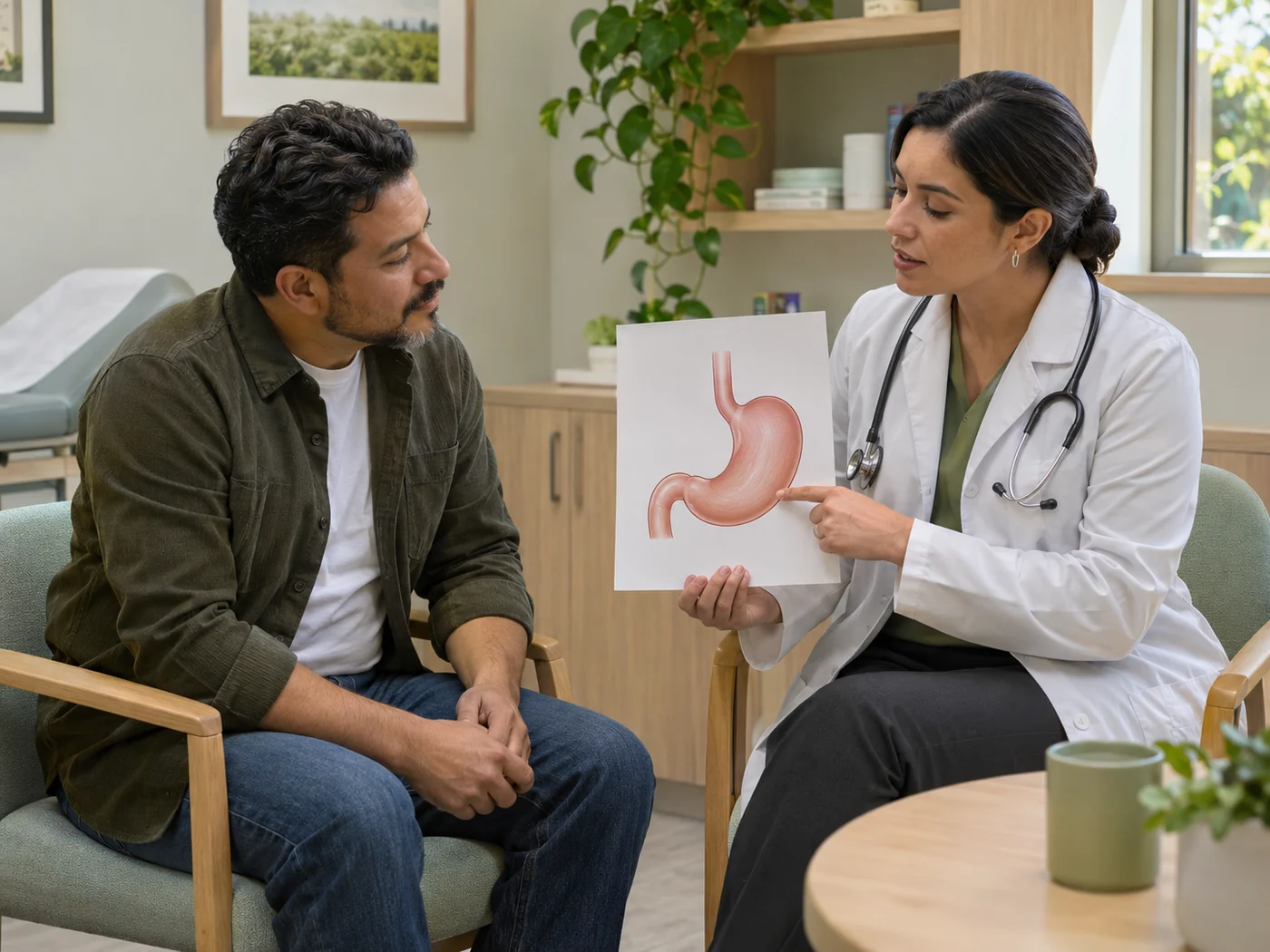
Medicines such as semaglutide and tirzepatide slow stomach emptying. Food staying in the stomach longer can contribute to fullness, especially after a larger meal. Constipation can also come with pressure or swelling. The same sensation can come from different causes, so one bloated evening cannot tell you how fast your stomach is emptying or whether a particular food caused it.
In weight-management trials of adults with obesity or overweight, abdominal distension was reported as an adverse event in 7% of the 2,116 participants who received Wegovy 2.4 mg injections once weekly and 5% of the 1,261 who received placebo. The U.S. label table gives the frequency for that event in those trials. It does not say how each case was assessed or how long the symptoms lasted. Wegovy U.S. prescribing information, Table 3 Zepbound U.S. prescribing information
What is a reasonable change if the pressure is mild?
Pick the change that fits the pattern and see what happens over the next few similar meals. If you feel tight after dinner, try serving a smaller portion first and saving the rest. Eat slowly and stop when you feel full. If burping mostly follows a fizzy drink, try still water with the same meal. Keep the rest of the meal familiar so you have something to compare. Expert consensus on gastrointestinal side effects of GLP-1 medicines
For example, if you felt pressure after trying a new snack and a sparkling drink together, start by changing the drink. If the pressure returns on several occasions, note whether the rest of the meal, the portion, or your bowel habits changed too. A single uncomfortable snack is a poor reason to cut an entire food group. Ask a clinician or pharmacist before starting an over-the-counter remedy or supplement for recurring symptoms.
If hard or infrequent stools are the main change, read the GLP-1 constipation guide. If you get full after a few bites repeatedly or struggle to finish enough food, tell your prescriber. The guide to GLP-1 medicines and gastroparesis explains what can prompt evaluation. Bloating alone cannot establish that diagnosis.
When should you call, and what should you say?
- Bloating keeps returning, started around a dose increase, or is making it hard to eat enough. Call your prescriber. Share the date of your last dose change, when the pressure starts and eases, whether you can see swelling, and any changes in bowel movements. Ask about your treatment plan before changing the dose.
- You have ongoing abdominal swelling, vomiting, and cannot pass stool or gas. Go to the emergency department now. Together these can point to a bowel blockage, which needs emergency evaluation. Severe abdominal pain or vomiting that won't stop also needs emergency assessment. MedlinePlus on intestinal obstruction · MedlinePlus on emergency care
- Any one of these occurs on its own. Call your healthcare provider promptly if your abdomen stays swollen, you cannot pass stool or gas, you keep vomiting, or unexplained abdominal pain won't go away. You can call even when other symptoms are absent. MedlinePlus on when to contact a provider
- You take Wegovy or Zepbound and have severe stomach-area pain that will not go away, with or without nausea or vomiting. Stop using it and call your healthcare provider right away. The pain can spread to your back. This is the pancreatitis instruction in the U.S. Medication Guides. Follow the guide supplied with your own medication. Wegovy Medication Guide · Zepbound Medication Guide
If you call about symptoms, a short description can help: “I've been visibly swollen since yesterday. I'm still passing gas, but I vomited twice and can only sip water.” Share what is happening now even if you have never logged a meal or written down a symptom.

About the author
Maya Lee
Glowise Senior GLP-1 Content Editor
Maya Lee is a Glowise Health Content Editor. Her guides turn product records, authoritative sources, and everyday organization questions into clear, practical GLP-1 information.
She helps readers ask better questions and keep the details relevant to a care conversation together.
See more Glowise on Google
Add Glowise as a preferred source to find our GLP-1 guides more easily in Google Search.