
Foundayo and Zepbound are worth comparing, but the useful comparison is not a verdict. It starts with the exact product information for each named medicine: Foundayo is an oral orforglipron tablet, and Zepbound is a tirzepatide injection. Those two facts describe the form each product takes, and each product's own current document is the place to confirm what that form involves.
A pill-versus-injection label on its own cannot decide which prescription is appropriate for any one person. What it can do is tell you where to look. This article maps the questions a reader commonly brings to a "Foundayo vs Zepbound" search onto the two official product documents that can actually answer them, so the next conversation with a prescriber or pharmacist starts from verified details rather than from a category label.
The practical takeaway
What this page gives you
- A direct answer to what separates Foundayo from Zepbound at the product level
- A table that pairs each common question with the document that can answer it
- A method for checking each product's current information on its own terms
- A neutral way to keep personal routine notes without turning them into conclusions
- A short list of focused questions to bring into your next conversation
The direct comparison starts with the exact product
Most comparison searches begin with a category: pill or injection. That is a reasonable starting point for curiosity, but it is a weak foundation for a decision, because two medicines can share a broad category and still differ in every detail that matters to an individual. The more reliable starting point is the exact product name, because each named medicine carries its own current product information, written for that product alone.
For Foundayo, that document is the official prescribing information for the orforglipron tablet. For Zepbound, it is the official prescribing information for the tirzepatide injection. Each document is maintained for its own product, and each one answers a specific set of questions about that product and no other.
The product name comes before the category
When you anchor a comparison to the exact product name, several things get easier. You stop blending details that belong to one medicine into your mental picture of the other. You can check a specific claim against a specific document instead of against a general impression. And you can write down a question that names the product it is actually about, which makes the question far easier for a prescriber or pharmacist to answer precisely. For category-level context, pill and injection basics can clarify form without replacing the exact product information.
A source-first comparison at a glance
The fastest way to make this comparison concrete is to line up the questions readers actually ask and match each one to the document that can answer it. Neither document answers questions about the other product, and neither one answers questions about your individual situation — those belong in a conversation, not in a document.
Use each document for the question it can answer
| Question | Foundayo document | Zepbound document |
|---|---|---|
| What is the medicine and its active ingredient? | Identifies Foundayo as an oral orforglipron tablet | Identifies Zepbound as a tirzepatide injection |
| What form does the product take? | Describes the tablet presentation | Describes the injection presentation |
| What does the current label say about use? | States the labeled information for this product | States the labeled information for this product |
| What safety information applies to this product? | Lists the product-specific safety sections | Lists the product-specific safety sections |
| Which product-specific questions belong to a professional? | Flags topics to confirm with a prescriber or pharmacist | Flags topics to confirm with a prescriber or pharmacist |
Read the table row by row rather than column by column. Each row is a single question, and the two cells simply show that each product has its own authoritative place to answer it. The table deliberately avoids comparing outcomes, costs, or suitability, because those are not questions a document can settle for an individual reader.
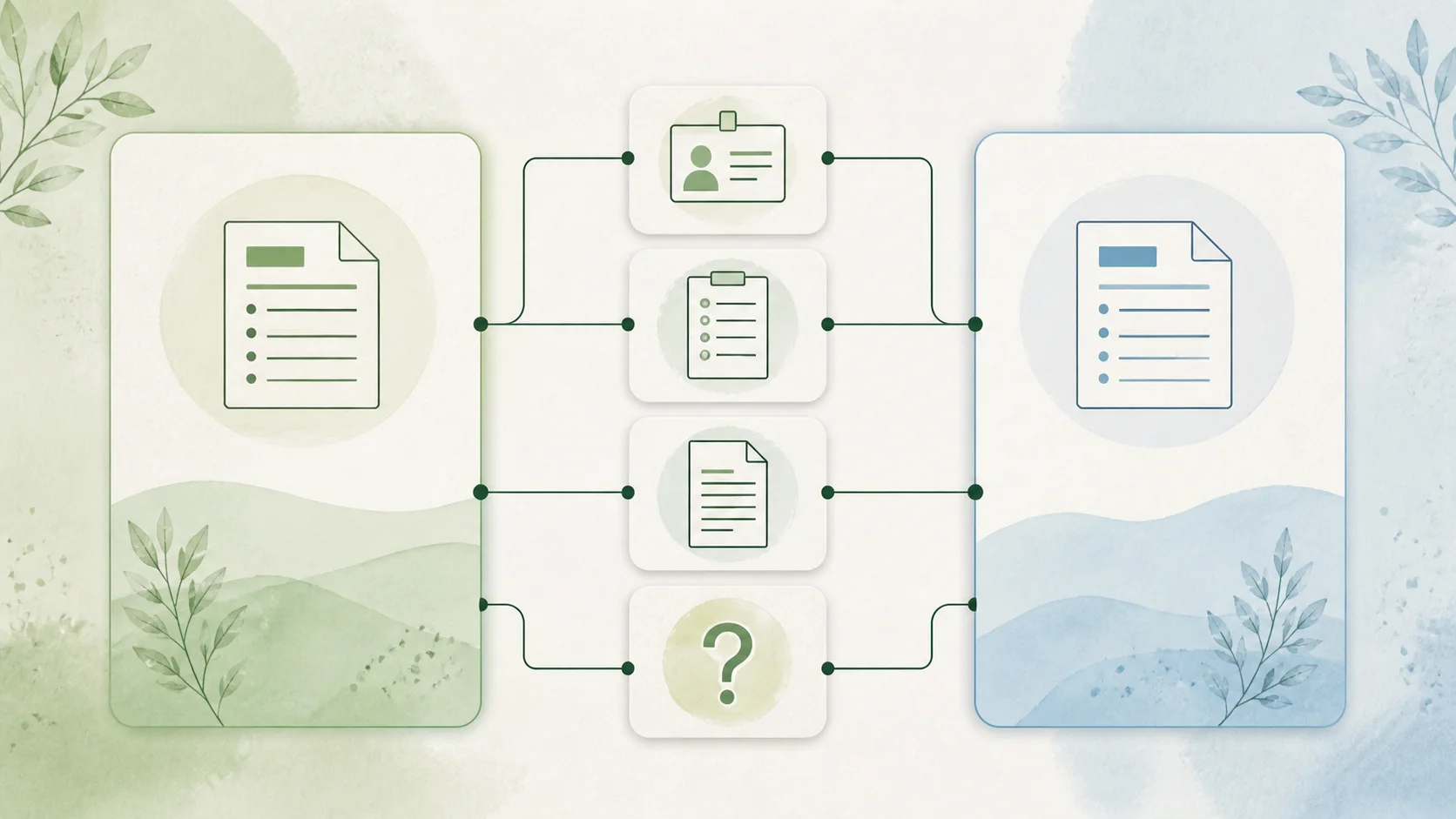
What each current product document can answer
It helps to treat each document as answering two layers of questions: first, what the medicine is and what form it takes; second, what the current product information says about that specific medicine. Keeping the layers separate prevents a common mistake — assuming that knowing the form means knowing the product.
Start with the medicine and its form
Foundayo's current product information identifies it as an oral orforglipron tablet. Zepbound's current product information identifies it as a tirzepatide injection. Those are identification facts, and they matter because they tell you which document governs which question. If a question is about the tablet, the Foundayo document is the authority. If a question is about the injection, the Zepbound document is the authority.
Form shapes the practical texture of a routine, but it is not a conclusion about a person or a product.
Then check the current product information
After the identification layer, each document opens into its own labeled sections: what the product is indicated for, how the label describes its use, and the safety information written specifically for that product. These sections are worth reading for the product you are actually asking about, in the current version of the document, rather than relying on summaries from any third party — including this article.
Two habits make this reading more productive. First, check one product at a time and finish your notes on it before opening the other document, so details stay attached to the right name. Second, when a section raises a question the document itself does not resolve — anything personal, anything about your own situation — write the question down verbatim instead of guessing at an answer. A question written in your own words, naming the exact product, is the single most useful thing you can carry into a conversation with a prescriber or pharmacist.
Keep routine context without drawing conclusions
While you read, you will naturally connect what you learn to your own routine: meals, water, sleep, activity, how you tend to remember things. That context is worth keeping. It is the raw material of a good question. What it is not is evidence of what any medicine will do for you.
Write down the context, not a conclusion
A useful note describes something observable: "I usually eat breakfast late," or "I want to remember to ask how this fits with travel." A conclusion sounds different: "a tablet would clearly suit me better." The first kind of note helps a professional understand your situation. The second kind quietly closes a question that was never actually answered.
The practical method is simple. Keep a short, dated list of observations and questions, each one tied to the exact product name it concerns. When you notice yourself writing a verdict, rewrite it as a question instead. "Which details of my routine matter for this product?" travels much further in a conversation than a self-made conclusion, and it keeps the decision where it belongs — with you and your prescriber, working from the current documents.

Where Glowise can keep the details together
The scattered part of this process is real: product documents live in one place, routine observations live in your head, and questions surface at random moments. Glowise is built for exactly that organizational problem. It brings medication, food, water, side effects, weight, activity, and progress into one place, so the details you gather while comparing products stay together instead of dispersing across sticky notes and memory.
If Zepbound is the medicine you are reviewing, the Zepbound tracking details view supports medication notes, meals, water, check-ins, and progress in a personal record, keeping the routine context next to the questions it prompted.
Turn notes into a focused question
The workflow step we call "record to question" has three parts. Start a record with the exact product name and the detail you want to revisit — for example, a section of the current document you want to ask about. Add routine context such as meals, water, or a check-in when it makes the question easier to remember and easier to explain. Then return to the record when you prepare your next focused question, so the question arrives with its context attached.
The record never decides anything. It holds what you noticed so that a conversation can do the deciding, with better raw material than memory alone provides.

Keep your product questions in one record
Keep product details, routine context, and focused questions in one place.
Questions worth taking to the next conversation
A good comparison ends with better questions, not with a self-appointed answer. The questions below are deliberately neutral: each one names a product, points at the current document, and leaves the personal judgment to the conversation it is taken into.
Use a neutral question list
- What does the current Foundayo product information say about the detail I noted, and how does it apply to my situation?
- What does the current Zepbound product information say about the same kind of detail, on its own terms?
- Which parts of my routine — meals, schedule, travel, storage habits — are relevant to discuss for each product?
- Are there product-specific safety sections in either document that I should make sure I understand correctly?
- Given my own history and current situation, which questions belong to my prescriber and which to my pharmacist?
That last question matters more than it looks. Some product-specific questions — how a medicine fits your health history, for example — naturally belong to a prescriber. Others — practical questions about a specific product's labeled presentation — are often exactly what a pharmacist answers every day. Naming the right professional for each question gets you a better answer faster.
If your reading takes you toward questions about compounded versions of tirzepatide rather than the named products compared here, that is a genuinely separate topic. Our article on questions about compounded tirzepatide covers it on its own terms, and it is best read as separate reading rather than folded into this comparison.
The practical takeaway
Comparing Foundayo and Zepbound well means comparing precisely, and precision has a specific shape: exact product names, current official documents, one product at a time, and personal observations kept as context rather than conclusions. Foundayo's document is the authority on the oral orforglipron tablet; Zepbound's document is the authority on the tirzepatide injection; neither document, and no article, can decide which prescription suits an individual.
Keep the exact product, its current document, and your question together before your next conversation.
Frequently asked questions
Is Foundayo a pill and Zepbound an injection?
Yes, at the level of product form. Current official product information identifies Foundayo as an oral orforglipron tablet and Zepbound as a tirzepatide injection. Those are identification facts about each product's form — useful for knowing which document answers which question, but not a basis for deciding between them.
Can a pill-versus-injection label decide which medicine is right for me?
No. Form is one attribute of a product, not a summary of it, and it cannot account for your individual situation. That kind of decision depends on personal factors that only a conversation with your prescriber can weigh, using the current product documents as shared reference material.
Which product details are worth checking before a conversation?
Start with identification — the exact product name, its active ingredient, and its form — then read the current document's own labeled sections for the product you are asking about, including its product-specific safety information. Anything the document does not resolve for your personal situation is worth writing down verbatim as a question, naming the product it concerns.
Can a personal record answer a treatment question?
No. A personal record can hold your routine context — meals, water, check-ins, observations, and the questions they prompted — so that a conversation starts from organized material instead of memory. But a record cannot prove cause, effect, or suitability, and it cannot replace the judgment of a prescriber or pharmacist working from the current documents.
Sources
- Foundayo Prescribing Information (Eli Lilly and Company) — the current official product information identifying Foundayo as an oral orforglipron tablet, with its product-specific labeled sections.
- Zepbound Prescribing Information (Eli Lilly and Company) — the current official product information identifying Zepbound as a tirzepatide injection, with its product-specific labeled sections.

About the author
Maya Lee
Glowise Senior GLP-1 Content Editor
Maya Lee is a Glowise Health Content Editor. Her guides turn product records, authoritative sources, and everyday organization questions into clear, practical GLP-1 information.
She helps readers ask better questions and keep the details relevant to a care conversation together.
See more Glowise on Google
Add Glowise as a preferred source to find our GLP-1 guides more easily in Google Search.