The best time of day to take Mounjaro is not a particular hour. The current US prescribing information says Mounjaro is administered once weekly, at any time of day, with or without meals. In other words, the label does not require morning, evening, breakfast, or bedtime dosing. (Mounjaro Prescribing Information)
That answer leaves a second, more personal question: which weekly cue will make the routine easier to remember? The label defines the permitted timing. A routine cue helps you organize that instruction in everyday life. Keeping those two jobs separate makes it easier to build consistency without turning a convenience preference into medical advice.
What the Mounjaro label actually answers
The prescribing information gives a broad timing window: once a week, any time of day, and no meal timing requirement. That is why there is no label-backed reason to declare morning universally better than evening, or the reverse. The answer is not hidden in a perfect clock time; the label deliberately permits more than one time-of-day routine. (Mounjaro Prescribing Information)
“With or without meals” also means a meal does not have to become the anchor. Breakfast may be a convenient reminder for one person, while a calendar alert or another weekly event may be clearer for someone else. Those are organizational options, not changes to the prescription.
What the label does not do is select the most convenient moment in your own week. Work shifts, caregiving, travel, and changing weekend plans can all make a seemingly memorable hour less reliable. The practical goal is therefore modest: identify a cue you can recognize, record what actually happened, and keep unresolved medication questions visible.
Prescription instruction and routine cue are different tools
It helps to name which question you are trying to answer before choosing a reminder.
| Question | What answers it | Example of the distinction |
|---|---|---|
| When is Mounjaro allowed to be taken? | The prescribing information and the instructions for your prescription | Once weekly, at any time of day, with or without meals |
| What will help me remember my weekly routine? | A personal reminder cue that stays within those instructions | A chosen weekly day plus a recurring calendar alert |
| What should I do after a missed dose or if I want to change days? | The label's specific instructions, clarified by a pharmacist or prescriber when needed | Do not improvise a new decision path from a general routine tip |
| What did I actually do? | A dated personal record | The date used and any open question you want to raise later |
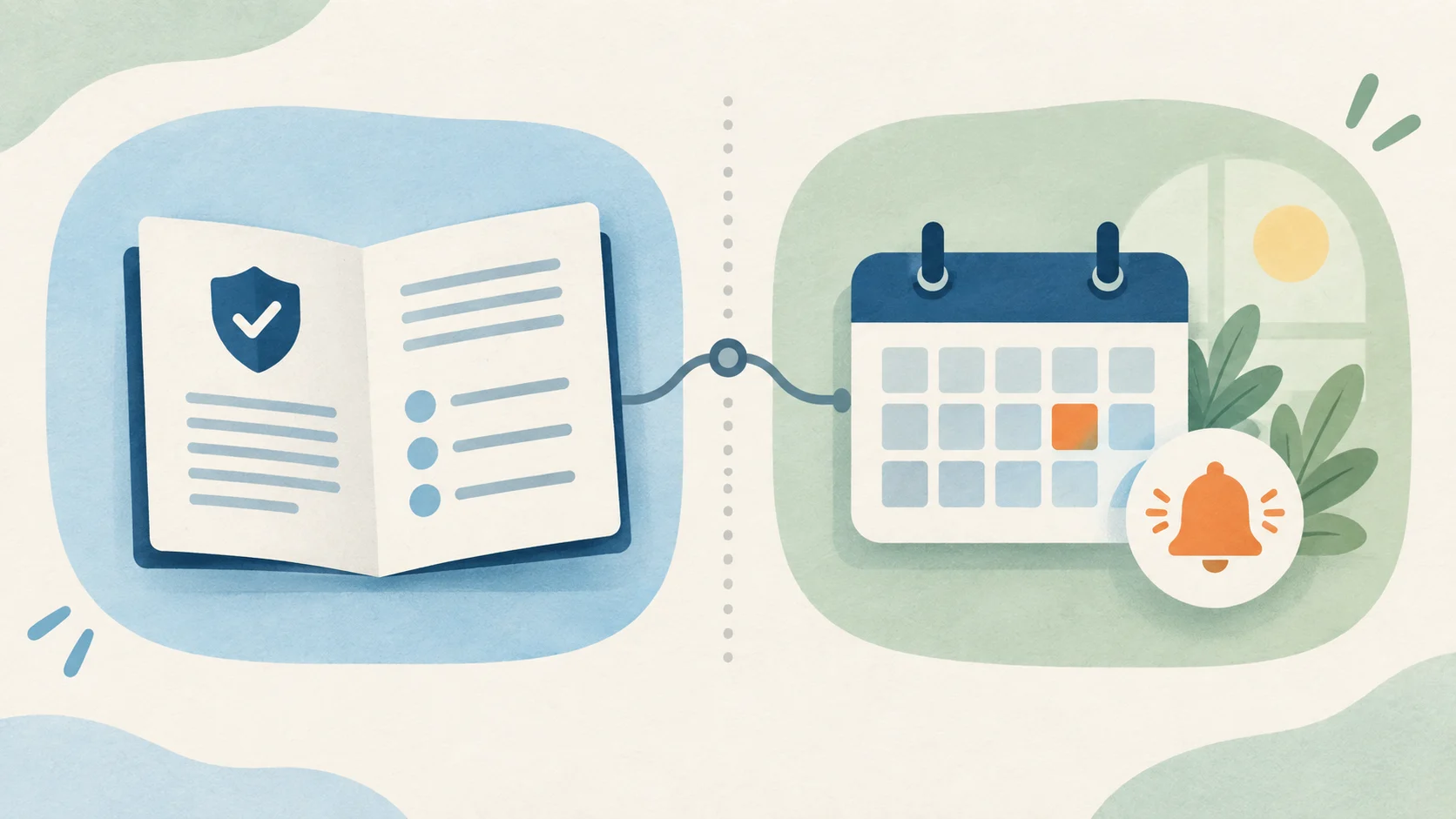
The distinction matters because a reminder cannot interpret prescription instructions. A calendar alert can prompt you to check your plan; it cannot decide whether a schedule change is appropriate. Likewise, a tracker can preserve a date you entered, but it cannot determine the best medication time for you.
Build a neutral weekly anchor
A useful routine anchor can be simple. It does not need to claim that one time improves results or prevents a particular experience. It only needs to make the weekly instruction easier to notice and review.
1. Start with the weekly day already in your plan
Treat the day as part of the medication information you are following, not as a casual preference to move whenever the week becomes inconvenient. If the day is unclear, check the instructions you received or ask your pharmacist or prescriber before building reminders around an assumption.
2. Attach one existing reminder cue
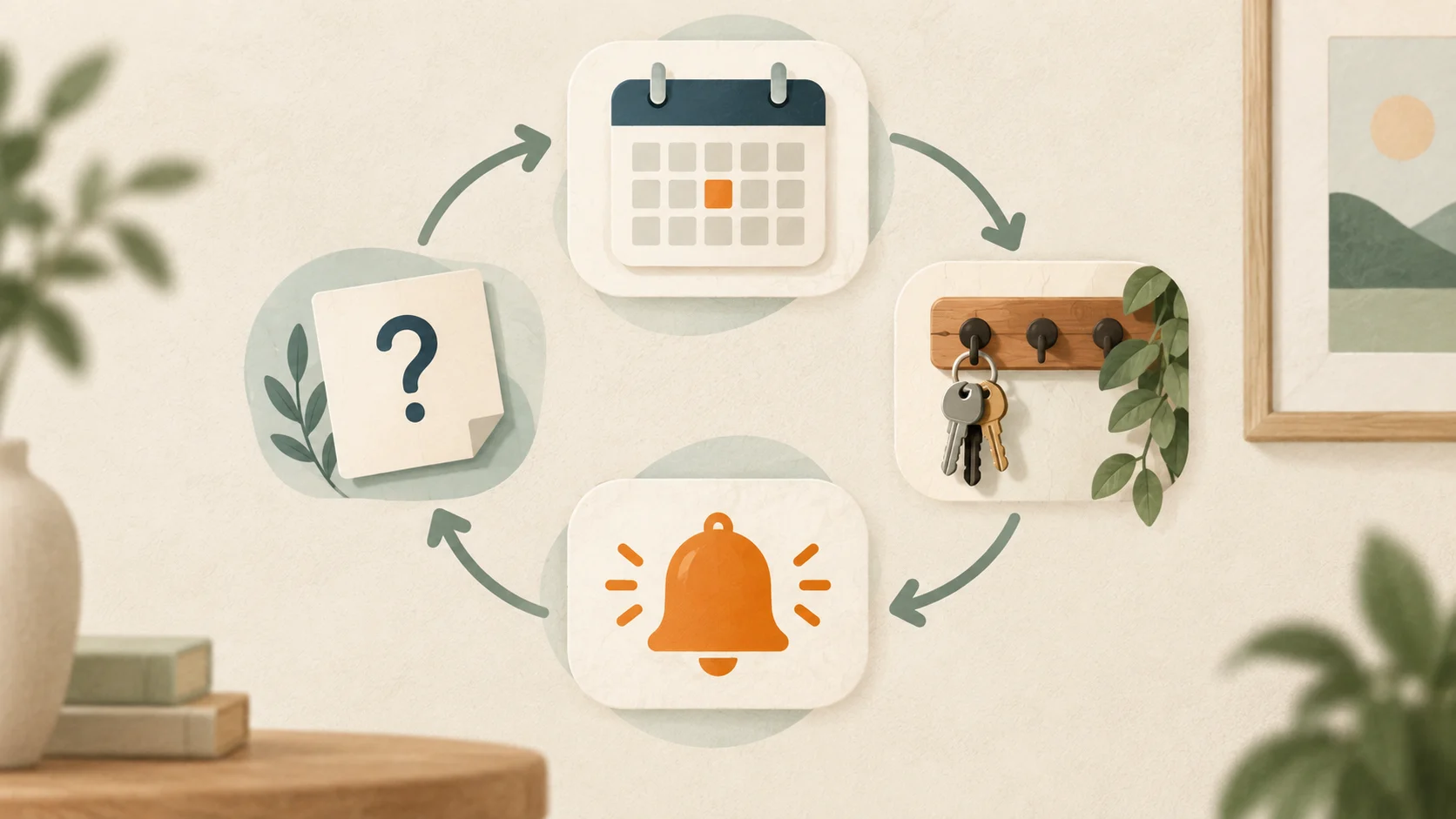
Choose something that already appears reliably in your week: a recurring calendar event, a phone reminder, or a weekly planning session. A meal can be a cue if it is useful to you, but the label does not require taking Mounjaro with food. The cue is there to attract your attention, not to add a new dosing rule.
3. Record the date actually used
A planned reminder and a completed event are not the same record. Marking the date you actually used can reduce the strain of reconstructing the week from memory later. Keep the entry factual: the date, the medication routine, and any context you deliberately want to remember.
4. Leave an open question open
If something does not match the plan, write the question down instead of answering it through guesswork. “I am not sure what to do after this missed date” is useful information to bring to the label, pharmacist, or prescriber. A good record makes uncertainty visible; it does not manufacture certainty.
Morning and evening are convenience choices, not universal winners
Morning may feel appealing because it connects to the start of a day. Evening may feel appealing because the day is quieter. Either idea can fail if the surrounding routine changes from week to week. The more useful comparison is not “Which hour is medically best?” but “Which allowed cue is least likely to disappear in my actual schedule?”
You can test the clarity of a cue without testing a different medication schedule. Ask whether the reminder is visible, whether it names the weekly routine clearly, and whether you have a place to mark the date used. If the reminder routinely arrives during meetings or travel, the organizational system may need attention. That observation does not, by itself, authorize changing the prescription day.
Avoid assigning extra meaning to the clock without evidence. The supplied label-based answer supports flexibility in time of day and meal timing; it does not establish that morning, afternoon, or evening will produce a better result for a particular person. Personal circumstances can inform what you ask, but they do not replace the prescription instructions.
Missed doses and changing the weekly day need the exact instructions
The Mounjaro prescribing information contains specific instructions for missed doses and for changing the day of weekly administration. Those situations are different from choosing a convenient reminder time within an established plan. Because the details determine what action is permitted, use the current prescribing information rather than relying on a shortened rule remembered from another source.
If the wording is difficult to apply to your situation, a pharmacist or prescriber can clarify it. Bring the scheduled day, the date actually used, and the question you are trying to resolve. That small packet is more useful than a vague memory that the dose was “sometime last week.”
Keep the routine context together
Medication routines become harder to review when the planned day sits in one calendar, the date used lives in a message, and the question is left in your head. A single, user-entered record can keep those pieces close enough to inspect together.
Glowise's Mounjaro Tracker can organize medication entries alongside food, water, side-effect, weight, activity, and progress context that you choose to record. Its role here is recall and organization. It does not diagnose a symptom, determine urgency, or recommend a medication dose or schedule.

The most useful entry is usually the most literal one: what was planned, what date was used, and what remains uncertain. You do not need to turn every week into a detailed diary. Record enough context to recognize the routine and prepare a clearer question when one arises.
The practical takeaway
A clear weekly timing routine
- Follow the instructions for your exact prescription.
- Remember that the US label permits any time of day, with or without meals.
- Use a chosen weekly day and one reliable reminder cue.
- Record the date actually used rather than relying on memory alone.
- Keep missed-dose or day-change questions open until you check the label or ask a pharmacist or prescriber.
- Treat a tracker as an organizing tool, not a timing decision-maker.
Frequently asked questions
Is morning the best time to take Mounjaro?
The current US prescribing information does not identify morning as the best time. It says Mounjaro is administered once weekly at any time of day, with or without meals. A morning reminder can be a personal routine cue if it fits the instructions you are following. (Mounjaro Prescribing Information)
Can I take Mounjaro at night?
The label allows administration at any time of day, so it does not exclude nighttime. Whether an evening cue is practical for you is an organizational question, not a new prescription instruction. (Mounjaro Prescribing Information)
Do I need to take Mounjaro with food?
No meal timing is required by the current US label: Mounjaro may be administered with or without meals. Follow the instructions for your exact prescription. (Mounjaro Prescribing Information)
What if I miss a dose or want to use a different day?
Those situations have specific instructions in the prescribing information. Check the current label and ask your pharmacist or prescriber if you need help applying the instructions; do not use a general reminder framework as a substitute.
Sources

About the author
Maya Lee
Glowise Senior GLP-1 Content Editor
Maya Lee is a Glowise Health Content Editor. Her guides turn product records, authoritative sources, and everyday organization questions into clear, practical GLP-1 information.
She helps readers ask better questions and keep the details relevant to a care conversation together.
See more Glowise on Google
Add Glowise as a preferred source to find our GLP-1 guides more easily in Google Search.