Quick Answer
- Call the pre-op office when you book and give your GLP-1 name, form, dose and timing.
- Follow your team's written plan for taking or holding your next dose. Many patients at low risk can continue before an elective procedure.
- Confirm food and drink cutoffs and which liquids are allowed. If you have diabetes, ask when to check glucose and how to handle your other medicines.
- Call the procedure team promptly if surgery is tomorrow and you lack a plan, you recently started or increased your dose, symptoms develop, or prep goes off schedule.
- Get urgent or emergency care right away when needed. Tell the team what you take and when you last took it, ate or drank.
- Before discharge, ask when and at what dose to restart and whom to call if eating or drinking is still difficult.
Who should you call and what should you tell them?
If you're taking a GLP-1 before surgery, call the pre-op number on your booking instructions. For an endoscopy or colonoscopy, use the procedure office. Ask how to reach the anesthesia team and make sure your GLP-1 prescriber has the procedure date. Ask the anesthesia, procedural and prescribing teams to agree on a plan that accounts for your medication, procedure and risk of delayed stomach emptying. U.S. multisociety guidance
Have your medication label and procedure details in front of you. Give the team:
- The exact medicine. Brand and generic name if available, whether you take a tablet or injection, the dose, and how often you take it.
- Your actual schedule. The date and time you last took it, when the next dose is due, and whether you recently started, increased the dose, or restarted after a break.
- Anything that may affect digestion or blood sugar. Report nausea, vomiting, belly pain, bloating, constipation, or difficulty eating or drinking. Mention known gastroparesis or another condition that slows stomach emptying. Say why you take the medicine and have your full medication list ready, including any insulin or other diabetes drugs.
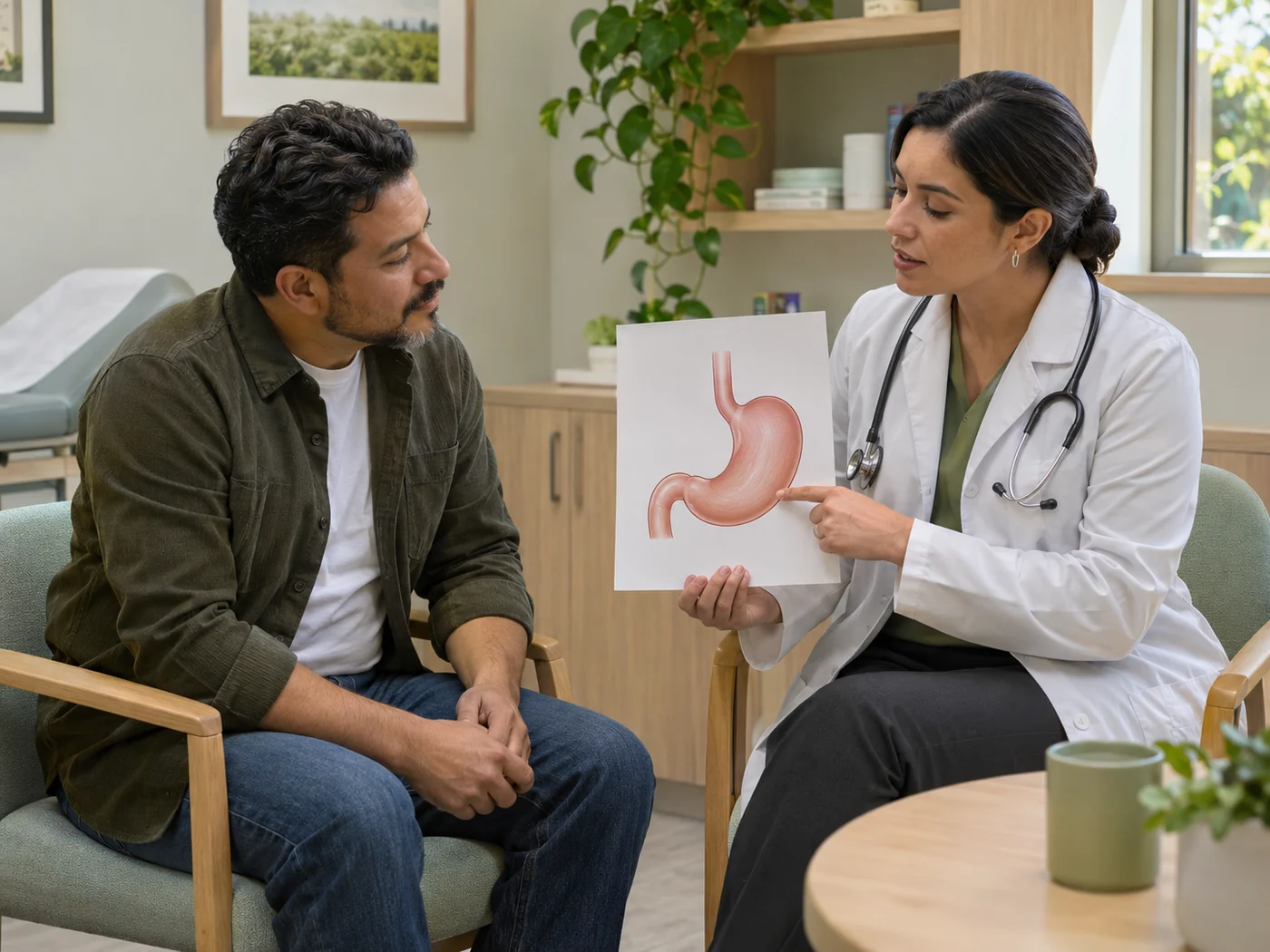
GLP-1–based drugs such as semaglutide and tirzepatide can slow the passage of food out of your stomach. With general anesthesia or deep sedation, stomach contents can come back up and enter the lungs, known as aspiration. Zepbound's U.S. label describes rare reports of this happening in people taking GLP-1–based medicines despite reported adherence to fasting instructions. It also says there is too little evidence to know whether changing fasting or temporarily stopping Zepbound reduces retained stomach contents. Tell the team even if the procedure is brief, and check whether sedation is planned if the booking only mentions local anesthesia. Zepbound prescribing information, section 5.10 · ASA guidance for patients preparing for surgery
Food or liquid may still be in your stomach even if you feel well or skipped a dose. Report your last actual dose and follow the fasting instructions from your care team. SPAQI consensus statement
What should your written plan cover?
Ask for a portal message or printed checklist you can refer to on the day. If your prescriber and the facility gave different instructions, send both to the pre-op or anesthesia team and ask that team to coordinate with your prescriber. You can say, “My next dose is due on Thursday. One instruction says to take it and the other says to hold it. Which instruction should I follow, and when should I stop food and drinks?”
Before the next dose that could be affected, make sure you can answer these questions from the team's plan:
| Ask about | What you need to know |
|---|---|
| Your next GLP-1 dose | Which scheduled dose should I take or hold? If I need to hold it, when is my last pre-op dose? |
| Food and drinks | When do I stop solids? Which drinks are allowed and when do I stop each one? How does that fit with bowel prep, if prescribed? |
| Diabetes care, if relevant | What do I do with my other medicines? When should I check glucose, what should I do if it's outside my advised range, and whom do I call after hours? |
| A change before arrival | Which number do I call if I take a dose I was told to hold, eat or drink after a cutoff, or cannot finish the prep? |
Even when two care teams agree that a medicine can continue, their fasting instructions may differ. The 2024 multisociety guidance uses individual risk to decide when measures such as a 24-hour pre-op liquid diet might help. The 2025 SPAQI consensus recommends a 24-hour solid-food fast more broadly for patients taking these medicines without significant digestive symptoms who have procedures requiring anesthesia, with separate cutoffs for clear liquids. Ask whether your actual plan permits a shake, milk or only specific clear drinks. Follow the facility's agreed instructions and have the diabetes team direct any medicine changes while you're fasting. U.S. multisociety guidance · SPAQI consensus statement · ADA Standards of Care 2026
When should you call the procedure team again?
- Surgery is tomorrow and you still lack a plan, or the prep went differently. Call the facility now. If the office is closed, use the after-hours number in your booking instructions. Report the actual time you last took the medicine and last ate or drank. If you cannot reach anyone, tell the team as soon as you arrive and before sedation. Let them decide whether the procedure can go ahead.
- You just started treatment, you're increasing the dose, or you have new or worsening digestive symptoms. Call the procedure team promptly, even if the instructions already arrived. The ASA identifies dose escalation, higher doses, digestive symptoms and other conditions affecting stomach emptying as reasons to reassess preparation. The team may change the fasting or anesthesia plan, check stomach contents with ultrasound when available and appropriate, or postpone an elective procedure. For questions about symptoms outside the surgical setting, see the guide to GLP-1 medicines and gastroparesis.
- You need urgent or emergency care. Get care right away. If you're able, tell the team which GLP-1 you take, when you last took it and when you last ate or drank. The anesthesia team can take precautions for a potentially full stomach. ASA guidance for patients preparing for surgery · ASA summary of risk factors and precautions
When can you restart after the procedure?
Before leaving, get the date or recovery milestone for your next GLP-1 dose, the dose to use if treatment was paused, and the after-hours numbers for the teams handling your recovery and medicines. The SPAQI consensus suggests restarting once you've resumed your usual diet. Your discharge instructions should account for your procedure and what you can safely eat and drink. SPAQI consensus statement, recommendations 6 and 7
- If the restart plan is unclear, call your GLP-1 prescriber or the clinician listed for restart questions, using the on-call number on your discharge paperwork after hours. If you missed several doses, tell them the date of your last actual dose.
- If you need instructions for insulin or other diabetes medicines, use the on-call number your discharge team gave you for your diabetes care. Ask the discharge team to write down that number and your glucose plan before you leave. ADA Standards of Care 2026
- If you vomit repeatedly or are struggling to drink enough, contact the surgical or procedure team's on-call service promptly for assessment before restarting. Go to the emergency department right away if vomiting won't stop, or if you have diabetes and are vomiting and cannot keep food or drinks down. For trouble breathing, call 911. MedlinePlus emergency guidance · CDC diabetes emergency guidance
For a dose you forgot on an ordinary day, use the brand- and form-specific missed semaglutide dose guide. After surgery, follow the restart instructions from your care team.

About the author
Maya Lee
Glowise Senior GLP-1 Content Editor
Maya Lee is a Glowise Health Content Editor. Her guides turn product records, authoritative sources, and everyday organization questions into clear, practical GLP-1 information.
She helps readers ask better questions and keep the details relevant to a care conversation together.
See more Glowise on Google
Add Glowise as a preferred source to find our GLP-1 guides more easily in Google Search.